••
Ghana Asserts Global Leadership: President Mahama to Champion Reparatory Justice at UN Amid Shifting International Dynamics
•3 min read•46 sources
Ghana is set to take a definitive stand on the global stage as President John Dramani Mahama prepares to lead a high-level delegation to the United Nations in March 2026. The mission centers on a landmark draft resolution, spearheaded by Foreign Affairs Minister Samuel Okudzeto Ablakwa, which seeks to classify the transatlantic slave trade as the gravest crime against humanity. During this visit, President Mahama is scheduled to deliver a keynote address at the UN Headquarters and participate in the International Day of Remembrance of the Victims of Slavery. This initiative aims to shift global discourse from mere acknowledgment to legal accountability and structured reparatory justice, reinforcing Ghana’s historical creed of ‘Freedom and Justice.’
While Ghana pushes for historical accountability, the international political climate remains fraught with volatility. In the Middle East, conflicting reports surround potential negotiations between the United States and Iran. While U.S. President Donald Trump has claimed that agreement has been reached on roughly 15 points regarding a nuclear deal, Tehran has denied any direct or indirect communication. This diplomatic friction occurs against a backdrop of escalating military actions, including Israeli airstrikes in Beirut targeting Hezbollah-linked figures and the disruption of the strategic Strait of Hormuz. These conflicts have not only triggered sharp fluctuations in global oil prices but have also resulted in significant environmental damage, with recent studies indicating that military-related emissions in the region have surpassed the annual output of entire nations like Iceland.
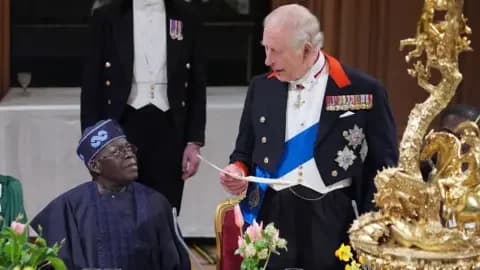
Closer to home, Ghanaian influence is also being felt within the Commonwealth and through bilateral diplomatic channels. Joshua K. Opey, Chairperson of the Commonwealth Youth Council, recently met with King Charles III at Westminster Abbey to advocate for youth economic empowerment and investment in cultural industries. Simultaneously, Minister Ablakwa engaged in high-level talks at the U.S. State Department to enhance trade, security, and the African Growth and Opportunity Act (AGOA). These diplomatic efforts coincide with significant changes in international mobility, as the United Kingdom transitions to a fully digital e-Visa system for Ghanaian travelers and reaches a new immigration agreement with Nigeria to expedite the return of individuals without legal residency.
Across the West African sub-region, political and security landscapes are undergoing rapid shifts. Nigeria has secured new military assistance from France to bolster counter-terrorism efforts following recent insurgencies, while Mali has seen a fragile truce with Al-Qaeda-affiliated groups through a controversial prisoner release aimed at securing fuel supplies. In Benin, the political atmosphere is tense as the main opposition party, The Democrats, declined to endorse candidates for the upcoming April presidential election after their nominee was barred. Amidst these regional developments, the global political community also pauses to mark the passing of former French Prime Minister Lionel Jospin at age 88, remembered for his pivotal role in unifying the French left and modernizing the nation's labor laws.
These interconnected events underscore a period of profound transformation for Ghana and its neighbors. As President Mahama prepares to address the UN General Assembly, the quest for reparatory justice serves as a bridge between addressing the wounds of the past and securing a more equitable future. The success of Ghana’s resolution will depend on its ability to navigate a world increasingly defined by complex security alliances, economic uncertainty, and the urgent need for youth-led innovation. These diplomatic maneuvers reflect a nation not only seeking to settle historical scores but actively participating in the resolution of contemporary global crises.
This story touches markets covered on Anansi Intelligence ↗.
Related topic
John Mahama: Latest News & Updates →More from politics
Continue exploring similar stories


