••
President John Mahama Commissions Refurbished Tema Oil Refinery as 1 Million Barrels of Jubilee Crude Arrive for Local Processing
•3 min read•12 sources
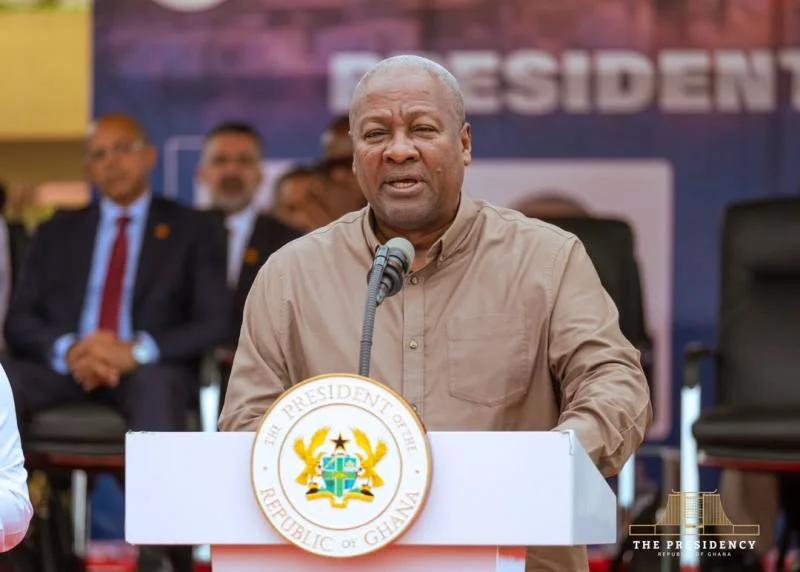
President John Dramani Mahama has officially commissioned the refurbished Crude Distillation Unit (CDU) at the Tema Oil Refinery (TOR), marking a pivotal moment in Ghana’s quest for energy self-sufficiency. The ceremony coincided with the arrival of the refinery’s inaugural one-million-barrel shipment of crude oil from the Jubilee Field, intended for domestic processing. President Mahama highlighted the revival as a strategic shift toward local value creation and industrial production, emphasizing that the restoration of such a vital state asset demonstrates that government-owned enterprises can thrive through competent management and strategic leadership rather than relying on state bailouts. This move is a cornerstone of the administration's Reset Agenda, aimed at enhancing institutional confidence and positioning Ghana as a key player in West Africa’s petroleum sector.
The refinery’s operational comeback is already yielding tangible economic benefits, having processed two million barrels of crude into various petroleum products since May. According to TOR’s Managing Director, Edmond Kombat, the restoration program has generated employment for 1,542 Ghanaians, including permanent and temporary roles for a new generation of engineers and technical staff. President Mahama lauded the dedication of the facility's workforce, noting that Ghanaian engineers and workers were the primary drivers of the comeback after years of decline. This workforce-led recovery is central to the government’s broader industrialization strategy, which seeks to rebuild national institutions rather than abandoning them in the face of operational challenges.
Looking ahead, the government has set an ambitious target to expand TOR’s refining capacity to 100,000 barrels per day. To achieve this, President Mahama has directed the Minister for Energy and Green Transition to collaborate with refinery management on a comprehensive strategic expansion plan. This initiative has received strong backing from the Chamber of Petroleum Consumers (COPEC). Executive Secretary Duncan Amoah praised the revival as a significant advancement for the petroleum sector, stating that local refining will significantly enhance national energy security and reduce the economy's vulnerability to global fuel supply disruptions and high import costs.
This revitalized focus on domestic refining and manufacturing aligns with the broader push for self-reliant industrialization championed by prominent Ghanaian business leaders. Industry veterans such as Tony Oteng-Gyasi, founder of Tropical Cable and Conductor Limited, have long advocated for policies that prioritize local production over importation to ensure sustainable economic growth. By reviving TOR and incentivizing continuous industrial activity, the government aims to create a resilient economic environment where local manufacturing serves as the backbone of national development, reducing dependence on foreign goods and strengthening the cedi through decreased import demand.
This story touches markets covered on Anansi Intelligence ↗.
Related topic
John Mahama: Latest News & Updates →Live rates
Dollar to cedi rate →More from business
Continue exploring similar stories


