••
President Mahama Outlines SOE Stock Listing and $10 Billion Industrial Investment Plan Amid Fiscal Pressures
•3 min read•17 sources
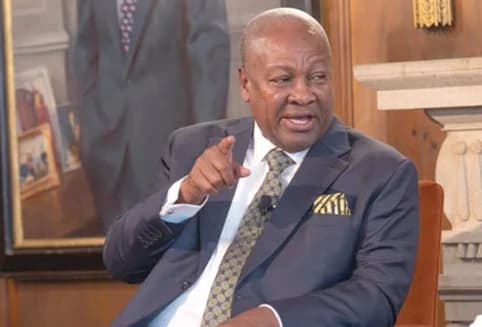
President John Mahama has unveiled a series of sweeping economic reforms aimed at enhancing corporate governance and stimulating industrial growth, anchored by a plan to list 10 state-owned enterprises (SOEs) on the Ghana Stock Exchange (GSE). This move, intended to curb political interference and attract public investment, comes as Finance Minister Dr. Cassiel Ato Forson reports a significant reduction in borrowing costs, which have reportedly fallen from an average of 30% to between 9% and 13%. The government's broader strategy focuses on transitioning Ghana from a primary resource exporter to a value-added industrial hub, supported by a proposed $10 billion investment blueprint for strategic sectors over the next four years.
Central to the administration's agenda is the 2030 deadline to halt the export of raw mineral ores, including gold, bauxite, and manganese. President Mahama has urged mining firms to establish local refineries, signaling that the upcoming Minerals and Mining Bill will formalize these requirements. To further bolster national development, the President has also called on the Ghanaian diaspora to shift from traditional remittances—which reached a record $7.8 billion—toward direct equity investments. These initiatives are designed to transform SOEs into transparent public companies while leveraging the significant increases in Foreign Direct Investment, which the administration projects will reach $2.6 billion by 2025.
In preparation for the 2027 Budget, Dr. Ato Forson has engaged with the Association of Ghana Industries (AGI) to outline the aforementioned $10 billion plan to enhance production and job creation. AGI President Kofi Nsiah-Poku has lauded these stability efforts, though he emphasized the critical need for more accessible financing to drive industrialization. While the government aims for single-digit borrowing costs to further support the private sector, it is also intensifying fiscal discipline through mid-year budget measures, including a rigorous audit of the government payroll to eliminate "ghost names" and a reopening of the domestic bond market to diversify financing sources.
Despite these proactive measures, international analysts have raised concerns regarding the fiscal sustainability of certain policies. S&P Global recently warned that the Ghana Accelerated National Reserve Accumulation Policy (GANRAP), intended to shore up gold and foreign exchange reserves, could impose local-currency costs between 0.8% and 2.6% of GDP. This fiscal pressure is compounded by a decline in Gross International Reserves, which fell from $14.16 billion in March 2026 to approximately $11.07 billion by August 2026. Furthermore, the Bank of Ghana reported a $1.25 billion operating loss in 2025, necessitating a phased recapitalization plan expected to run through 2032.
Looking ahead, Ghana faces a delicate balancing act between aggressive growth and fiscal consolidation. S&P Global forecasts that the fiscal deficit may widen to 3.9% annually through 2029, driven by increased capital spending and the removal of certain levies. However, the government remains optimistic that its focus on digital revenue collection, AI-driven VAT reforms, and a stable power supply will mitigate these risks. As the nation moves toward its 70th independence anniversary, the administration's success will depend on its ability to maintain investor confidence while navigating global inflationary pressures and currency vulnerabilities.
Related topic
John Mahama: Latest News & Updates →Live rates
Ghana gold price →

