••
Mahama Administration Navigates Economic Oversight Challenges and Youth Policy Reforms Amidst Calls for Political Civility
•3 min read•18 sources
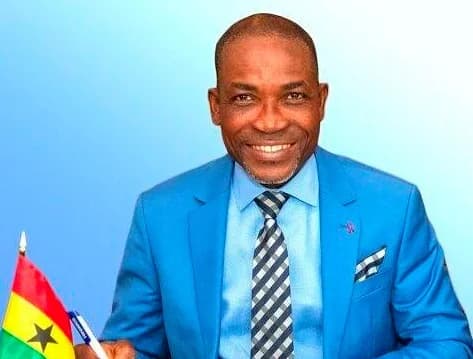
Governance under President John Mahama has come under intense scrutiny as state agencies and independent policy think tanks clash over the accuracy of national economic reporting and the pace of key policy rollouts. At the center of the debate is the State Interests and Governance Authority (SIGA), which recently reported a GH₵19.80 billion profit for state-owned enterprises in 2025. This figure has been sharply contested by Bright Simons, Vice President of IMANI Africa, who cited material errors and flawed numbers in the State Ownership Report. However, SIGA Director-General Professor Michael Kpessa-Whyte has robustly defended the report's integrity, clarifying that the data was manually compiled from direct submissions by state entities rather than through automated or AI-driven processes, and has refused calls to withdraw the document. Amidst this dispute, government spokesperson Raymond Tamekloe has emphasized that the administration's signature 24-hour economy policy will be implemented gradually to ensure long-term success, rejecting demands for a rushed rollout. To further enhance economic productivity, the Ministry for Labour and Employment is urging all ministries to explicitly integrate job-creation impacts into their budget proposals, signaling a shift toward more accountable fiscal planning. In parallel, the Ministry of Youth Development and Empowerment is collaborating with IMANI to refine initiatives like the Adwumawura Programme. These discussions aim to address high unemployment by transitioning toward cooperative enterprise models and industrial parks, supported by a new digital "Youth Tracker" to monitor beneficiary progress. This focus on systemic reform coincides with veteran journalist Kwesi Pratt Jnr.'s recent rejection of the "Gen Z revolution" narrative. Speaking at the Pan-African Progressive Front's International Youth Forum, Pratt argued that the struggle against exploitation and poverty is a shared interest across all age groups, urging young Africans to organize around collective economic issues rather than generational divides. The broader political environment is also facing calls for a "reset" as observers note an erosion of civility in public discourse. Critics and citizens alike are calling on President Mahama and opposition leaders to model respectful disagreement, moving away from personal attacks and toward reasoned debate. In a move to address public concerns regarding everyday governance, the Ghana Revenue Authority (GRA) Customs Division recently clarified that travelers are not automatically taxed for carrying multiple mobile phones, provided the devices are for personal use. These developments collectively reflect an administration attempting to balance ambitious economic restructuring with the practicalities of institutional transparency and the maintenance of a stable democratic culture.
Related topic
Ghana Customs Recruitment: Latest News & Updates →

