••
President Mahama Unveils Sweeping Public Sector Reforms and Growth Agenda at 2026 May Day Celebrations
•3 min read•32 sources
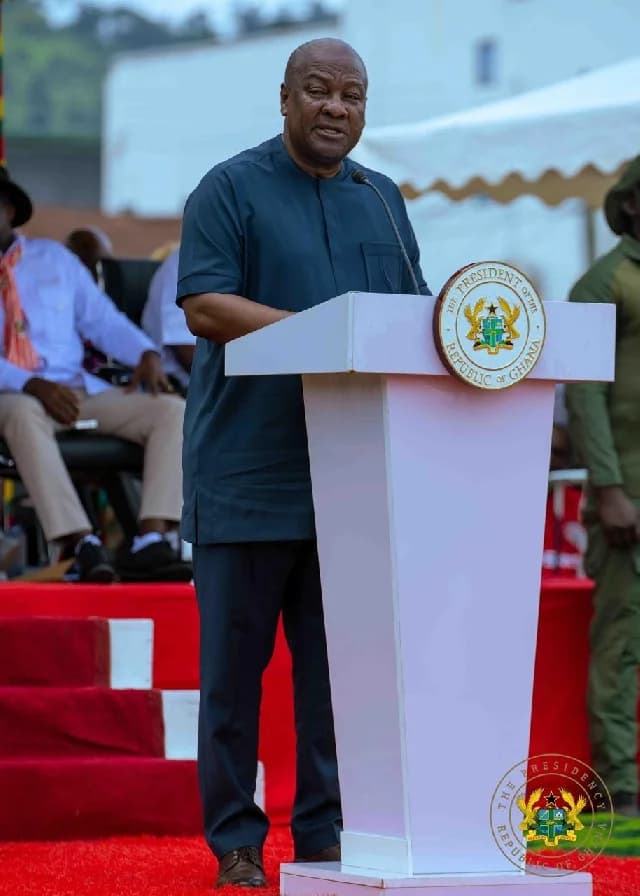
During the 2026 May Day celebrations held at Jackson Park in Koforidua, President John Dramani Mahama announced a series of ambitious reforms aimed at transitioning Ghana from macroeconomic stability to tangible economic growth. Under the theme "Pivoting to Growth, Jobs, and Sustainable Livelihoods, Resetting Ghana Beyond Macroeconomic Stability," the President emphasized that the fruits of recent economic gains must now reflect in the pockets and living conditions of the Ghanaian workforce. The event, held outside Accra for the first time in several years, served as a platform for the government to outline its "Resetting Ghana" agenda, focusing on industrial transformation and job creation through a 24-hour economy policy.
Central to these reforms is a total overhaul of the public sector compensation system. President Mahama announced the establishment of an Independent Emoluments Commission to ensure fair and transparent salaries across the board, alongside a plan to review Article 71, which governs the remuneration of senior public officials. Furthermore, a new Labour Bill is being finalized to address modern employment trends, including protections for workers in the gig economy and remote work sectors. To address immediate unemployment concerns, the President approved the hiring of 20,000 trained teachers and nurses, with a long-term plan to recruit 40,000 personnel into the security services. He also pledged to review the tiered pension system to address long-standing grievances regarding inadequate retirement payouts.
The celebrations were held against the backdrop of a major energy crisis following a fire at the Akosombo Generating Station switchyard, which had temporarily wiped out nearly 1,000 megawatts of transmission capacity. Minister of Energy and Green Transition, John Abdulai Jinapor, confirmed the full restoration of all power units thanks to the efforts of GRIDCo, VRA, and ECG technicians. The incident, however, sparked political controversy as Dr. Mary Awusi, CEO of the Ghana Free Zones Authority, alleged the fire was a result of sabotage by elements within the opposition. Amidst this tension, President Mahama personally rewarded a female National Service person with automatic employment for her exceptional professionalism in helping stabilize the national grid during the emergency.
While the government highlighted its successes in reviving state-owned enterprises like the Tema Oil Refinery (TOR) and the Agricultural Development Bank (ADB), organized labor and the political opposition voiced significant concerns. The Trades Union Congress (TUC) and the Industrial and Commercial Workers’ Union (ICU) argued that economic growth remains "meaningless" if it does not lead to sustainable job security and relief from the high cost of living. Conversely, the Minority caucus in Parliament criticized the administration for what they termed a "betrayal" of workers, citing delayed salaries for health professionals and declining conditions for cocoa farmers. President Mahama countered these criticisms by reaffirming his commitment to accountability, promising to prosecute individuals indicted in Auditor-General reports and defending the prosecutorial independence of the Office of the Special Prosecutor.
As Ghana moves forward, the success of these proposed reforms will depend on the government’s ability to implement the 24-hour economy policy and meet its target of processing 50% of the nation’s cocoa locally by next year. The President called for a unified front, urging the TUC to demand higher accountability from state-owned enterprise management to prevent future mismanagement. With the introduction of a Public Officers Code of Conduct Bill and a new asset declaration regime on the horizon, the administration is positioning itself as a champion of transparency, though the pressure from labor groups for immediate relief from economic hardship remains a critical challenge for the year ahead.
This story touches markets covered on Anansi Intelligence ↗.
Related topic
John Mahama: Latest News & Updates →More from politics
Continue exploring similar stories


