••
President Mahama Announces Procurement Reforms as Government Rebuts Road Contract Allegations
•3 min read•18 sources
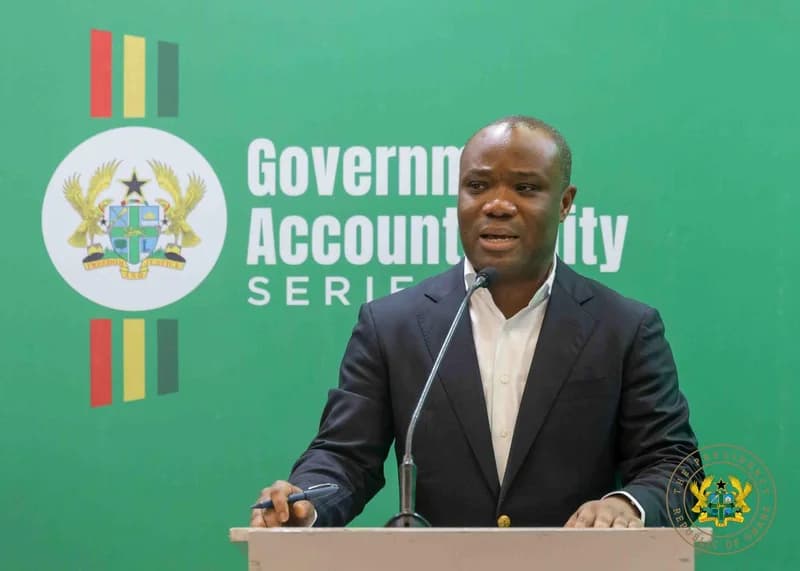
The Ghanaian government has strongly dismissed allegations of widespread procurement abuse within the Ministry of Roads and Highways, asserting that over 90% of road contracts were awarded through competitive tendering. Speaking at a Government Accountability Series in Accra, Minister of State for Government Communications Felix Kwakye Ofosu revealed that of the 1,441 road contracts awarded between 2025 and 2026, 1,301 underwent open bidding processes. This rebuttal follows an investigative report by the Media Foundation for West Africa (MFWA) and The Fourth Estate, which alleged that the government’s flagship "Big Push" infrastructure initiative was dominated by sole-sourced contracts. While the government admitted that 47.14% of "Big Push" projects were sole-sourced, it maintained these represented only a small fraction (4.58%) of the total road sector awards and were justified by urgent national needs.
In response to the scrutiny, President John Dramani Mahama has commissioned a comprehensive 72-page investigative report and introduced a series of procurement reforms aimed at enhancing transparency and accountability. These measures include the establishment of a Value for Money (VFM) Office, which will provide mandatory certification for all major single-source contracts to ensure optimal public spending. Furthermore, the President has mandated that large-scale sole-sourced deals receive Cabinet approval and be published on a centralized electronic procurement platform, disclosing the beneficial owners of the contracted companies. Although an internal review concluded that the Ministry had not breached the Public Procurement Act, the government emphasized that these reforms are necessary to prevent technical analysis from being bypassed during the execution of urgent infrastructure projects.
The debate over infrastructure spending and oversight is also playing out in the judiciary, as lawyers for former officials involved in the Accra Sky Train project seek a dismissal of charges related to an alleged $2 million financial loss. Counsel for Solomon Asamoah, former CEO of the Ghana Infrastructure Investment Fund (GIIF), and Professor Christopher Ameyaw-Akumfi argued in the High Court that the loss was a direct result of the global COVID-19 pandemic rather than criminal negligence or lack of board approval. The defense contends that the investment was an equity stake and that project delays were caused by unforeseen global disruptions. Justice Audrey Kocuvie-Tay is expected to rule on the submission of no case by late June 2026, marking a critical juncture in the state’s efforts to monitor large-scale investment projects.
These events highlight a period of intense institutional self-correction and external monitoring within Ghana’s political landscape. Amidst these discussions on fiscal discipline and legal accountability, the Presidency also observed traditional milestones, with President Mahama presiding over the 48th Ceremonial Guards Changing Parade where the Ghana Navy assumed security duties from the Ghana Army. As the government prepares to release the full 72-page procurement report for public examination, the administration faces the dual challenge of accelerating infrastructure development while satisfying the rigorous transparency demands of civil society organizations like the MFWA, which continues to challenge the accuracy of the government's tendering figures.
This story touches markets covered on Anansi Intelligence ↗.
Related topic
John Mahama: Latest News & Updates →More from politics
Continue exploring similar stories


