••
President Mahama Announces $200 Million IFC Infrastructure Investment Amid National Transport Fare Adjustments
•3 min read•16 sources
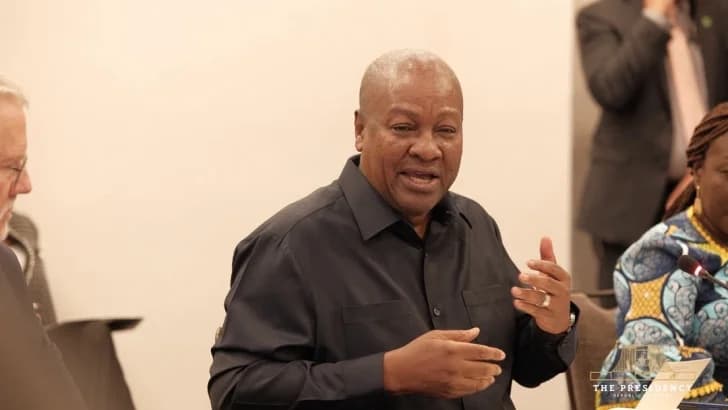
President John Dramani Mahama has announced a $200 million commitment from the International Finance Corporation (IFC) to develop a critical logistics corridor linking Volta Lake to northern Ghana and the Sahelian states. Disclosed during the United Nations General Assembly, the funding is designed to establish a 7-kilometer railway extension and enhance the Volta Ecological Zone to facilitate more efficient trade under the African Continental Free Trade Area (AfCFTA). IFC Managing Director Makhtar Diop specified that the investment includes $100 million for the Volta project and $50 million specifically for railway improvements, aiming to reduce the high cost of moving goods to landlocked neighbors like Burkina Faso. This infrastructure push comes as civil society groups, including the Chartered Institute of Project Analysts and Consultants (CIPAC), warn that the government must establish contingency reserves to shield such large-scale projects from the volatility of extractive sector revenues.
Simultaneously, Ghana’s road transport sector is undergoing significant price adjustments. Starting September 26, 2026, public transport fares will increase by 8% following negotiations between the Ministry of Transport and the Ghana Private Road Transport Union (GPRTU). While transport operators initially sought a 30% hike due to rising maintenance and fuel costs, they settled for the lower figure after the government promised a GH₵2 per litre intervention on diesel and further fuel price reductions. In contrast, the state-run Metro Mass Transit (MMT) Limited has confirmed it will maintain current fare levels to ensure affordability, despite operating with only 206 of its 418 buses and seeking government support for repairs and spare parts.
The domestic aviation industry is also facing pressure to reform its pricing structures. Transport Minister Joseph Bukari Nikpe recently urged airlines to reduce passenger fares following the implementation of import duty exemptions on aircraft parts. This appeal coincided with Africa World Airlines (AWA) unveiling a new 102-seater Embraer E190 aircraft aimed at boosting domestic connectivity. Industry analysts at CUTS International have noted that Ghanaian domestic fares—averaging between US$313 and US$450—remain significantly higher than those in Nigeria, South Africa, and India. They attribute these costs to high airport infrastructure charges, taxes, and the use of older aircraft which demand more expensive maintenance.
These combined developments highlight a pivotal moment for Ghana’s logistics and transport economy as the government attempts to balance long-term infrastructure investment with immediate cost-of-living concerns. While the IFC-funded corridor and new aviation capacity promise better regional integration, the private sector remains burdened by operational inefficiencies. CUTS International recently highlighted that port delays resulted in $60 million in demurrage payments last year alone. For the government’s "Big Push" infrastructure agenda to succeed, including the proposed Accra–Kumasi Expressway, stakeholders emphasize that policy must focus on reducing these hidden logistics costs while fostering a more competitive market environment across all transport modes.
Related topic
John Mahama: Latest News & Updates →
