••
President Mahama to List 10 State-Owned Enterprises on Ghana Stock Exchange Under "New Economy" Reform Plan
•2 min read•5 sources
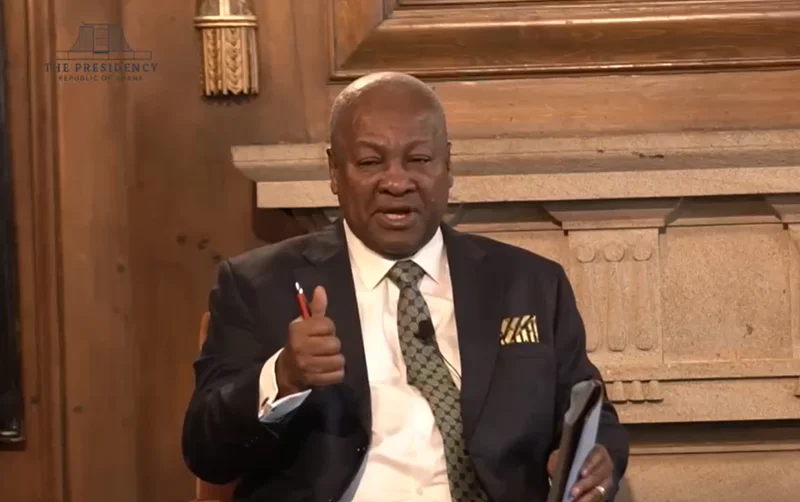
President John Dramani Mahama has announced a landmark decision to list 10 state-owned enterprises (SOEs) on the Ghana Stock Exchange (GSE) as part of a strategic move to insulate these entities from political interference and improve corporate governance. Speaking at the Council on Foreign Relations in New York during the UN General Assembly, the President emphasized that the move would transform management practices, making it significantly harder for successive governments to disrupt the operations of these vital institutions. This initiative is designed to offer investment opportunities not only to local Ghanaians but also to the diaspora, fostering a culture of public ownership and transparency in the management of state assets.
The President's announcement comes at a time when SOEs are showing signs of financial recovery. Historically, many state enterprises operated with guaranteed benefits despite significant losses; however, recent oversight by the State Interests and Governance Authority (SIGA) has led to a major turnaround. Mahama noted that the sector recently reported a combined net profit of nearly GH₵19.8 billion. By listing these firms, the government intends to build on this momentum, ensuring that management remains professional and independent while opening up new avenues for capital injection and private sector participation.
Complementing this structural reform, Finance Minister Dr. Cassiel Ato Forson has outlined the government's "New Economy" programme, which aims to shift the nation toward greater self-sufficiency. The programme focuses on enhancing local production and reducing Ghana's heavy reliance on imports, which is seen as a critical step in creating sustainable jobs for the youth. This policy framework seeks to empower domestic manufacturing and local enterprises, aligning with the President's vision of a more resilient and independent national economy that can withstand global market shocks.
However, experts and security analysts warn that internal reforms must be paired with robust economic intelligence to protect local industries. As China introduces zero-tariff policies for African exports, there are concerns that without a "local value retention law," Ghana might see illusory gains while losing substantive ownership of production chains to foreign entities. Integrating economic intelligence into national security frameworks is now being viewed as essential to safeguard the gains of the "New Economy" and ensure that the benefits of both local manufacturing and state enterprise reforms remain firmly within the hands of Ghanaians.
Related topic
John Mahama: Latest News & Updates →
