••
President Mahama Proposes Monthly National Sanitation Day as Ghana Launches Post-Flood Clean-Up Exercise
•3 min read•40 sources
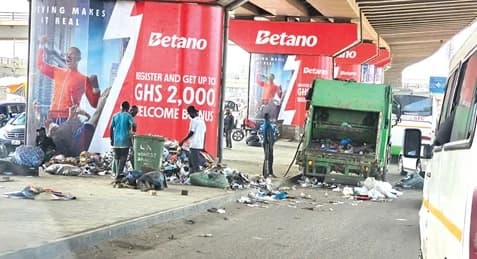
President John Dramani Mahama and Vice President Professor Jane Naana Opoku-Agyemang have spearheaded a massive two-day National General Cleaning Exercise across seven regions of Ghana, following the devastating floods of June 29 that resulted in numerous fatalities and significant property damage. The initiative, themed "Our Actions, Our Future: Cleaning Ghana after the Floods," involves a coordinated effort between the Ghana Armed Forces, local assemblies, and the public to desilt clogged drains and clear debris. To facilitate the exercise, the government mandated the closure of all shops and commercial establishments from 6:00 am to 1:00 pm on July 10 and 11, with security agencies enforcing compliance across the Greater Accra, Volta, Central, Western, Ashanti, and Eastern regions. The government has reportedly allocated approximately GH"150 million for immediate flood mitigation and emergency relief operations.
During an inspection of the Alajo and Tse Addo drainage systems, President Mahama expressed concern over the discovery of inappropriate waste, including paving blocks and furniture, inside the city's drains. He emphasized that "drains are not garbage instruments" and urged a fundamental shift in public attitudes toward waste disposal to prevent future disasters. Following the successful turnout on the first day, the President proposed institutionalizing a monthly national clean-up day, arguing that the current two-day exercise is insufficient to address the country's deep-seated sanitation challenges. This proposal has gained traction among local leaders, with Kumasi Mayor Richard Ofori Agyemang Boadi and Pig Farm Assembly Member Mohammed Awal advocating for legislation to make these monthly exercises compulsory for all citizens and institutions.
Supporting the technical response, the Ministry of Defence has announced that military and other security services will continue dredging major waterways even after the cleaning exercise concludes to ensure rainwater can flow effectively into wetlands. Deputy Defence Minister Ernest Brogya Genfi noted that while the initial clean-up is a vital first step, the volume of waste generated by recent flooding requires a sustained, long-term commitment. In the political sphere, the exercise has sparked debate over infrastructure investment; while the current administration focuses on immediate recovery, NPP hopeful Eugene Boakye Antwi defended successive government efforts, highlighting previous allocations of hundreds of millions of cedis toward drainage projects and calling for a non-partisan approach to long-term flood management.
As the exercise concludes, the Post-Flood Coordinating Team will assess the results and advise the presidency on further mitigation strategies. Public officials, including the Governor of the Bank of Ghana, Dr. Johnson Pandit Asiama, and various Members of Parliament, have stressed that the success of these initiatives depends on collective responsibility and the strict enforcement of sanitation laws. Moving forward, the government intends to utilize newly acquired specialized equipment for drainage maintenance, while emphasizing that infrastructure improvements must be matched by responsible community behavior to build a more resilient nation against the impacts of climate change and urbanization.
This story touches markets covered on Anansi Intelligence ↗.
More from politics
Continue exploring similar stories


