Ghana News AI
HomeBriefsAsk GhanaTopicsTools
•
•

Stay Informed

Get AI-curated news briefs from Ghana delivered to your inbox every morning. Free forever, no spam.

Explore

  • Home
  • Briefs
  • About

Categories

  • Politics
  • Business
  • Sports
  • Entertainment
  • Africa

Features

  • Analysis
  • Cedi Rates
  • Dollar to Cedi
  • Ghana Gold Price
  • BoG Policy Rate

Topics

  • Armed Forces Recruitment
  • WAEC Results & News
  • Nana Ama McBrown
  • NDC News
  • All Topics

Legal

  • Privacy Policy
  • Terms of Service
Ghana News AI© 2026. All rights reserved.
Made withfor Ghana
politics

Minister Agnes Naa Momo Lartey and Stakeholders Call for Digital Vigilance and Victim Protection in National Anti-Trafficking Strategy

1st August•3 min read•6 sources
Minister Agnes Naa Momo Lartey and Stakeholders Call for Digital Vigilance and Victim Protection in National Anti-Trafficking Strategy
  1. Home
  2. /Politics
  3. /Minister Agnes Naa Momo Lartey and Stakeholders Call for Digital Vigilance and Victim Protection in National Anti-Trafficking Strategy

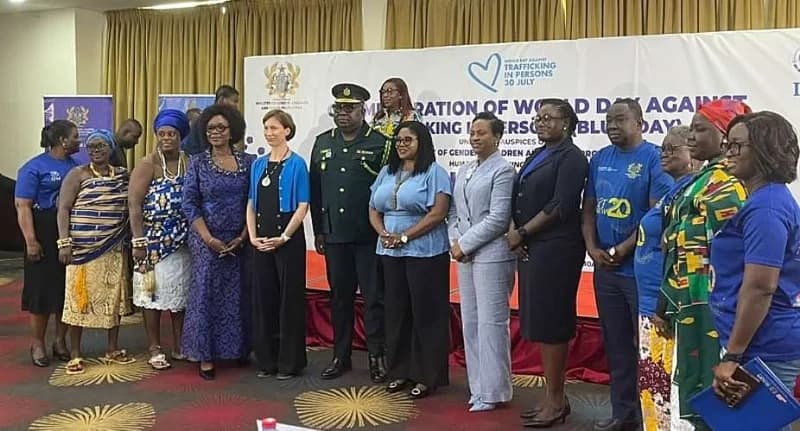
Ghana’s Minister for Gender, Children and Social Protection, Dr. Agnes Naa Momo Lartey, has called for heightened national vigilance to combat the evolving tactics of human traffickers, particularly the rising use of digital platforms for exploitation. Speaking at a symposium for the 2026 World Day Against Trafficking in Persons, Dr. Lartey noted that while the Human Trafficking Act of 2005 has provided a strong legal foundation for two decades, criminals are increasingly leveraging social media and online scams to recruit victims. Data from 2025 highlights the scale of the challenge, with 2,331 victims successfully rescued within a single year. The Minister emphasized that the current administration under President John Mahama remains committed to the three pillars of prevention, protection, and prosecution to safeguard vulnerable citizens.

Adding to the call for systemic reform, Deputy Superintendent of Immigration Justice Kudzo Normeshie, representing the International Centre for Safe Migration, urged the government to integrate victim protection directly into its ongoing operations against illegal mining, or galamsey. Normeshie argued that current anti-galamsey efforts focus heavily on environmental degradation and economic loss while often overlooking the human trafficking networks that thrive in remote mining districts. He cautioned that law enforcement actions can inadvertently displace trafficking networks without providing the necessary support systems, and he called for structured identification protocols and a stronger social welfare presence in mining-affected areas to restore the dignity of those exploited.

Furthermore, the International Justice Mission (IJM) has advocated for a more cohesive partnership between government bodies, civil society, and the media to sustain the fight against trafficking. Anita Budu, IJM’s West Africa Programme Director, stressed the importance of a coordinated national response that moves beyond disjointed institutional efforts. She outlined five key commitments for future strategy, including improved data sharing, embedding victim-centered approaches into the justice system, and amplifying the voices of survivors. Budu also lauded the role of the media in identifying victims and raising public awareness, which has directly led to successful rescue operations across the country.

As Ghana marks 20 years of formal anti-trafficking legislation, the consensus among stakeholders points toward a more holistic approach that addresses both new digital threats and established vulnerabilities in the extractive sectors. By strengthening partnerships through organizations like the Coalition of NGOs Against Child Trafficking and the Ghana Survivor Network, authorities aim to create a more resilient safety net. Moving forward, the government and its partners intend to focus on community-level reporting and the establishment of confidential channels to ensure that the progress made since 2005 is not undermined by the shifting landscape of modern exploitation.

Our Take

From the Team

Coming Soon

Our team will add key insights, trends, and actionable takeaways to help you stay informed faster.

This story touches markets covered on Anansi Intelligence ↗.

Related topic

John Mahama: Latest News & Updates →

More from politics

Continue exploring similar stories

Johnson Akuamoah Asiedu — Former Auditor-General
politics|1st August

President Mahama Leads National Relief Efforts as MPs Face Conduct Inquiries and Institutional Reforms Take Center Stage

President John Mahama has presided over a significant national relief effort at the Jubilee House, presenting GH"1.87 million in compensation to the families of victims from the August 2026 military helicopter crash. The package includes GH"1 million trust funds for each surviving child, supported by a GH"10.16 million Children’s Support Fund bolstered by public donations. This executive commitment to social welfare is mirrored in the agricultural sector, where Samuel Nartey George, MP for Ningo-Prampram and Minister for Communication, Digital Technology and Innovations, distributed 3,500 bags of fertilizer to local farmers under the "Feed Ghana" program. George noted that these initiatives are vital for enhancing food security and supporting rural livelihoods under the current administration. In the legislative sphere, public accountability and personal conduct have come under intense scrutiny. Ahafo Ano South East MP Yakubu Mohammed issued a public apology for inappropriate remarks made to a schoolgirl during a parliamentary visit, acknowledging that his "cultural jest" regarding marriage undermined the dignity of children and the purpose of the educational tour. Simultaneously, the government is monitoring the legal status of Asante Akim North MP Ohene Kwame Frimpong, who is currently detained in Amsterdam pending a U.S. extradition order. Foreign Affairs Minister Samuel Okudzeto Ablakwa confirmed that the state is providing consular assistance to ensure Frimpong receives due process, highlighting the complex legal challenges facing members of the House. Institutional integrity remains a focal point as several government bodies released major reports. Outgoing Auditor-General Johnson Akuamoah Asiedu submitted the 2025 audit reports to Parliament, calling for urgent action on irregularities in sea defense projects and public health management. The National Labour Commission also revealed that it has adjudicated 13,113 cases in the past two decades, with 58% centered on unfair dismissals. Security governance is also being reinforced, with Major General Anthony Ntem of the Ghana Boundary Commission completing a five-day assessment of the Ghana-Togo border to address infrastructure and telecommunications gaps. These efforts are complemented by the National Biosafety Authority’s fifth report, which marks a significant transition to a robust regulatory framework for GMOs in Ghana. Regionally, the political landscape is marked by increasing volatility and significant shifts in leadership aspirations. Burkina Faso has been added to a human rights watchlist following a severe crackdown on over 1,000 civil society organizations by the military government. In Uganda, the health crisis of opposition leader Kizza Besigye, currently unconscious during a treason trial, has sparked international concern over democratic space. Furthermore, former Senegalese President Macky Sall’s bid for the UN Secretary-General position has stumbled following a disappointing Security Council straw poll. As Ghana navigates these internal and external dynamics, the focus remains on balancing economic development with the high standards of public service and regional stability.

Odeneho Kwaku AppiahOdeneho Kwaku Appiah
politics|1st August

NPP Regional Chairmanship Aspirants Pledge Reorganization and Unity to Reclaim Power in 2028

The New Patriotic Party (NPP) has entered a critical phase of internal reorganization as aspirants for regional chairmanship positions begin intensive campaigns across Ghana. Following the party's defeat in the 2024 general elections to the current President, John Mahama of the National Democratic Congress (NDC), key figures in the Ashanti and Northern regions are positioning themselves to lead the charge for recovery. These regional contests are viewed by political analysts as pivotal for rebuilding party structures and reconciling disgruntled members before the 2028 electoral cycle begins in earnest. In the Northern Region, Alhaji Inusah Amadu, popularly known as "Dagomba Boy," has officially declared his intention to run for the regional chairmanship for the third time. Amadu’s campaign centers on a pledge to reunite a fractured regional party and reclaim parliamentary seats lost in the previous election, most notably the Yendi constituency. He emphasized that rebuilding public confidence and strengthening grassroots connections are the primary requirements for restoring the party’s dominance in the north. Facing competition from two other contenders, Amadu argues that his previous experience and local standing are essential to addressing the party's disappointing 2024 performance. Simultaneously, the race in the Ashanti Region—the NPP’s most significant electoral stronghold—has intensified between Odeneho Kwaku Appiah, known as COKA, and Dr. Henry Kwabena Kokofu, the former CEO of the Environmental Protection Agency. Appiah is currently touring constituencies and utilizing media platforms to engage delegates, stressing that his leadership would focus on creating robust party structures to support the 2028 presidential bid of Dr. Mahamudu Bawumia. With the regional executive elections scheduled for August 15, 2026, Appiah is leveraging his strong grassroots support to present himself as the candidate capable of ensuring the NPP remains a formidable force in its heartland. These regional elections serve as a vital bellwether for the NPP’s national prospects and its ability to function as an effective opposition. As the party transitions from the administration of former President Nana Akufo-Addo to a new leadership era, the success of these regional aspirants in fostering unity will be critical. The outcomes of the upcoming polls in the Ashanti and Northern regions will likely dictate the party’s internal cohesion and its readiness to challenge President Mahama’s administration in the next general election.

Emmanuel Armah-Kofi Buah (right), Minister of Lands and Natural Resources, interacting with Robert Makila Sambian, CEO, VALCO
politics|1st August

President Mahama Spearheads Industrial Revival with Tema Oil Refinery Expansion and Sweeping Cocoa Sector Reforms

President John Dramani Mahama has commissioned the refurbished Crude Distillation Unit (CDU) of the Tema Oil Refinery (TOR), signaling a decisive step toward industrial self-reliance and energy security. During the ceremony, the President revealed that the refinery has successfully processed one million barrels of locally produced crude oil, achieving this operational milestone without direct government financial intervention. To further bolster the facility, President Mahama directed the Minister for Energy and Green Transition, John Jinapor, to develop a strategic plan to increase TOR’s production capacity to 100,000 barrels per day. The President emphasized that the goal is to eliminate political interference and transform the refinery into a premier petroleum hub for West Africa, facilitating regional trade under the African Continental Free Trade Area (AfCFTA) while creating sustainable jobs.\n\nIn parallel with energy sector improvements, the administration is moving to modernize other vital state-owned assets. Minister for Lands and Natural Resources, Emmanuel Armah-Kofi Buah, recently visited the Volta Aluminium Company (VALCO) to assure workers that the smelter is not for sale, despite rumors of privatization. While the government is seeking a strategic investor to provide the $700 million needed for equipment modernization and to address a $250 million debt, the Minister maintained that VALCO will remain a cornerstone of the national industrialization agenda. This commitment to state oversight has been met with calls for greater transparency from the Minority in Parliament, particularly regarding the transfer of the Damang Mine. Ranking Member Kwaku Ampratwum-Sarpong argued that the state should have leveraged the transfer to increase its equity from 10% to 30% to secure better long-term revenue for Ghanaians.\n\nFurthering the government’s value-addition strategy, Parliament has passed the landmark Ghana Cocoa Board Bill, 2026. This legislation aims to revolutionize the cocoa sector by shifting away from international syndicated loans toward a local funding model. The bill mandates that at least 50% of Ghana's cocoa be processed domestically and guarantees that farmers receive a minimum of 70% of the free-on-board (FOB) price. Combined with the President's new incentives for businesses operating 24-hour shifts, these reforms reflect a coordinated effort to transition Ghana from an exporter of raw materials to an industrial powerhouse. These developments collectively underscore a political focus on strengthening state enterprises and maximizing the national benefit from Ghana's natural resources.

FIFA Abandons World Cup Stake Sale Amid Governance Crisis as Hamas Agrees to Phased Gaza Peace Deal
politics|1st August

FIFA Abandons World Cup Stake Sale Amid Governance Crisis as Hamas Agrees to Phased Gaza Peace Deal

Global political and institutional governance has been marked by two significant developments involving a major diplomatic breakthrough in the Middle East and a substantial reversal at FIFA. In a move announced by U.S. President Donald Trump, Hamas has agreed to a conditional disarmament in Gaza as part of a multi-phase peace initiative aimed at concluding the long-standing conflict. Simultaneously, FIFA President Gianni Infantino has officially scrapped a controversial proposal to sell private stakes in the men’s and women’s World Cup tournaments following an unprecedented backlash from regional confederations and high-profile internal resignations. Both events highlight a shift toward prioritizing institutional stability and traditional governance structures over radical commercial or military strategies. The agreement regarding Gaza represents a potential turning point for regional stability. Under the initiative facilitated by the Board of Peace, Hamas is set to relinquish its weaponry, though negotiator Ghazi Hamad emphasized that this is strictly contingent on Israel upholding its end of the truce. Requirements for Israel include a total cessation of attacks on Palestinians and the withdrawal of military forces from the territory. The disarmament process is expected to be phased, starting with the handover of small arms by the Gaza police, while the decommissioning of heavy weaponry could take between 200 and 350 days. International observers remain cautiously optimistic, noting that the plan also envisions the establishment of a new Palestinian governing body and significantly improved humanitarian conditions. In the world of international sports governance, the collapse of FIFA’s private investment initiative has left the federation reeling. The plan to sell stakes in flagship competitions faced fierce opposition from major bodies, including UEFA and Concacaf, which threatened to boycott future World Cups. The dissent extended into FIFA’s own administration, leading to resignations from senior figures such as advisor Carlos Cordeiro and the federation's chief operating officer. Opponents argued that the move threatened the public-centric nature of the sport in favor of corporate interests. A consolidated bloc of over 136 votes against the measure made its passage impossible, forcing President Infantino to acknowledge the project’s divisive nature. As these situations unfold, the focus for both global diplomats and sports administrators has shifted toward reconciliation and rebuilding trust. Infantino is now under significant pressure to mend fractured relationships with regional confederations ahead of his re-election bid at the FIFA Congress in March 2025. In the Middle East, the success of the peace plan hinges on the rigorous implementation of the agreed-upon phases and the management of regional tensions involving actors such as Iran. Both developments highlight the complexities of modern governance, where unilateral initiatives—whether commercial or military—increasingly face resistance from established stakeholders and international coalitions.

All
africa
business
education
entertainment
health
news
politics
sports
technology