••
Ghana Overhauls Agricultural Strategy Amid Trade Disruptions and Growing Farmer Grievances
•3 min read•20 sources
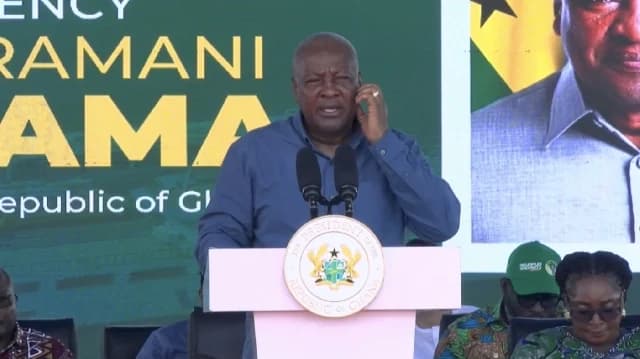
President John Dramani Mahama has announced a significant shift in Ghana's agricultural policy, transitioning from subsidized to free fertilizer distribution for the upcoming farming season. This move, unveiled during the commissioning of a new Farmer Service Centre in Kwahu Afram Plains South, is intended to alleviate the financial burden on smallholder farmers following a period of food gluts and price volatility that resulted in substantial losses. The new centre is envisioned as a transformative hub, providing modern equipment, training, and market linkages to boost productivity and reduce post-harvest losses, an initiative that has received strong support from local youth groups looking for economic opportunities in the district.
However, the agricultural sector faces immediate challenges from regional trade disruptions and historical policy shortcomings. Dr. Peter Boamah Otokunor, Director of Presidential Initiatives in Agriculture and Agribusiness, recently attributed a severe tomato shortage to an over-reliance on imports, noting that Ghana typically imports 75% of its dry-season tomato supply from Burkina Faso. Following a recent export ban by Burkinabe authorities, the Ministry of Trade has begun diplomatic engagements to find a mutually beneficial solution. In tandem, the government is rolling out the 'Feed Ghana' and 'Feed the Industry' programs, which aim to cultivate 70,000 hectares through enhanced irrigation schemes to ensure domestic self-sufficiency and strengthen agro-processing.
While these initiatives are being deployed, grassroots discontent remains high among cocoa producers. In Darso, located in Offinso North, cocoa farmers braved torrential rains to petition the Minority Caucus in Parliament regarding delayed payments and stagnant producer prices. Minority Chief Whip Frank Annoh-Dompreh criticized the current management of the cocoa industry, calling for greater transparency from the Ghana Cocoa Board as farmers report they have not received payments since October. This pressure from the cocoa belt highlights a growing demand for accountability and immediate financial relief for rural workers who anchor the nation's economy.
On a regional level, the push for sustainability is being met with calls for targeted infrastructure investment and environmental oversight. In Savelugu, MP Hajia Fatahiya Abdul Aziz is rallying support for the restoration of the Libga Dam Cluster to empower over 5,000 women farmers facing water shortages. Simultaneously, the National Development Planning Commission (NDPC) has warned that persistent poverty in the northern regions could lead to long-term national economic decline if not addressed through better district-level management. Furthermore, the National Association of Sand and Stone Workers and Tipper Truck Users (NASSWOTTU) is urging stricter compliance with the Minerals and Mining Act to prevent unregulated activities from further degrading essential farmlands.
As Ghana navigates these complex agricultural and economic hurdles, the focus remains on balancing immediate relief measures with long-term structural changes. From securing regional trade agreements to investing in localized irrigation and ensuring fair compensation for cocoa farmers, the path forward requires a coordinated effort between the government and the private sector. The successful implementation of the '24-Hour Economy' strategy and agricultural value chain enhancements will be critical in stabilizing food prices and maintaining the country's economic trajectory in the face of external market shocks.
This story touches markets covered on Anansi Intelligence ↗.
More from politics
Continue exploring similar stories


