••
Ghana Intensifies Environmental Stewardship with Nationwide Clean-Up and Educational Initiatives Following Recent Floods
•3 min read•11 sources
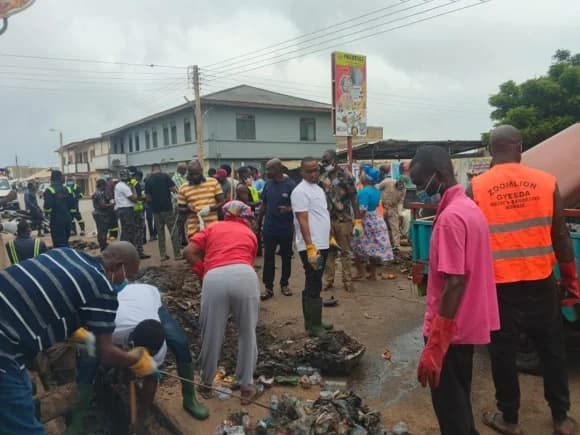
In a coordinated response to the devastating floods of June 29, Ghana has launched a massive multi-sectoral environmental campaign aimed at restoring sanitation and building long-term infrastructure resilience. President John Dramani Mahama initiated the two-day National General Cleaning Exercise, themed "Our Actions, Our Future: Cleaning Ghana after the Floods," which saw participation from state institutions, corporate bodies, and the military. The exercise achieved significant results across the country, particularly in Accra, where high-population areas saw desilted drains and the clearing of major bottlenecks such as the Alajo drain. In the Volta Region alone, the initiative successfully evacuated 200 tonnes of waste and included a massive tree-planting drive along the Ho-Sokode road, supported by resources from Zoomlion Ghana Limited.
Complementing these physical cleaning efforts, the Christian Council of Ghana (CCG) has moved to institutionalize environmental awareness through a new partnership with the Ghana Broadcasting Corporation (GBC). On July 14, 2026, the CCG donated 500 copies of its educational booklet, "A Clean Environment – Our Responsibility," to the national broadcaster. Rev. Dr. Cyril Fayose, General Secretary of the CCG, emphasized that the donation is part of the Environmental Care and Cleanliness (ECC) Programme designed to foster civic responsibility. GBC Director-General Professor Amin Alhassan committed the corporation’s platforms to amplifying this campaign, noting that the Church's involvement is critical in shifting public attitudes toward sanitation and flood prevention.
Beyond immediate cleaning and education, officials are calling for stricter enforcement and modern technical solutions to Ghana’s waste crisis. TDC Ghana Limited announced that it will begin demolishing illegal structures and shipping containers encroaching on the Sakumono Ramsar Site effective July 15, 2026. Managing Director Courage Kweku Makafui Nunekpeku warned that these encroachments destroy vital rainwater retention basins, directly increasing flooding risks in surrounding communities. Simultaneously, environmental researcher Dr. Ted Yemoh Annang from the University of Ghana urged the government to pivot toward composting. He noted that over 75% of Ghana’s waste is biodegradable and argued that establishing compost plants would alleviate the pressure on rapidly filling landfill sites while providing organic manure for the agricultural sector.
The nationwide drive has also seen strong calls for private sector involvement and youth empowerment. Anthony Kwasi Sarpong, Commissioner-General of the Ghana Revenue Authority (GRA), urged businesses to creatively support youth-led sanitation initiatives, suggesting that resource provision to local groups is essential for the sustainability of these efforts. As state agencies like the Volta River Authority (VRA), Bui Power Authority, and the Minerals Income Investment Fund (MIIF) continue to integrate environmental stewardship into their corporate mandates, the government aims to transform these periodic exercises into a permanent culture of cleanliness. The success of these combined efforts—spanning enforcement, education, and community action—is viewed as a vital step in mitigating the perennial threat of flooding and improving the nation’s overall public health.
This story touches markets covered on Anansi Intelligence ↗.
Related topic
Ghana Customs Recruitment: Latest News & Updates →More from africa
Continue exploring similar stories


