••
Ghana’s Economic Recovery Faces Political Headwinds as Government Tackles Galamsey and Infrastructure Backlogs
•3 min read•32 sources
President John Dramani Mahama has declared that Ghana is witnessing the first signs of economic recovery, reporting a shift toward macroeconomic stabilization following what he described as a fragile environment inherited in January 2025. Speaking during his 2026 Eid-ul-Adha address, the President highlighted that his administration's focus on restoring confidence and promoting job creation is beginning to yield results. Key initiatives cited include the recruitment of 6,000 Arabic teachers under the Youth Employment Agency (YEA) and a GH¢100 million budgetary allocation for the nation’s ten technical universities to bolster innovation and technical vocational training (TVET). Despite these reports of progress, the Finance Ministry noted a significant milestone as Ghana achieved a 'Moderate Risk of Debt Distress' status for the first time in 13 years, marking a critical step in the ongoing Extended Credit Facility (ECF) program with the IMF.
However, this narrative of recovery has been met with sharp resistance in Parliament, where tensions recently erupted over a proposed 0.75% fee on Mobile Money (MoMo) wallet-to-bank transfers. Minority Leader Alexander Afenyo-Markin characterized the charge as a "backdoor E-Levy," accusing the government of reintroducing controversial taxes under a new guise. This led to a heated exchange with Majority Leader Mahama Ayariga, who called for the remarks to be expunged from the record to maintain parliamentary decorum. While the Bank of Ghana has since suspended the MoMo charge for further consultations, the Minority continues to press the government on unfulfilled campaign promises regarding youth employment and agricultural support, while MP Dr. Othniel Kwainoe defended the Bank of Ghana’s recent financial statements against claims of insolvency, attributing negative equity to necessary monetary policy adjustments.
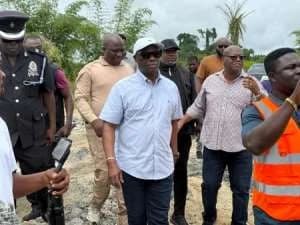
On the environmental front, the government has intensified its crackdown on illegal mining, known as galamsey, through a massive land reclamation drive. Lands Minister Emmanuel Armah-Kofi Buah is currently spearheading an 800-acre restoration project in Nkroful to reverse damage to the River Subri and surrounding landscapes. Parallel to these efforts, the Environmental Protection Authority (EPA) has escalated enforcement, recently arresting the PRO of Gyetey Gye Nyame Mining for operating without permits and shutting down Gan-He Company Limited for persistent water pollution. While some experts, like Professor Martin Oteng-Ababio, argue that a state of emergency is not a long-term solution, the government maintains that safeguarding water bodies remains a non-negotiable national priority.
Simultaneously, the administration is grappling with urgent infrastructure and urban planning crises. In the Greater Accra Region, Minister Linda Ocloo and traditional leaders in Weija have authorized the demolition of structures obstructing waterways to mitigate chronic flooding, a move supported by NADMO to prevent the recurrence of past disasters. At the same time, the Public Interest and Accountability Committee (PIAC) is investigating long-delayed petroleum-funded projects, such as the Ehi–Dzodze road project in the Volta Region, which has remained stalled since 2011. As the government attempts to balance these local grievances with broader economic goals, the successful completion of stalled GETFund projects at Kpedze SHS and telecom expansions in Agotime-Ziope signal a push toward fulfilling development commitments. The coming months will be a test of whether these stabilization efforts can effectively address the manufacturing sector's calls for protection against cheap imports and the public's demand for tangible infrastructure improvements.
This story touches markets covered on Anansi Intelligence ↗.
Live rates
Bank of Ghana policy rate →More from politics
Continue exploring similar stories


