••
Ghana Accelerates Agricultural Modernization through Belarus Machinery Deal and Afarinick’s Large-Scale Cocoa Distribution
•3 min read•27 sources
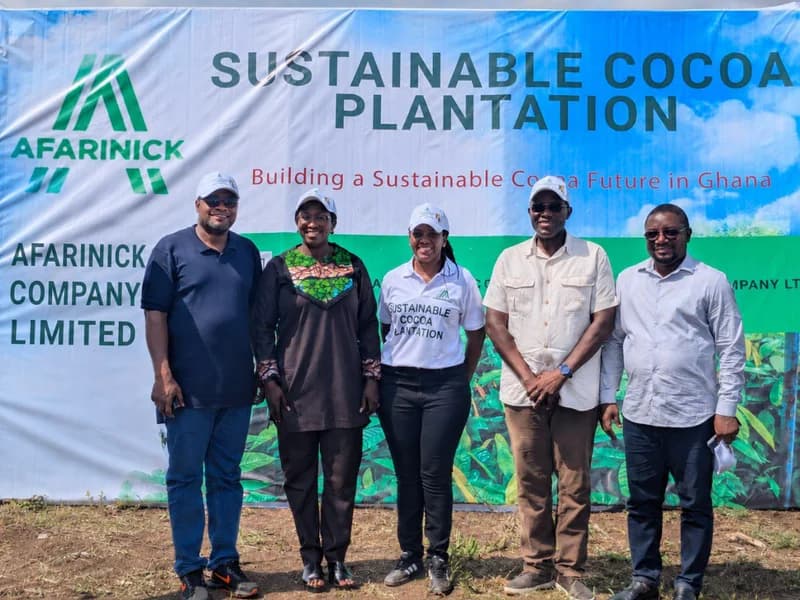
Ghana is significantly scaling up its agricultural modernization efforts through major international partnerships and large-scale private-sector investments. President John Dramani Mahama recently announced the procurement of 1,840 pieces of agricultural machinery from Belarus as part of the "Feed Ghana Programme." This initiative, aimed at enhancing mechanization across the country, will see the equipment deployed to newly established Farmer Service Centres to improve productivity and food security. Simultaneously, the private sector is driving expansion in the cocoa sector, notably in the Volta Region, where Afarinick Company Limited (ACL) has distributed over 400,000 improved, disease-resistant cocoa seedlings to local farmers to enhance their livelihoods.
The agreement with Belarus, finalized during the Ghana-Belarus Business Forum in Minsk, extends beyond equipment supply to broader economic cooperation. President Mahama emphasized that Belarus’s expertise in agricultural machinery, fertilizers, and agro-industrial systems is crucial for Ghana’s development agenda. The partnership also invites Belarusian investment in mining, renewable energy, and healthcare, leveraging Ghana's strategic position as a gateway to the 1.3 billion-strong African Continental Free Trade Area (AfCFTA). To support this, the government is highlighting its $10 billion "Big Push" Infrastructure Programme, designed to enhance connectivity and reduce the cost of doing business for international investors while ensuring a stable and transparent regulatory environment.
On the domestic front, Afarinick Company Limited’s initiative in Kpando marks a significant milestone for the Volta Region, positioning it as a new frontier for cocoa production. The distribution took place at ACL’s 2,000-acre sustainable commercial cocoa plantation—currently the largest in Ghana—which features a state-of-the-art nursery capable of producing two million seedlings annually. Members of Parliament and agricultural stakeholders have praised the project for providing high-quality planting materials that promise higher yields and better resilience to climate change. This effort aligns with national goals to expand cocoa acreage and rehabilitate existing farms to boost foreign exchange earnings and rural development.
Further strengthening the local agricultural value chain, efforts are underway to revive the historical Pwalugu Northern Star Tomato Factory in the Upper East Region. Talensi District Chief Executive, John Millim Nabwomya, is engaging with Nutrifood Ghana Limited to rehabilitate the facility, focusing on securing a sustainable raw material supply through the Tono Irrigation Scheme. Meanwhile, in the South Tongu District, the "Nkoko Nkitinkiti" initiative has provided poultry birds to over 200 residents to reduce dependence on imported poultry and improve local food security. These localized efforts are being complemented by a national call from the JoyBusiness AgriBusiness Month to protect Ghana’s indigenous food systems and traditional seed varieties, which are essential for long-term biodiversity.
These developments collectively signal a strategic shift from raw material exports toward value addition and industrial mechanization. By combining international technology transfers with private-sector-led seedling distribution and the revival of dormant processing factories, Ghana aims to build a more resilient and self-sufficient agricultural economy. Moving forward, the success of these initiatives will depend on sustained private-sector collaboration, the adherence to biosecurity protocols in poultry farming, and the effective deployment of new machinery to serve smallholder farmers across the nation's 16 regions.
This story touches markets covered on Anansi Intelligence ↗.
Related topic
John Mahama: Latest News & Updates →Live rates
Dollar to cedi rate →More from business
Continue exploring similar stories


