••
President Mahama and Finance Minister Ato Forson Outline $1.6 Billion 'New Economy' Strategy and SOE Reform
•3 min read•21 sources
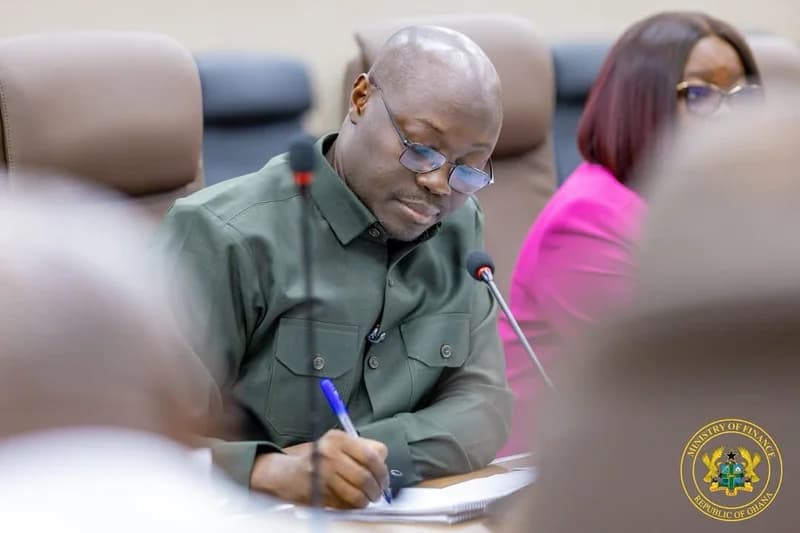
President John Mahama and Finance Minister Dr. Cassiel Ato Forson have unveiled a comprehensive economic roadmap designed to transition Ghana from an import-dependent nation to a production-led 'New Economy.' Speaking at high-level engagements including the UN General Assembly and meetings with industry leaders, the administration outlined a multi-billion dollar investment plan and radical governance reforms. Central to this strategy is the government’s 'New Economy' programme, slated for the 2027 Budget, which aims to allocate approximately US$1.6 billion—roughly one percent of GDP—toward strategic sectors such as commercial agriculture, mining value addition, energy, and transport infrastructure. Dr. Forson emphasized that 'every import is an opportunity' to produce locally, citing gas-to-power initiatives and the Western Railway Line as critical projects to bolster domestic industrial capacity.
To complement this industrial push, President Mahama announced plans to list 10 state-owned enterprises (SOEs) on the Ghana Stock Exchange (GSE). This initiative is intended to enhance corporate governance, minimize political interference, and ensure financial accountability. The President noted that the listings would provide a platform for broader public ownership, allowing both domestic citizens and the diaspora to invest in state assets. By involving private investors, the government aims to transform management structures and end the practice of SOEs granting salary increments and bonuses while incurring financial losses. This move follows reports from the State Interests and Governance Authority highlighting the untapped economic potential of these enterprises.
Parallel to these reforms, the government is making a strategic appeal to the Ghanaian diaspora to shift from traditional remittances to direct capital investment. While remittances reached a record US$7.8 billion in 2025—accounting for six percent of GDP—President Mahama and Vice President Professor Jane Opoku-Agyemang have urged Ghanaians abroad to channel these funds into industrialization and the 24-hour economy. The administration is developing frameworks to facilitate safe investment avenues, viewing the diaspora's skills and resources as essential for national development. This call for private-sector-led growth was echoed by Alan Kyerematen, Executive Director of CENSADEV, who advocated for institutionalized public-private dialogues and a transition away from government dependency to achieve lasting currency stability.
Looking inward, the administration is also focusing on the 24-Hour Economy Markets initiative, which seeks to modernize traditional markets that currently account for 60% of retail sales. By improving sanitation, infrastructure, and formalizing informal traders, the initiative aims to create 24-hour trading hubs that stimulate local economic activity. Furthermore, Deputy Director of the Youth Employment Agency, Nii Tetteh Laryea Cyril, underscored the importance of ending the 'raw material export cycle' by processing resources like cocoa domestically. Together, these initiatives represent a unified effort to drive industrialization, increase non-traditional export revenue, and create sustainable jobs for the Ghanaian workforce through a mix of state reform and private sector empowerment.
Related topic
John Mahama: Latest News & Updates →Live rates
Dollar to cedi rate →
