••
Mahama Convenes Emergency Cabinet Meeting Over Fuel Surge as Kwahu Business Forum Highlights Economic Reforms
•3 min read•36 sources
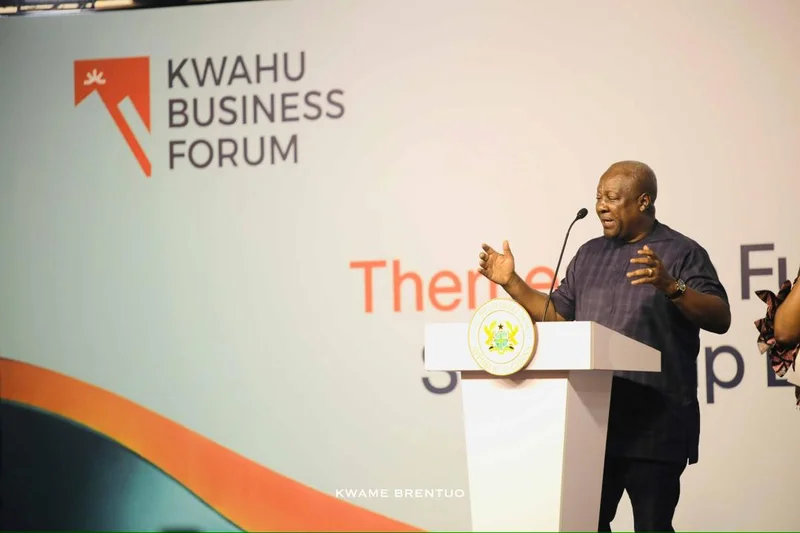
President John Dramani Mahama has taken center stage at the 2026 Kwahu Business Forum to address pressing national issues, most notably a sharp surge in petroleum prices triggered by the ongoing conflict in Iran. As of April 1, 2026, petrol prices have risen by 15% to GH"13.30 per litre, while diesel has jumped 19% to GH"17.10 per litre. In response, the President announced an emergency Cabinet meeting to review the petroleum pricing framework, specifically targeting adjustments to taxes and margins to alleviate the financial burden on households and businesses. Despite the global volatility, Mahama reassured Ghanaians that the nation maintains a six-week petroleum reserve and emphasized that the economy remains resilient enough to withstand external shocks.
Beyond immediate price stabilization, the President outlined significant progress in the energy sector, including the restructuring of a $1.7 billion debt owed to Independent Power Producers (IPPs). Under a new agreement, IPPs have accepted a 20% "haircut" on outstanding debt, coupled with a structured repayment plan intended to restore investor confidence. Complementing these financial maneuvers are operational reforms at the Electricity Company of Ghana (ECG). Mahama criticized past procurement inefficiencies—such as the purchase of non-essential items over critical infrastructure like transformers—and signaled a shift toward management practices that can better support Ghana’s expanding urban power needs.
The forum also served as a platform for major agricultural and infrastructure announcements. The President unveiled plans for a 60-hectare irrigation facility dedicated to year-round tomato cultivation, a move designed to stabilize supply and reduce post-harvest losses for farmers. However, the administration’s infrastructure record faced scrutiny from the opposition. Kofi Tonto, an aide to NPP presidential candidate Dr. Mahamudu Bawumia, raised alarms over the Accra-Kumasi dualization project, alleging that the remaining 34% of the work is now projected to cost GH"6 billion—triple the GH"2 billion spent on the first 64%. Mahama defended his administration’s approach to public works, asserting that contracts under the "Big Push" initiative are awarded based on technical capacity rather than political affiliation.
The event was not without its share of political friction and civil discourse. Minority Leader Alexander Afenyo-Markin and Deputy Minority Whip Jerry Ahmed Shaib criticized the government for failing to adequately consult the private sector, arguing that high taxes and restrictive lending continue to stifle small and medium enterprises (SMEs). In contrast, Chief Justice Paul Baffoe-Bonnie underscored the judiciary's role as the "engine of growth," advocating for faster contract enforcement to bolster investor trust. The forum also saw a brief interruption when a young man staged a placard protest regarding ADB Bank’s unfulfilled commitments, an incident the President acknowledged as a testament to Ghana’s commitment to free speech. The festivities were further marked by a courtesy visit from former President Nana Addo Dankwa Akufo-Addo, maintaining a long-standing tradition of political leadership participating in the Kwahu Easter celebrations.
This story touches markets covered on Anansi Intelligence ↗.
Related topic
NPP (New Patriotic Party): Latest News →More from politics
Continue exploring similar stories


