••
Government Vows Grid Modernization After Akosombo Fire as Minority Demands Transparency on Energy Levies
•3 min read•21 sources
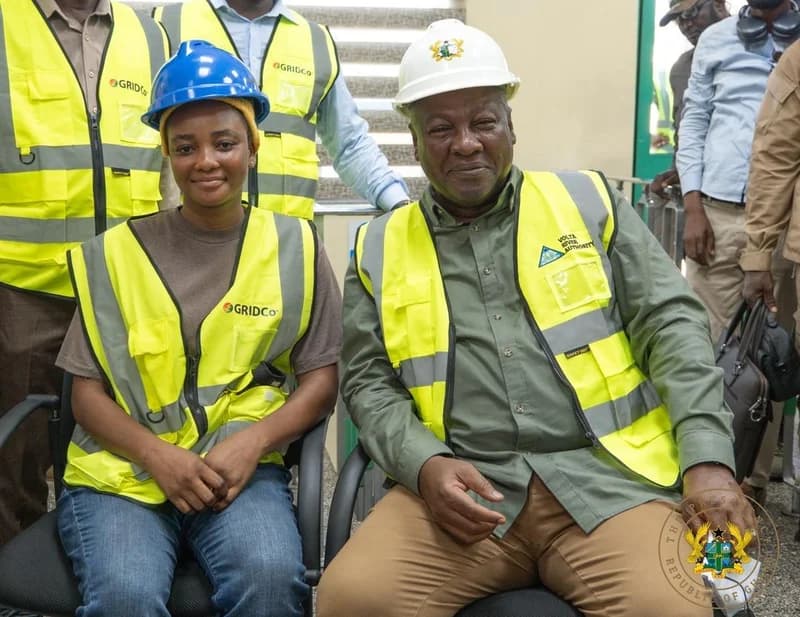
President John Dramani Mahama has announced a comprehensive plan to modernize Ghana’s power infrastructure following a major fire at the Akosombo GRIDCo substation switchyard. The incident, which caused significant power outages and disrupted over 1,000 megawatts of electricity, has prompted the government to move toward building a state-of-the-art power control center. During a visit to the site—arriving via a newly commissioned Ghana Air Force Airbus H175 helicopter—President Mahama praised the swift response of the Volta River Authority (VRA) and technical teams. He highlighted the disaster as an opportunity to implement advanced monitoring technology and artificial intelligence to ensure system redundancy and prevent future nationwide disruptions.
Amidst the recovery efforts, the Ministry of Energy has moved to dismiss claims of a structural generation deficit, characterizing such allegations as misleading. Energy Ministry spokesperson Richmond Rockson and Minister John Jinapor emphasized that Ghana’s installed capacity of approximately 6,000 megawatts remains well above the peak demand of 4,400 megawatts. They maintained that recent outages were the direct result of the Akosombo fire rather than a lack of supply. However, this narrative is being challenged by Michael Kwasi Aidoo, a Member of Parliament on the Energy Committee, who warned that installed capacity does not equate to available power. Aidoo argued that several plants are underperforming due to gas supply inconsistencies and investment gaps in the transmission network, leaving the grid inherently vulnerable.
The power situation has also ignited a fresh political battle over financial transparency. Habib Iddrisu, the First Deputy Minority Whip and MP for Tolon, has formally invoked the Right to Information (RTI) Act to demand a detailed accounting of billions of cedis collected under the Energy Sector Levies Act. Iddrisu cited a failure by the Ministry of Energy and Green Transition to submit mandatory annual reports to Parliament since March 2026. The Minority is demanding a comprehensive breakdown of revenue and expenditures within 14 days, expressing concern over how these funds are being managed while the energy sector continues to face infrastructure challenges.
Beyond the political and technical debate, the restoration efforts have seen notable humanitarian and institutional responses. President Mahama recommended automatic employment for a female National Service Scheme (NSS) worker who excelled during the emergency, while MTN Ghana donated one million Ghana cedis in airtime and data to the technical teams. Concurrently, the VRA has issued a stern warning against development within 280 feet of the Volta River, stating no compensation will be provided for encroachers as part of its Emergency Preparedness Plan. As the government pushes for a decentralized and modernized grid, experts like Justice Ohene-Akoto have urged the Electricity Company of Ghana to adopt more innovative upgrade methods to avoid further intermittent blackouts during this critical recovery phase.
This story touches markets covered on Anansi Intelligence ↗.
Related topic
John Mahama: Latest News & Updates →More from politics
Continue exploring similar stories


