••
Mahama Administration’s 24-Hour Economy Policy Faces Parliamentary Scrutiny Amid Broader Sector Reforms
•3 min read•13 sources
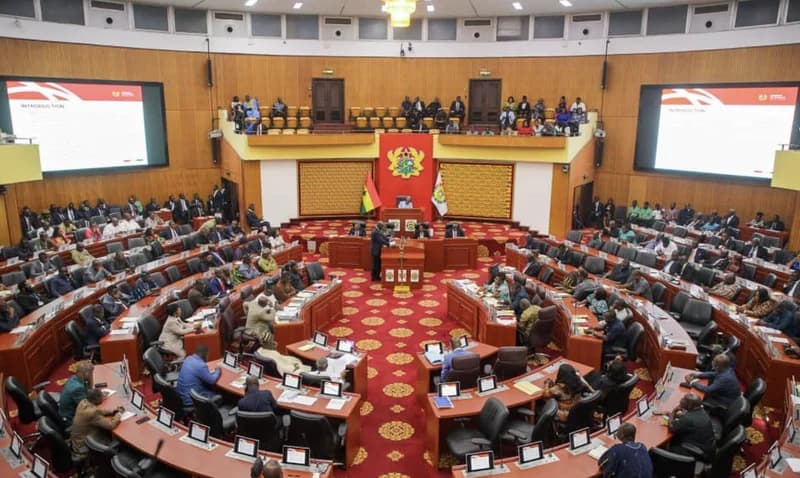
The Ghanaian Parliament has become a focal point of intense debate as the Mahama administration seeks to codify its flagship 24-hour economy policy through the establishment of a dedicated 24-Hour Economy Authority. Opposition members, led by Damongo MP Samuel Abu Jinapor, have criticized the rollout as ineffective, labeling it a 'deception' nearly a year into the government’s tenure. Jinapor noted that the promised three-shift work system remains largely unimplemented, with the Office of the Speaker of Parliament being the only notable exception. He argued that instead of creating a new authority, which he claims would primarily benefit political appointees, the government should utilize existing agencies like the Ghana Export Promotion Authority to manage the policy.
In defense of the bill, Attah Issah, the MP for Sagnarigu, emphasized that the 24-hour economy is a complex, multi-sectoral initiative that necessitates a legally backed institution. Issah argued that a mere administrative secretariat would lack the budgetary allocation and legal capacity required to coordinate effectively across various ministries. According to Issah, the Authority is essential for ensuring accountability and compliance, providing the necessary institutional framework that current ministries are not equipped to handle independently. This clash highlights the growing political tension over the government's ability to fulfill its central campaign promises regarding youth employment.
Simultaneously, the Ministry of Transport has unveiled a multi-sector strategy to address urban mobility and rising costs. Minister Joseph Bukari Nikpe announced the acquisition of two passenger vessels for the Accra–Takoradi and Ghana–Nigeria routes to alleviate road congestion. To further support the transport sector, the Ministry of Trade is developing a mobile application to track spare parts pricing, aimed at ensuring transparency and encouraging fare reductions. However, these efforts are being met with mixed reactions, as experts have raised concerns over a separate proposal to rename Kotoka International Airport to Accra International Airport. Estimates suggest the rebranding could cost taxpayers between $2 million and $5 million, a move some critics view as more politically motivated than pragmatically necessary.
Adding to the government’s challenges, the Minority Caucus has demanded the immediate release of GH¢10 billion to Licensed Buying Companies (LBCs) to settle debts owed to cocoa farmers. Isaac Yaw Opoku, the ranking member on Food, Agriculture and Cocoa Affairs, alleged that a power struggle within the Ghana Cocoa Board (COCOBOD) has delayed payments, leaving many farmers in financial distress since November. As the administration navigates these criticisms in agriculture and aviation, the success of the 24-Hour Economy Authority remains the central test of its economic agenda and its ability to address the nation’s systemic unemployment and infrastructure hurdles.
This story touches markets covered on Anansi Intelligence ↗.
More from politics
Continue exploring similar stories


