••
President Mahama Revitalizes Energy Sector with TOR Expansion and Landmark $12bn Petroleum Hub Investment
•3 min read•44 sources
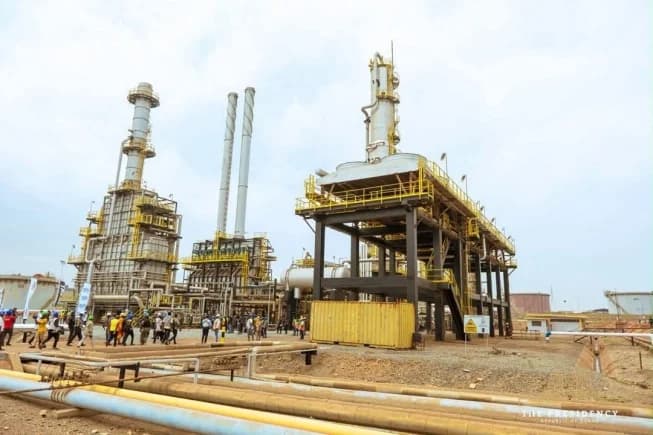
President John Mahama has marked a significant turning point for Ghana's energy sector by commissioning refurbished facilities at the Tema Oil Refinery (TOR), coinciding with a landmark $12 billion investment commitment for the first phase of the Ghana Integrated Petroleum Hub. These developments come at a critical juncture as the administration seeks to stabilize the domestic fuel market against global volatility and currency depreciation. By prioritizing the revival of state-owned assets and attracting massive foreign direct investment through Touchstone Capital Partners (TCP), the government aims to transform Ghana into Africa’s premier energy corridor, significantly reducing the nation’s historical reliance on imported petroleum products.
During the commissioning of TOR’s refurbished Crude Distillation Unit (CDU) and Residual Fluid Catalytic Cracking Unit, President Mahama emphasized that the refinery’s return to operation was achieved through strategic leadership rather than government bailouts. The revival has already generated over 1,500 jobs and returned the facility to profitability. Energy analysts suggest that if TOR scales its production to 100,000 barrels per day in tandem with the Sentuo Oil Refinery, the two could meet 50% of domestic fuel demand. This shift is expected to create a more transparent local pricing framework, potentially decoupling Ghanaian pump prices from some international benchmarks and providing a fairer regime for consumers.
Complementing this domestic revival is the ambitious Petroleum Hub project in Jomoro, where Touchstone Capital Partners has rallied $12 billion for Phase 1. This initial phase includes a refinery, petrochemical plant, and extensive storage and port infrastructure. TCP Vice-President Niccol"o Ravano highlighted that the project represents a $60 billion long-term opportunity, aiming to enhance regional energy security across West Africa. Further bolstering the sector’s outlook, Ghana National Gas Limited reported a 97% growth in net profit for 2025, a performance praised by Energy Minister Dr. John Abdulai Jinapor as a testament to the viability of the state’s "Gas-to-Power" agenda.
Despite these infrastructure gains, the downstream sector remains pressured by a weakening Cedi and rising international crude prices. To mitigate the immediate impact on transport costs, President Mahama directed a GH""2 per litre subsidy on diesel, prompting the National Petroleum Authority (NPA) to revise ex-pump price floors downwards. While the Chamber of Petroleum Consumers (COPEC) and the Institute for Energy Security (IES) welcomed the relief, they cautioned that such measures are temporary ""ad-hoc"" interventions. Stakeholders are now advocating for more sustainable solutions, such as the establishment of a national strategic fuel reserve and a focus on currency stabilization to protect the economy from future global market shocks.
This story touches markets covered on Anansi Intelligence ↗.
Related topic
John Mahama: Latest News & Updates →Live rates
Dollar to cedi rate →More from business
Continue exploring similar stories


