••
John Mahama Unveils GH¢100m National Research Fund as Technical Universities Forge Strategic Industry and International Ties
•2 min read•7 sources
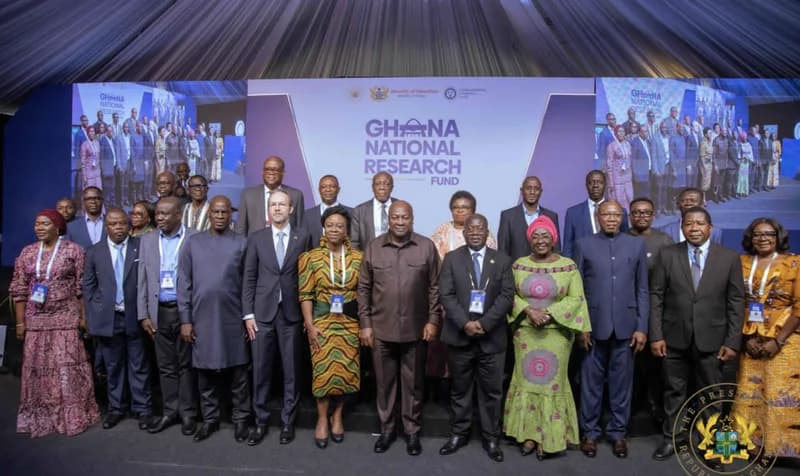
In a significant move toward transforming Ghana into a knowledge-driven economy, President John Mahama has unveiled the Ghana National Research Fund in Accra. The initiative introduces a GH¢100 million seed fund, proposed for 2026, aimed at bolstering national research, innovation, and local knowledge generation. This fund is designed to support competitive research grants, doctoral programs, and strategic innovation initiatives that align with national development goals. During the launch, Mahama emphasized the necessity of producing locally relevant technologies to address critical challenges, such as pest resistance in maize and cocoa production, while referencing the historical commitments of past leaders like Dr. Kwame Nkrumah and Professor John Evans Atta Mills.
Complementing this national focus on research, Ghana’s technical universities are actively bridging the gap between academia and industry through new strategic partnerships. Tamale Technical University (TaTU) recently signed a Memorandum of Understanding (MOU) with GNPC Explorco to enhance technical knowledge transfer within the upstream petroleum sector. This collaboration is set to provide specialized training workshops and joint research opportunities, ensuring that the next generation of petroleum professionals is equipped with practical industry skills. Both institutions have committed to immediate implementation to foster local talent and support regional economic growth.
On the international front, Accra Technical University (ATU) has expanded its academic reach by formalizing a partnership with the Higher African School of Information and Communications Technologies (ESATIC) from Côte d’Ivoire. Signed during ATU’s inaugural international flag-raising ceremony, the MOU focuses on student and cultural exchanges as well as joint research initiatives. ATU’s Vice-Chancellor, Professor Amevi Acakpovi, noted that such collaborations are vital for enhancing academic mobility and promoting regional integration within Africa. This move, supported by diplomatic representatives, highlights a growing trend of Ghanaian institutions seeking cross-border synergies to improve educational standards.
Collectively, these developments signal a robust effort to align Ghana’s educational output with industrial needs and global standards. The establishment of the National Research Fund, paired with the proactive industry engagement of technical universities like TaTU and ATU, suggests a structured approach to sustainable development. By securing funding for innovation and fostering partnerships that provide students with real-world exposure, Ghana aims to enhance its national competitiveness and ensure that its workforce is prepared for the technical and scientific challenges of the future.
This story touches markets covered on Anansi Intelligence ↗.
Related topic
John Mahama: Latest News & Updates →More from education
Continue exploring similar stories


