••
Dr. Kwami Ahiabenu Explores the Transformative Potential of Embodied Intelligence in Global AI and Robotics
•3 min read•1 source
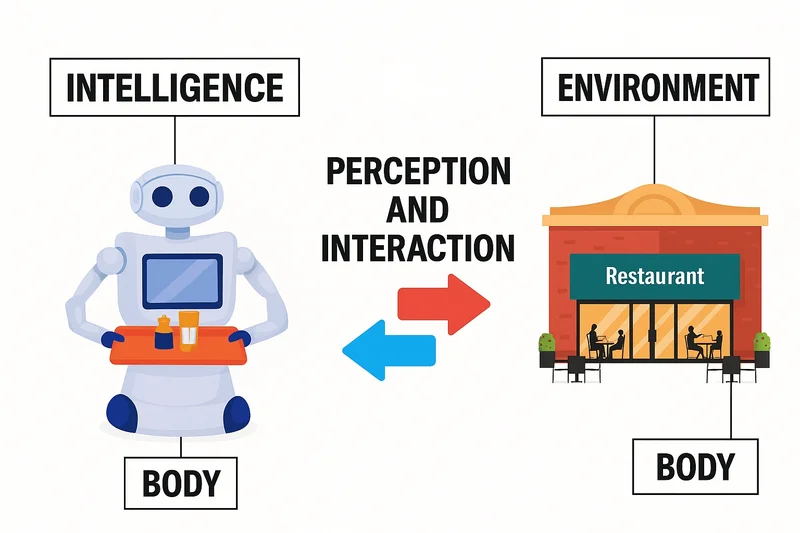
The landscape of artificial intelligence is undergoing a significant shift from static, data-driven systems to 'embodied intelligence,' a concept that promises to revolutionize how machines interact with the physical world. According to AI consultant Dr. Kwami Ahiabenu, embodied intelligence focuses on creating AI systems that can learn and adapt through real-time physical experiences rather than relying solely on pre-programmed instructions. This evolution marks a departure from traditional 'disembodied' AI, which exists primarily in digital environments, and is increasingly viewed as the critical missing link for the next generation of advanced robotics. Moving beyond mere data processing, these systems aim to mimic the way biological organisms learn by trial and error within their surroundings.
Developing these sophisticated systems requires overcoming substantial technical hurdles, particularly in the realms of motion control and sensory perception. Unlike standard software, embodied AI must process a constant stream of environmental feedback to execute precise movements and make split-second decisions. This necessitates a seamless integration of hardware and software, where the 'brain' of the AI is inextricably linked to its physical 'body.' Despite these challenges, the global robotics market is poised for exponential growth, driven by the demand for machines that can operate autonomously in unpredictable settings. Dr. Ahiabenu notes that ongoing collaborations between academic researchers and industrial leaders are currently narrowing the gap between theoretical models and functional, real-world applications.
The implications of this technology are far-reaching, with the potential to address critical labor and efficiency challenges across multiple sectors. In healthcare, embodied AI could lead to more responsive surgical assistants or elderly care robots that navigate homes with human-like dexterity. Similarly, in the agricultural sector, these intelligent machines could manage complex tasks such as selective harvesting and precision weeding, which require a high degree of spatial awareness. As the technology matures, it is expected to solve practical problems that were previously thought to be the exclusive domain of human intelligence and physical coordination.
Looking ahead, the successful deployment of embodied intelligence will likely redefine the global industrial landscape. While the transition from digital algorithms to physically interactive machines remains complex, the promise of more intuitive and capable automation is driving significant investment and research. For Ghana and the broader global community, these advancements signal a future where AI is not just a tool for information, but a physical partner capable of performing labor-intensive and high-precision tasks. The focus now shifts toward refining the sensors and actuators that will allow these systems to move from controlled laboratory environments into the complexities of daily life.
This story touches markets covered on Anansi Intelligence ↗.
More from technology
Continue exploring similar stories


