••
KNUST Inaugurates Ghana Photonics and Optics Laboratory to Drive Research and Regional Innovation
•2 min read•4 sources
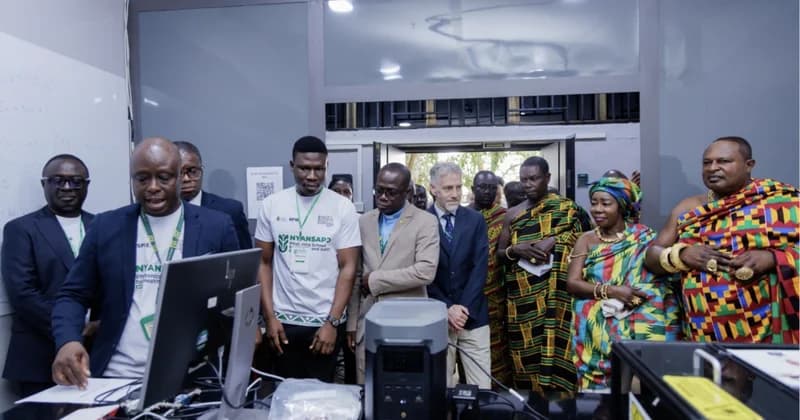
The Kwame Nkrumah University of Science and Technology (KNUST) has officially inaugurated the Ghana Photonics and Optics Laboratory (GPOL), marking a significant milestone in the nation’s scientific infrastructure. As the first dedicated optics facility at the university and only the second of its kind in Ghana, the lab was established through the initiative of Dr. Akyana Britwum and Dr. Michael Kweku Edem Donkor. Supported by funding from the international society for optics and photonics (SPIE), the laboratory is positioned to become a center of excellence for training the next generation of African scientists and innovators. Housed within the Department of Physics, the GPOL is equipped with advanced measurement and teaching kits designed to address critical scientific and health-related inquiries. The facility's capabilities span various sectors, including medicine, environmental monitoring, and telecommunications. Specifically, the laboratory features instruments for analyzing blood, water, and soil quality, providing local researchers with the tools necessary for high-precision optical measurements that were previously difficult to access within the country. During the launch, Professor Philip Antwi-Agyei emphasized the strategic importance of the laboratory in empowering Ghana to leverage optical technology. He noted that the facility would significantly reduce the nation’s reliance on external resources for scientific assessments, thereby enhancing national safety and informing data-driven decision-making. By fostering local capacity in photonics, the university aims to provide home-grown solutions to complex challenges in health and infrastructure. The inauguration coincided with the commencement of the NYANSAPƆ Photonics School for Health and Safety, an initiative that underscores the laboratory's regional significance. The program currently involves 38 students from six African countries, offering them comprehensive training and hands-on experience in photonics applications. This collaborative environment is expected to facilitate long-term research partnerships across the continent, solidifying KNUST’s role as a leader in science and technology education in West Africa.
