••
Kasapreko Lists on Ghana Stock Exchange as Government Eyes Local Ownership for Gold Fields’ Tarkwa Mine
•3 min read•7 sources
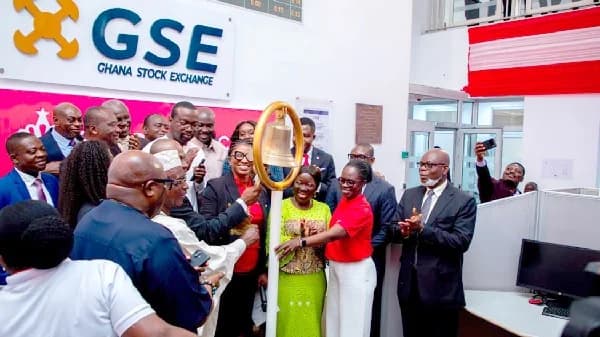
Kasapreko PLC has marked a historic milestone on the Ghana Stock Exchange (GSE) by listing 4.13 billion ordinary shares, valued at GH"4.96 billion. The company’s initial public offering (IPO) was oversubscribed by 246%, raising GH"700 million from bids totaling GH"1.73 billion. This surge in investor confidence coincides with growing international interest in Ghana’s industrial potential, notably in the salt sector. Electrochem Ghana Ltd is currently attracting interest from investors in the UAE, France, the UK, and Austria for a $500 million expansion project. This initiative aims to quintuple annual salt production from 1 million to 5 million tonnes, further solidifying Ghana’s strategic position within the African trade landscape.
Complementing this industrial growth, the Ghanaian government is exploring strategies to deepen domestic control over the nation’s natural resources. Reports indicate that the government is considering transferring control of Gold Fields Ltd’s Tarkwa mine—its largest asset—to local firms when current leases expire in April 2024. While discussions remain in the preliminary stages, the move is designed to retain more revenue within the country to capitalize on rising gold prices. This potential policy shift has already impacted market sentiment, causing a sharp fall in the mining firm's share prices as local entities prepare for possible bidding processes.
As Ghana’s corporate landscape expands, regulatory bodies are tightening oversight to ensure market integrity. The Office of the Registrar of Companies (ORC) and the Criminal Investigation Department (CID) of the Ghana Police Service have formed a strategic partnership to combat increasingly complex corporate fraud and economic crimes. This collaboration focuses on protecting the corporate register and maintaining public confidence in the business environment. Simultaneously, financial experts at the Citi Business Festival have raised alarms regarding a widening “retirement planning gap.” Eugene O. Birikorang of Petra Trust noted that financial illiteracy is driving pension neglect, urging workers to prioritize early contributions and emergency savings to navigate future economic pressures.
On the broader regional and global front, economic stability efforts are being bolstered by international interventions and shifting commodity markets. The International Monetary Fund (IMF) has approved a $211.5 million arrangement for Sierra Leone to boost climate resilience and economic support, following a successful review of its credit facility. Meanwhile, global energy markets are seeing a reprieve as oil prices declined; Brent crude futures dropped to $78.31 following a U.S.-Iran interim deal. This agreement has facilitated the movement of oil tankers through the Strait of Hormuz, potentially releasing over 85 million barrels of oil into the global market, though geopolitical tensions in the Middle East keep analysts cautious about long-term price stability.
Collectively, these developments reflect a Ghanaian economy in transition, characterized by robust local industrial expansion and a push for indigenous resource management. The success of the Kasapreko IPO and the massive interest in Electrochem’s salt project demonstrate significant capital market potential. However, the long-term success of these initiatives will depend on the government’s ability to implement clear policy frameworks—particularly in the mining and salt sectors—while addressing internal challenges like financial literacy and corporate fraud. As global factors like oil prices and IMF interventions play out, Ghana’s focus on strengthening domestic industry and regulatory oversight remains its central pillar for economic resilience.
This story touches markets covered on Anansi Intelligence ↗.
Live rates
Ghana gold price →More from business
Continue exploring similar stories


