••
AGI and Trade Ministry Champion Sustainability and Local Sourcing to Boost Ghana’s Industrial Sector
•2 min read•4 sources
Ghanaian industrial leaders and government officials are intensifying calls for a strategic shift toward sustainability and self-reliance to bolster the nation's economic competitiveness. At the heart of this movement is the Association of Ghana Industries (AGI), which recently launched the Sustainable African Value-Chain Initiative (SAVI) in partnership with the Confederation of Danish Industry. AGI President Pharm. Dr. Kofi Nsiah-Poku emphasized that Environmental, Social, and Governance (ESG) compliance should no longer be viewed as a mere regulatory hurdle but as a critical gateway to global trade and investment. By integrating sustainable practices into core industrial operations, Ghanaian businesses can better position themselves within the international market, especially as global standards for carbon footprints and social responsibility tighten.
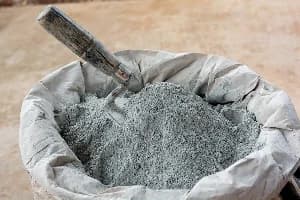
This push for sustainability is echoed in specific sectors, most notably the cement industry. During the INTERCEM Africa 2026 conference held in Accra, Elizabeth Ofosu-Adjare, the Minister for Trade, Agribusiness, and Industry, urged manufacturers to pivot toward local raw materials. The Minister highlighted the urgent need for innovation and cost-effective production systems that utilize Ghana’s natural resources more effectively, thereby reducing the heavy reliance on imported clinker. This sentiment aligns with the government's broader strategy to enhance industrial capacity and ensure that value chains are more resilient to external shocks and currency fluctuations.
However, the transition to local sourcing presents significant structural challenges that require nuanced solutions. Frederic Albrecht, Chairman of the Chamber of Cement Manufacturers Ghana (COCMAG), pointed out during the same conference that while reducing clinker dependence is necessary, the industry faces limitations due to finite limestone reserves within the country. Albrecht called for a strategic transformation that moves beyond simple substitution, suggesting that the industry must adopt locally driven production methods that are both environmentally sustainable and economically viable under current geographical constraints.
The collaboration between AGI and Danish partners, supported by Denmark’s Ambassador to Ghana, H.E. Jakob Linulf, underscores the international dimensions of this industrial evolution. Through upcoming training programs and policy advocacy, these initiatives aim to bridge the gap between traditional manufacturing and modern ESG requirements. As Ghana seeks to expand its export potential and attract foreign investment, the convergence of government policy and private sector innovation—focused on sustainability and local resource optimization—will be the defining factor in the country’s industrial future.
This story touches markets covered on Anansi Intelligence ↗.
More from business
Continue exploring similar stories


