••
Professor John Amuasi Champions Africa’s Role in Health AI as Ga East Improves Hospital Access Amidst Mourning for Lawyer Sarah Araba Tettey
•3 min read•3 sources
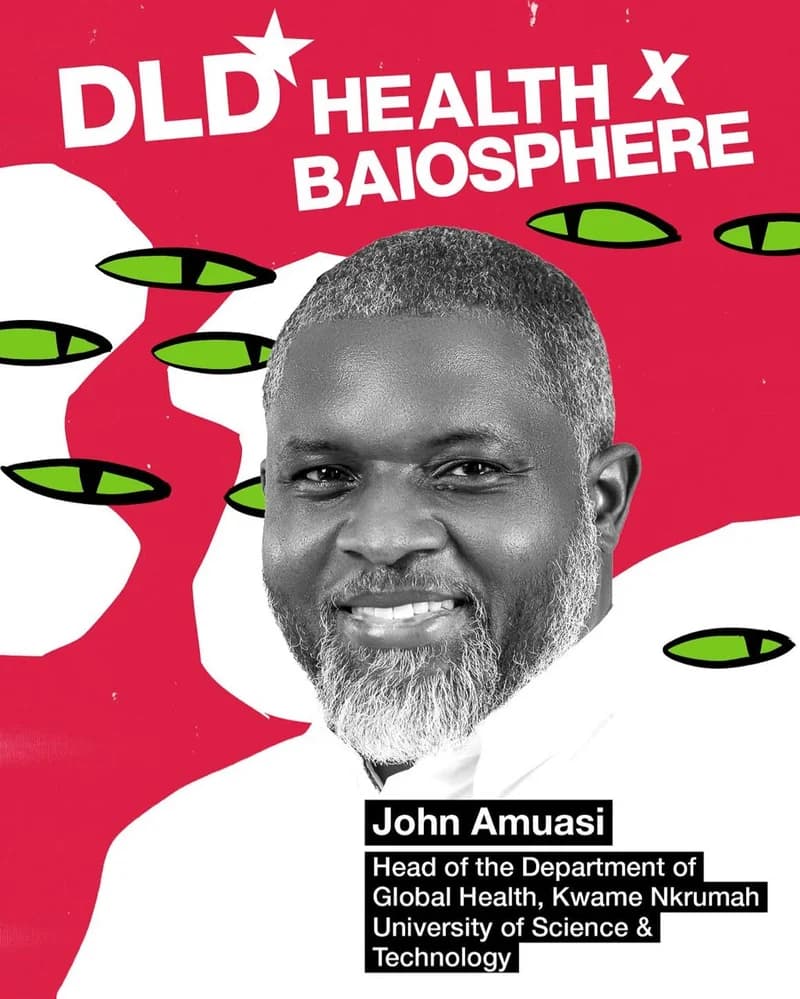
Ghana’s healthcare and infrastructure landscape is currently marked by a blend of high-level technological vision, local infrastructural interventions, and profound personal loss. Professor John Amuasi of the Kwame Nkrumah University of Science and Technology (KNUST) recently set a global stage at the DLD Munich conference, asserting that Africa is uniquely positioned to lead the future of AI-driven health innovation. However, this vision of a high-tech future stands in contrast to the immediate, practical challenges of health delivery, as seen in the Ga East Municipality where road repairs are only just beginning to ensure hospital access, and the tragic, sudden passing of a promising young lawyer, Sarah Araba Tettey, which has shocked the legal and academic communities.
Speaking at the DLD Munich conference, Professor Amuasi emphasized that Africa’s vast genetic diversity is an indispensable asset for the development of global AI healthcare systems. He warned that if African genetic data is excluded from global datasets, the resulting AI models will be fundamentally flawed and potentially harmful. Drawing parallels to Africa’s success in leapfrogging traditional banking with mobile money, Amuasi argued that the continent has a unique opportunity to adopt advanced health technologies without the burden of legacy infrastructure. He urged international investors and policymakers to recognize Africa not merely as a participant, but as a central pillar for the success of global health AI.
While Professor Amuasi looks toward a digital future, local authorities in Ghana are grappling with the physical infrastructure necessary for basic healthcare delivery. In the Ga East Municipality, the Assembly has initiated the reshaping of the deteriorated road leading to the Ga East Municipal Hospital. This project, part of the District Road Improvement Programme (DRIP), follows persistent concerns raised by health workers and residents during a Mother’s Day event attended by MP Faustina Elikplim Akurugu. Municipal Chief Executive Edmund Agboh noted that while full reconstruction is planned, this temporary reshaping is critical to ease the transport challenges faced by patients and ambulances in the interim.
Amidst these developments in health policy and infrastructure, the Ghanaian legal community is mourning the sudden death of 26-year-old lawyer Sarah Araba Tettey. An alumna of KNUST’s Faculty of Law and a recent addition to O & A Legal Consult, Ms. Tettey reportedly suffered a cardiac arrest while celebrating Ghana’s football victory over Panama at a hostel in Bomso. Despite receiving 45 minutes of CPR at the KNUST Hospital, she was pronounced dead, leaving her colleagues and peers from the Ghana School of Law in a state of shock. Her body currently remains at the KNUST Medical School mortuary as authorities work to confirm the exact circumstances of her passing.
These three narratives collectively highlight the complex reality of Ghana’s progress. The push for global leadership in AI and health innovation must be supported by foundational improvements in physical infrastructure, such as reliable road access to medical facilities. Furthermore, the tragic loss of Ms. Tettey serves as a reminder of the fragility of life and the ongoing need for robust emergency response systems. As the nation mourns a rising legal talent, the calls from leaders like Professor Amuasi and the actions of the Ga East Assembly emphasize the dual necessity of vision and basic service delivery in securing the country's future.
This story touches markets covered on Anansi Intelligence ↗.
More from africa
Continue exploring similar stories


