••
Ambassador James Victor Gbeho Mourned by ECOWAS as African Leaders Advance Language-Inclusive AI and Urban Governance Reform
•3 min read•4 sources
The West African diplomatic community is in mourning following the passing of Ambassador James Victor Gbeho, a towering figure in Ghanaian and regional statecraft. The ECOWAS Commission announced that Gbeho, who served as its President from 2010 to 2012, passed away on June 13, 2026, at the age of 91. Describing his death as a significant loss for the continent, the Commission highlighted his instrumental role in consolidating regional reforms and his lifelong dedication to peacebuilding, notably his influential work in restoring stability to Liberia during the 1990s. Beyond his regional leadership, Gbeho was a distinguished diplomat who served as Ghana’s Ambassador to the United Nations and as Minister for Foreign Affairs.
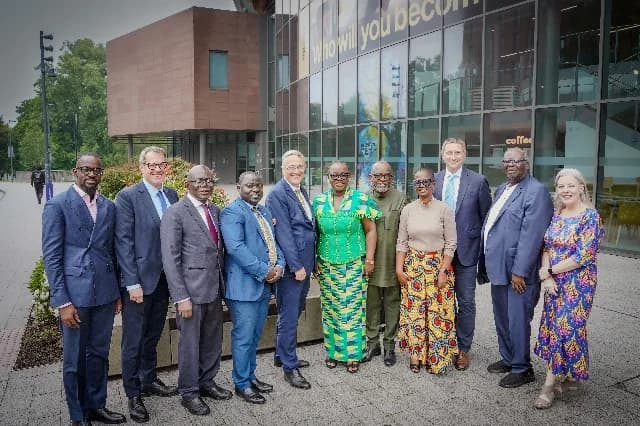
Gbeho’s legacy of institutional strengthening coincides with a renewed push for intellectual and technological sovereignty across the continent. At the University of Warwick, Professor Nana Aba Appiah Amfo, Vice-Chancellor of the University of Ghana, recently delivered a landmark lecture advocating for the inclusion of African languages in the global artificial intelligence (AI) revolution. Professor Amfo argued that the current reliance on dominant Western languages in AI databases presents a "visibility and justice problem," warning that the exclusion of Africa’s diverse linguistic heritage risks misrepresenting the continent's cultural perspectives. She emphasized that African languages must be treated as critical intellectual infrastructure rather than technical obstacles.
To address these challenges, Ghana is moving forward with a National AI Strategy aimed at enhancing local language processing capabilities. Supporting this vision, the University of Ghana has announced the introduction of a mandatory Digital Literacy and Applied AI course designed to equip students with the skills necessary for the evolving technological landscape. This initiative seeks to ensure that future leaders can engage with AI systems that are culturally and linguistically relevant to the African context, bridging the gap between global innovation and local identity.
Parallel to these technological advancements, the African Cities Research Consortium (ACRC) recently held a Cross-Project Learning Workshop in Accra to strengthen urban governance through evidence-based decentralization. The workshop brought together academics, government officials, and civil society leaders to discuss how community-led insights can shape effective urban policy. Professor Kwamena Ahwoi and Dr. Esther Offei-Aboagye provided frameworks for enhancing local accountability, while contributors like Diana Mitlin showcased successful initiatives such as waste-to-product projects in Accra. The gathering underscored the necessity of combining governance authority with rigorous research to improve service delivery in Africa’s rapidly growing cities.
Together, these developments—ranging from the diplomatic milestones of the late Ambassador Gbeho to the forward-looking strategies in AI and urban planning—reflect a continent navigating a complex transition. The synthesis of traditional diplomacy, technological justice, and localized governance suggests a holistic approach to African development. As regional bodies like ECOWAS honor their past leaders, academic and policy institutions are increasingly focused on building the research and digital infrastructure required to sustain growth and ensure that African voices remain central to both local and global progress.
This story touches markets covered on Anansi Intelligence ↗.
More from africa
Continue exploring similar stories


