••
ISSER Raises Concerns Over "Big Push" Progress as Government Details Major Power Infrastructure Investments
•2 min read•2 sources
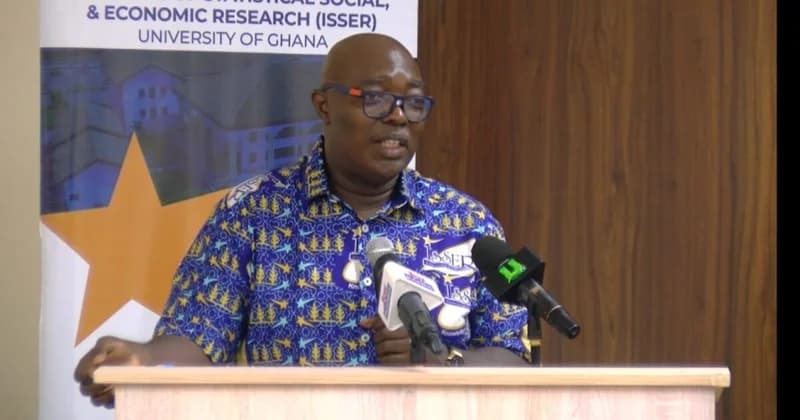
The government under President John Mahama is navigating a critical period for national infrastructure, as ambitious investment plans in the energy sector face scrutiny over the slow pace of broader economic growth. While the administration has outlined massive capital injections aimed at stabilizing the power grid, the Institute of Statistical, Social and Economic Research (ISSER) has flagged concerns regarding the "Big Push" infrastructure program. Despite the government's high-level objectives, ISSER reports that construction sector growth stood at a modest 1.3% in the first quarter of 2026, signaling a potential disconnect between policy planning and tangible economic impact.
To address long-standing electricity supply challenges, Dr. Yussif Sulemana, Technical Advisor to the Minister of Energy, recently detailed a series of strategic investments during a workshop in Accra. The center-piece of these efforts is a US$700 million investment in a new gas processing plant, which is projected to generate over 2,500 jobs and significantly reduce the nation's dependency on fuel imports. Additionally, the government is pursuing a US$3.4 billion Renewable Energy Plan and a US$278 million investment program through the Electricity Company of Ghana (ECG) to modernize distribution networks and mitigate the economic losses caused by power fluctuations.
However, the Director of ISSER, Professor Robert Darko Osei, has cautioned that the benefits of these projects are not yet being felt across the wider economy. He noted that many initiatives within the "Big Push" framework remain in preparatory phases, which fail to generate immediate measurable economic activity. Professor Osei attributed this sluggish performance to significant reductions in capital expenditure and tight fiscal policies that have constrained the government's ability to fast-track infrastructure spending. ISSER is now calling for a more aggressive implementation strategy to ensure these projects drive productivity and job creation as intended.
The tension between the government’s energy-sector ambitions and the fiscal realities highlighted by ISSER underscores the challenge of balancing debt management with the need for growth-inducing infrastructure. While the promised investments in gas and renewable energy offer a roadmap to energy security, the immediate task for the Mahama administration will be accelerating these projects to reverse the downward trend in construction growth. Stakeholders emphasize that unless these large-scale investments transition quickly from the planning stage to active construction, the anticipated economic revitalization and industrial stability may remain out of reach.
This story touches markets covered on Anansi Intelligence ↗.
Related topic
John Mahama: Latest News & Updates →More from business
Continue exploring similar stories


