••
India Deploys Stringent Security as Millions Resit NEET-UG Medical Entrance Exam Following Paper Leak Scandal
•2 min read•1 source
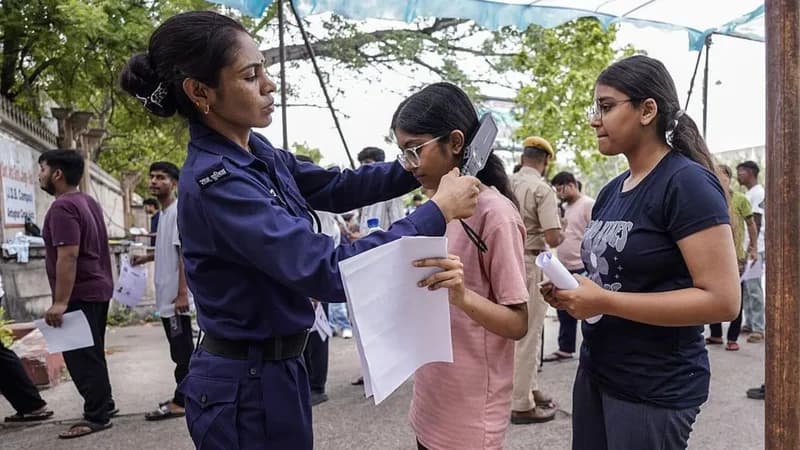
Millions of medical aspirants across India have returned to examination centers to retake the National Eligibility cum Entrance Test (Undergraduate), or NEET-UG, under unprecedented security measures. This massive logistical undertaking follows the controversial cancellation of the initial exam due to a confirmed question paper leak that sparked nationwide outrage. To restore the integrity of the selection process for India's medical schools, the government implemented a fortress-like environment at more than 5,440 exam centers, signaling a high-stakes effort to regain public trust in the country's educational assessment system. The scale of the security operation was immense, involving the Indian Air Force to transport new test papers safely across the country. At the testing sites, candidates were subjected to rigorous biometric verification, metal detectors, and armed patrols. In an effort to curb high-tech cheating, authorities deployed signal jammers and comprehensive security camera monitoring systems. These stringent protocols were deemed necessary after the initial breach revealed significant vulnerabilities that allowed exam questions to be circulated before the scheduled test date, undermining the efforts of millions of students. The exam leak triggered widespread protests from students and parents, who demanded greater accountability and called for the Education Minister to be held responsible for the lapse. This scandal has not only disrupted the academic calendar for aspiring doctors but has also cast a shadow over the credibility of India’s competitive examination bodies. In response to the outcry and the scale of the alleged fraud, the case has been officially referred to the Central Bureau of Investigation (CBI), which is now tasked with uncovering the criminal networks involved and ensuring such a breach does not recur. As the results of this resit are awaited, the incident remains a catalyst for broader reforms within India's education and testing infrastructure. The government's reliance on military-grade logistics and high-tech surveillance highlights the extreme measures now required to protect the sanctity of high-stakes exams in the digital age. Moving forward, the focus will likely shift from emergency resits to long-term systemic changes aimed at preventing corruption and ensuring a fair, merit-based path for the next generation of India's medical professionals.
This story touches markets covered on Anansi Intelligence ↗.
More from education
Continue exploring similar stories


