••
Ghana’s Resource Governance Under Scrutiny: IEA Critiques Tax Cuts Amidst Rising Political Tension Over Mining Concessions
•3 min read•44 sources
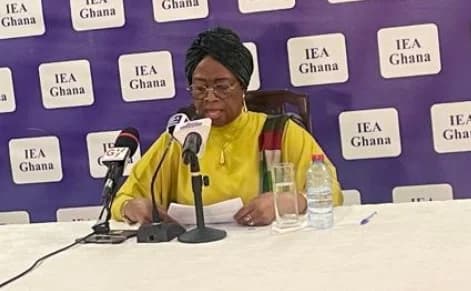
Ghana’s natural resource management has become a central flashpoint for political and economic debate, with the Institute of Economic Affairs (IEA) leading a chorus of concern over recent fiscal policy shifts. Justice Sophia Akuffo, a Distinguished Fellow of the IEA, has criticized the government’s decision to reduce the Growth and Sustainability Levy (GSL) from 3% to 1%. The IEA argues that this move is counterproductive, undermining the state’s ability to maximize national benefits from the extractive sector at a time when global mineral prices are surging. According to the IEA, providing tax concessions while simultaneously attempting to raise royalties creates a policy disconnect that threatens long-term economic gains. Justice Akuffo urged the government to look toward models in Botswana and Burkina Faso to increase state participation and secure national development, particularly as over 30 mining leases approach expiration.
Simultaneously, the political landscape is being roiled by controversy surrounding the Damang Mine and the business interests of Ibrahim Mahama, brother to President John Dramani Mahama. The Minority in Parliament has announced plans to petition the Commission on Human Rights and Administrative Justice (CHRAJ), alleging a lack of transparency and a 'predetermined' selection process in awarding the Damang Mine concession to Ibrahim Mahama’s company, E&P. Furthermore, the Minority has linked these concerns to President Mahama’s use of his brother’s private jet, demanding a full accounting of all related travel since January 2025. While anti-corruption campaigners like Edem Senanu have cautioned against the 'politicization' of these bidding processes—noting that legal compliance is the primary metric—the Minority has vowed to conduct a forensic review of the deal should the New Patriotic Party (NPP) return to power in 2028.
Amidst these disputes, newly appointed CEO of the Ghana Gold Board, Sammy Gyamfi, has outlined a vision for an 'economic reset' through tighter controls in the gold sector. Reflecting on his transition from political communication to corporate leadership, Gyamfi emphasized that his role is focused on ending financial leakages and boosting foreign exchange inflows to support the national economy. Despite his shift to the Gold Board, Gyamfi maintains that he remains active within the National Democratic Congress (NDC), though he has prioritized his new mandate to ensure Ghanaians retain greater sovereignty over their mineral resources. He acknowledged the strategic importance of gold trading over mere extraction as a means of retaining value within the domestic economy.
On the enforcement front, the National Anti-Illegal Mining Operations Secretariat (NAIMOS) has reported significant milestones in the fight against 'galamsey.' Director Colonel Dominic Buah revealed that operations between July 2025 and March 2026 led to the seizure of 94 excavators, nearly 3,000 'changfang' machines, and the arrest of 237 suspects. However, the fight is becoming increasingly dangerous, as NAIMOS identified at least 59 weapons among illegal miners, leading to violent confrontations and injuries to security personnel. In a parallel legal development, Bernard Antwi Boasiako, known as Chairman Wontumi, is currently challenging a High Court ruling that dismissed his 'no case' submission regarding illegal mining allegations against Akonta Mining Company, with further arguments set for April 2026.
These converging issues highlight a critical juncture for Ghana’s extractive governance. From the IEA’s calls for a revised mineral framework to the Gold Board’s focus on trade value and the ongoing battle against illegal mining, the nation faces the challenge of balancing investor attraction with absolute national interest. As the government seeks support from traditional leaders like the Yagbonwura to promote responsible mining, the outcomes of the CHRAJ petition and the various legal challenges facing political figures will likely shape the transparency standards and economic trajectory of Ghana’s mining sector for years to come.
This story touches markets covered on Anansi Intelligence ↗.
Related topic
NDC (National Democratic Congress): Latest News →Live rates
Ghana gold price →More from politics
Continue exploring similar stories


