••
UN Secretary-General Antonio Guterres Calls for Global AI Regulations to Protect Children and Ensure Equity
•2 min read•1 source
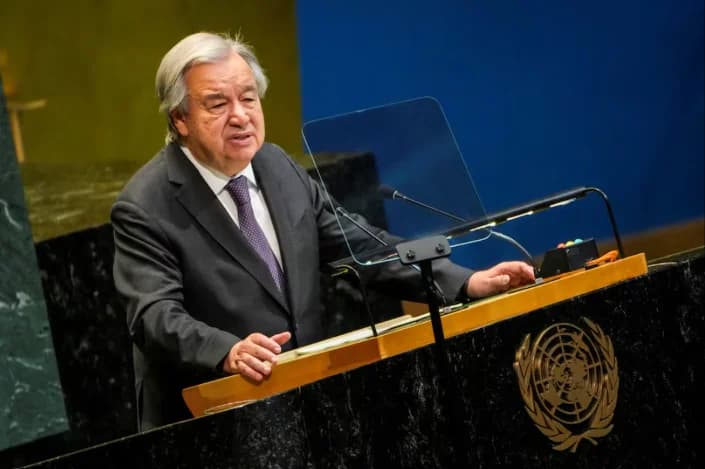
United Nations Secretary-General Antonio Guterres has issued a stern warning that the rapid advancement of artificial intelligence (AI) is significantly outpacing existing regulatory frameworks, creating urgent risks that demand immediate global intervention. Speaking at the first government-level global dialogue on AI governance in Geneva, Guterres emphasized that without harmonized international rules, the technology poses profound threats to societal stability and individual safety. He specifically highlighted the vulnerability of children, noting that current AI systems are often deployed without the rigorous vetting necessary to ensure they do not cause psychological or developmental harm to younger generations.
Central to the Secretary-General’s proposal is the introduction of an AI Child Safety Pledge. This initiative seeks to compel technology developers to ensure their systems are demonstrably safe before they are made accessible to children. Guterres advocated for a regulatory approach mirrored after medical safety protocols, where technologies undergo extensive testing and validation before public release. By treating AI safety with the same gravity as healthcare, the U.N. aims to prevent the "move fast and break things" mentality from compromising the wellbeing of the world's youth, who are increasingly interacting with AI-driven educational and social tools.
Beyond safety concerns, the Secretary-General raised alarms regarding the geopolitical and economic implications of AI’s current development trajectory. He pointed out that the vast majority of AI breakthroughs and infrastructure are concentrated within a handful of powerful corporations and a few wealthy nations. This concentration of power threatens to leave developing countries, including many across the African continent, at a severe disadvantage. Guterres argued that without intentional efforts to promote equitable participation, the digital divide will widen, further marginalizing nations that lack the resources to compete in the high-stakes global AI race.
To address these multifaceted challenges, the Geneva meeting focused on an independent report from a U.N.-backed panel of experts. This report is expected to serve as a blueprint for future international cooperation, outlining strategies to democratize AI governance and foster a more inclusive technological landscape. As the international community grapples with these complexities, the U.N. remains steadfast in its call for a coordinated response that balances innovation with human rights, ensuring that the benefits of artificial intelligence are shared globally while its most dangerous outcomes are mitigated through collective action.
This story touches markets covered on Anansi Intelligence ↗.
More from technology
Continue exploring similar stories


