••
Escalating Security Crisis: Ghanaian Peacekeepers Wounded in Lebanon as Regional Violence Intensifies Across West Africa and Ethiopia
•3 min read•18 sources
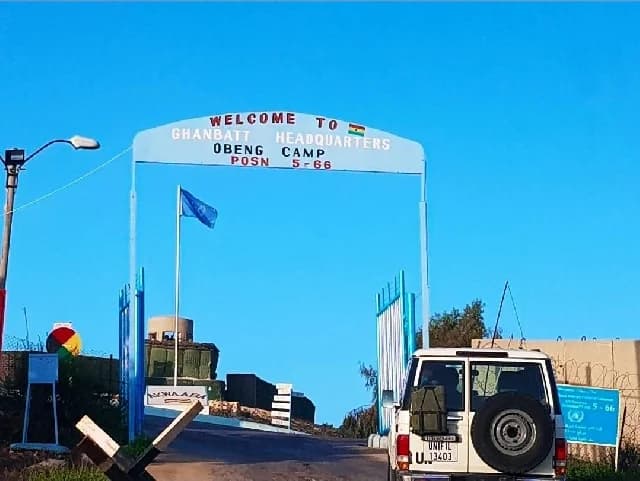
The safety of Ghanaian personnel both home and abroad has come under sharp focus following a series of violent incidents, most notably a missile attack on United Nations Interim Force in Lebanon (UNIFIL) peacekeepers on March 6, 2026. Four Ghanaian soldiers were injured when a missile struck the Ghana Battalion headquarters at the Al Qawzah base in southern Lebanon. While two soldiers were initially reported to be in critical condition and one was transferred to a Beirut hospital for advanced care, the Ministry of Defence has since confirmed that all four are currently stable and recovering. The attack, which occurred amid escalating tensions between the Israel Defense Forces and Hezbollah, drew widespread condemnation from UNIFIL and the Ghanaian government, while Israeli Ambassador Roey Gilad expressed sympathy for the 'tragic event.'
This international incident coincides with a deteriorating security landscape across the African continent. In Nigeria's Borno State, Senator Mohammed Ali Ndume reported a massive civilian massacre in the village of Ngoshe, where suspected Islamist militants killed numerous residents and abducted over 100 women and children during Ramadan. The assault highlights the persistent threat of Boko Haram and other insurgent groups despite increased defense spending. To combat this rising tide of jihadism, authorities in Benin and Nigeria have launched a joint security operation involving coordinated border patrols and intelligence sharing. This collaboration is specifically aimed at curbing the expansion of groups like Jama'at Nusrat al-Islam wal-Muslimin (JNIM), which are increasingly threatening coastal West African states.
Further east, a harrowing report from Amnesty International has exposed systemic atrocities in Ethiopia’s Oromia region. Between 2020 and 2024, the Oromo Liberation Army (OLA) has been accused of summary executions, gang rapes, and sexual slavery, often targeting the families of government forces. The report, based on survivor testimonies including those of minors, warns that these acts may constitute war crimes. The violence in Oromia is exacerbated by a communication blackout that has created a climate of impunity, leaving millions of civilians vulnerable to ongoing conflict and human rights abuses.
Domestic security within Ghana has also faced significant challenges this month, mirroring the regional instability. On March 2, 2026, a National Ambulance Service crew narrowly survived a dawn gun attack in Yendi, where unknown assailants fired upon their vehicle. Days later, on March 5, an armed robbery wave in the Agona East District left Assembly Member Ishmael Odoom hospitalized with a gunshot wound after assailants targeted local shops. These events have sparked urgent calls from local leaders and residents for a permanent police presence and enhanced security infrastructure, such as CCTV cameras, to protect both emergency responders and the general public.
Together, these developments underscore a critical period for regional stability and the protection of those on the front lines of peace and service. From the missile-scarred bases in southern Lebanon to the embattled villages of Borno and Oromia, the human toll of these conflicts remains high. As the Ghanaian government lodges formal complaints at the United Nations and local communities demand better protection, the need for coordinated international and domestic security strategies has never been more pressing. The recovery of the injured peacekeepers and the rescue of the abducted civilians in Nigeria remain top priorities for the respective authorities.
This story touches markets covered on Anansi Intelligence ↗.
More from africa
Continue exploring similar stories


