••
Ghana Scales Up Youth Empowerment and Agricultural Support Through National Education and Leadership Initiatives
•3 min read•24 sources
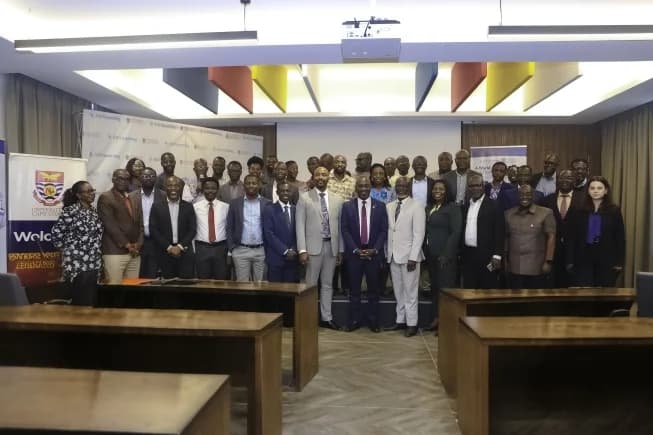
In a concerted effort to foster long-term national development, Ghana has launched a series of expansive initiatives targeting youth empowerment, agricultural safety, and educational accessibility. Central to these efforts is the 2026 International Youth Empowerment Summit (iYES), held at the UPSA Auditorium under the theme "Transgenerational Impact." National Youth Authority (NYA) CEO Osman Ayariga emphasized the need for young Ghanaians to look beyond temporary influence and focus on building lasting legacies. To support this vision, the NYA has introduced several structured opportunities, including the National Apprenticeship Programme, the Adwumawura Programme, and the One Million Coders Initiative, all designed to equip the next generation with the tools necessary for sustainable livelihoods and civic responsibility.
The push for youth advocacy was further bolstered by the recruitment of digital influencer Wode Maya, who has been invited to serve as an ambassador for the NYA’s "Red Means Stop" campaign. This initiative specifically targets the rising threat of drug abuse among the youth, leveraging Maya’s significant reach across Africa to promote healthy lifestyles and protect the aspirations of young people. Beyond advocacy, Ayariga called on industry leaders to provide practical mentorship in emerging sectors like content creation. Simultaneously, the Ministry of Youth Development and Empowerment, led by George Opare Addo, is urging a shift toward technical and vocational education (TVET) through programs like the Japan-Ghana AutoConnect. This automotive training initiative aims to reach 100,000 participants over the next decade, addressing the skills gap and adapting to the global rise of electric vehicles.
Parallel to these urban youth initiatives, the Ghana Cocoa Board (COCOBOD) has announced a landmark support package for the nation’s cocoa-farming communities. Board Chairman Dr. Samuel Ofosu Ampofo revealed plans to provide free tertiary education for the children of cocoa farmers, expanding the board's traditional scholarship scheme to ensure higher education is accessible to farming families. To improve immediate farm productivity and safety, COCOBOD is also distributing 27,000 motorized spraying machines and 89,000 sets of personal protective equipment (PPE). These measures, supported by the provision of free fertilizers and insecticides, are intended to modernize the cocoa sector and secure the financial future of those at the heart of Ghana’s agricultural economy.
Educational opportunities are also expanding through international and digital partnerships. The High Commission of India has opened applications for the 2026-2027 ICCR scholarships, offering 70 slots for Ghanaian students to study in India under the Africa Maitri and Lata Mangeshkar schemes. Locally, the University of Cape Coast (UCC) has partnered with Astria Learning to launch an AI-powered eCampus, set to welcome its first cohort in August 2026. This digital platform aims to provide flexible, accredited postgraduate programs for working professionals across West Africa. Complementing these institutional efforts, local philanthropy remains active, with Felix Akonta supporting over 4,400 BECE candidates in the Ketu South Municipality through rigorous mock examinations and infrastructure improvements.
Collectively, these initiatives represent a multi-sectoral strategy to address unemployment, poverty, and the skills gap in Ghana. By combining high-level leadership training at iYES with practical vocational skills and unprecedented educational support for agricultural families, the government and its partners are attempting to build a more resilient social fabric. The success of these programs will depend on the sustained commitment of stakeholders and the ability of the youth to translate these opportunities into meaningful societal change, ensuring that the "transgenerational impact" envisioned at the iYES summit becomes a tangible reality for the nation.
This story touches markets covered on Anansi Intelligence ↗.
More from africa
Continue exploring similar stories


