••
Ghana and Sub-Saharan Africa Navigate Economic Stabilization Amid Deepening Education and Infrastructure Gaps
•3 min read•14 sources
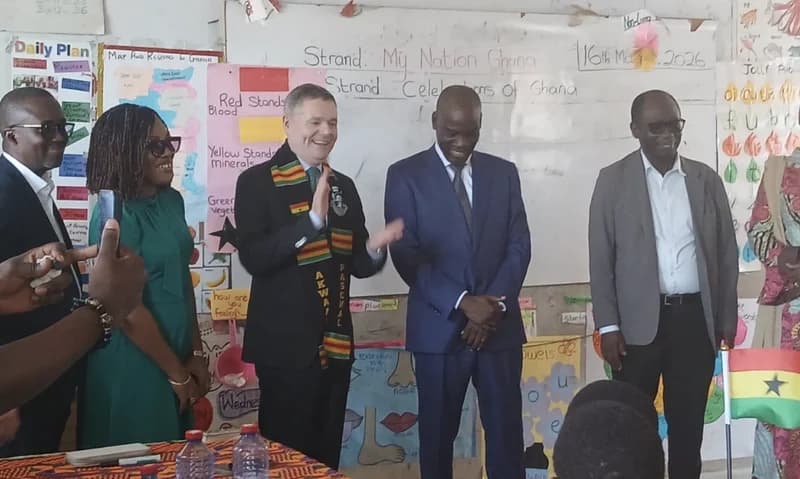
Ghana and the broader Sub-Saharan African region are currently navigating a complex developmental landscape, balancing notable economic stabilization with systemic challenges in education, infrastructure, and job creation. While the World Bank has recently commended Ghana’s economic turnaround under the leadership of Finance Minister Dr. Cassiel Ato Forson, World Bank Managing Director Paschal Donohoe has issued a stark warning regarding a looming global jobs deficit. With approximately 1.2 billion young people set to enter the labor market in developing countries over the next decade, there is a critical mismatch between current educational outcomes and market needs. In Africa specifically, where 10 to 12 million youth enter the workforce annually against only three million formal jobs created, Donohoe emphasizes that a fundamental "skills revolution" is required to harness the continent's demographic potential.
The education sector is a primary focus of these reform efforts. Ghana has officially confirmed its return to the May-June West African Senior School Certificate Examination (WASSCE) schedule, rejoining four other West African nations after five years of pandemic-related disruptions. To support foundational learning, the World Bank is sustaining its investment through the $174 million Ghana Accountability for Learning Outcomes Project (GALOP), which targets literacy and teacher training for 2.9 million pupils across 10,000 low-performing schools. Beyond state initiatives, community leaders like Dr. Haruna Zagoon-Sayeed are advocating for localized educational strengthening, urging the Muslim community and other stakeholders to collaborate on resource mobilization to bridge development gaps from the basic school level.
In the agricultural and infrastructure sectors, progress is being tempered by concerns over asset management and professional capacity. The Tree Crop Development Authority (TCDA) is set to distribute six million seedlings of high-value crops like cashew and rubber to 10,000 farmers to boost export earnings. However, Alex Mould, CEO of the Millennium Development Authority (MiDA), has raised alarms over "wasted agricultural assets" in Ghana's Middle Belt, where vandalized irrigation facilities and neglected equipment are hindering productivity. This infrastructure strain is a regional trend; a Project Management Institute (PMI) report indicates that Sub-Saharan Africa faces a 57% construction talent gap, requiring 150,000 more project professionals by 2035 to successfully execute the $360 billion Programme for Infrastructure Development in Africa (PIDA).
Looking toward the future, Ghana’s economic resilience faces external pressures from geopolitical tensions in the Middle East. Bank of Ghana Governor Johnson Asiama noted that while rising gold prices offer some protection for the nation’s export earnings, the conflict involving the U.S., Israel, and Iran poses significant risks to the inflation outlook via volatile oil prices. Amidst these macro-economic shifts, the nonprofit sector is also seeking to professionalize, with the upcoming Africa Nonprofit Summit (ANPOS2026) in Accra set to launch a new Compliance Guidebook. These combined efforts across the economic, educational, and agricultural sectors reflect a nation striving for sustainable growth while grappling with the urgent need for structural and professional reforms.
This story touches markets covered on Anansi Intelligence ↗.
Live rates
Ghana gold price →More from africa
Continue exploring similar stories


