••
Ghana and West Africa Accelerate Development Initiatives Across Economic, Agricultural, and Tech Sectors
•3 min read•18 sources
In a pivotal week for West African development, World Bank Group Managing Director Paschal Donohoe concluded a high-profile three-day visit to Ghana in March 2026, reaffirming the Bank's commitment to the nation's economic recovery. A cornerstone of the visit was the announcement of a $300 million commitment to the STARR-J program, designed to enhance secondary education and equip youth with job-relevant skills. Donohoe met with President John Mahama and other high-ranking officials to discuss reforms aimed at fostering private sector growth and addressing the skills mismatch that contributes to youth unemployment. This visit coincided with a warning from Bank of Ghana Governor Johnson Asiama, who urged African nations to prioritize financial integration and interoperable payment systems to avoid fragmented growth across the continent's fintech and investment landscapes.
Agricultural self-reliance and food security have also taken center stage through the 'Feed Ghana' initiative. In the Yilo Krobo Municipal Assembly, officials distributed a significant portion of a 10,000-bird local chicken consignment under the 'Nkoko Nkitinkitin' program, which aims to revitalize the poultry industry and reduce reliance on imports. Simultaneously, the Ministry of Food and Agriculture urged citizens to adopt backyard tomato gardening to bridge a supply gap of nearly 300,000 metric tonnes exacerbated by regional export bans. To ensure long-term sustainability, Fairtrade Africa is championing dynamic agroforestry for cocoa farmers, while conservation groups are advising farmers to document planted trees to secure future financial benefits and combat the encroachment of illegal mining.
Environmental protection and resource management saw renewed focus during World Water Day 2026 celebrations. AngloGold Ashanti Obuasi Mine delivered mechanized water systems to several communities, while Ghana Water Limited (GWL) highlighted the critical link between water access and gender equality. GWL officials warned that illegal mining, or 'galamsey,' remains the greatest threat to sustainable water treatment. On the enforcement front, the National Anti-Illegal Mining Operations Secretariat (NAIMOS) reported an 87% operational success rate over the last ten months, having seized 94 excavators and arrested 237 suspects. The secretariat plans to expand its presence to nine bases by mid-2026 to further rehabilitate degraded lands and protect national security.
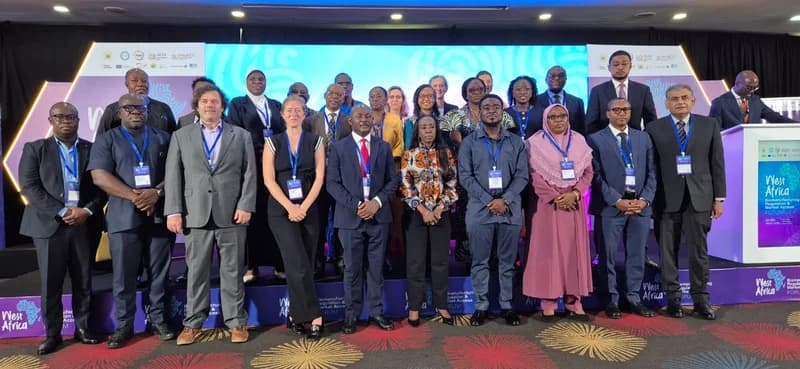
Advancements in regional policy and technology are providing a framework for these developmental gains. West African nations are currently harmonizing regulatory processes to scale up local vaccine manufacturing, aiming to produce 60% of needed vaccines within the region by 2040. Domestically, Ghana is strengthening its data-driven decision-making with the launch of the African Centre for Development Impact (ACDI) and the inauguration of the Nsowah-Nuamah Statistics and Artificial Intelligence Institute (NSAI) board. These institutions aim to bridge the gap between academic research and practical policy, ensuring that Africa’s growth is guided by evidence-based strategies and cutting-edge data science, ultimately fulfilling the vision of 'Ex Africa Nova Lux'—new light from Africa.
This story touches markets covered on Anansi Intelligence ↗.
Related topic
John Mahama: Latest News & Updates →More from africa
Continue exploring similar stories


