••
Ghana Water Limited and Eni Ghana Spearhead Sustainability Initiatives as Encroachment Threatens National Infrastructure
•3 min read•4 sources
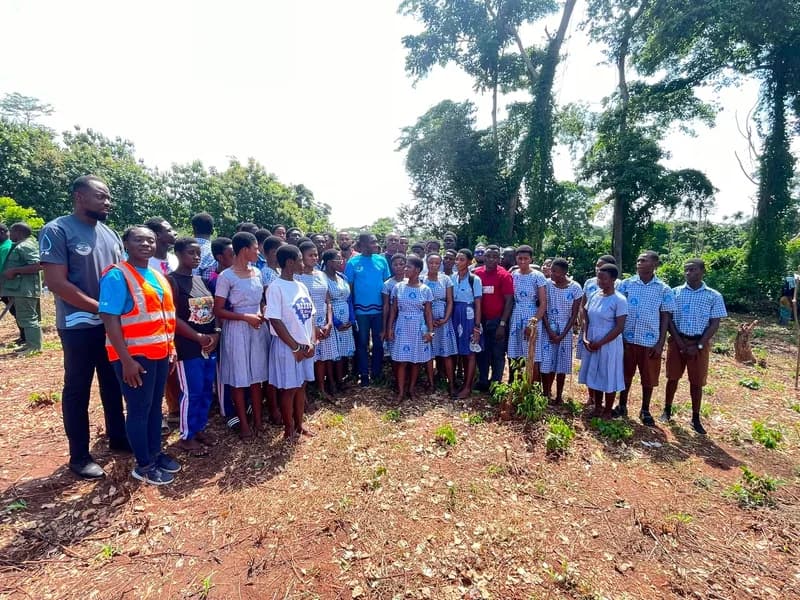
Ghana is currently grappling with a dual crisis of environmental degradation and infrastructure encroachment that threatens the nation's long-term water and food security. Ghana Water Limited (GWL) recently raised an alarm regarding the Barekese Dam in the Ashanti Region, where over 50% of the surrounding forest cover has been lost. This deforestation, driven by illegal logging, sand winning, and urban expansion, has led to severe siltation and a 30% reduction in the reservoir's storage capacity. The dam currently provides over 22 million gallons of water daily to Greater Kumasi, and officials warn that without immediate intervention, the sustainability of this vital supply is in jeopardy.
Similarly, the nation's agricultural infrastructure is under significant pressure from unauthorized developments. The Ashaiman Irrigation Scheme in the Greater Accra Region is currently operating at only 36% of its 155-hectare capacity due to widespread encroachment. Agribusiness entrepreneur Kojo Akoto Boateng has highlighted that this is not an isolated incident, as the Kpong and Afife schemes face similar threats. These unauthorized developments directly undermine agricultural output and pose a severe risk to the food security of major metropolitan areas including Accra and Tema.
In response to these systemic challenges, strategic international partnerships are being formed to bolster sustainable development. Eni Ghana has signed a Letter of Intent with the Italian Agency for Development Cooperation (AICS) to explore initiatives in education, vocational training, agriculture, and water and sanitation. This partnership, effective as of June 2026, aims to mobilize resources and expertise to support the UN 2030 Agenda in Ghana. Maurizio Pinna, Managing Director of Eni Ghana, emphasized the company's commitment to creating a lasting impact in local communities through economic diversification and improved social infrastructure.
Complementing these high-level corporate efforts is a growing movement of grassroots advocacy. James Kumbeni, a prominent climate advocate and long-distance cyclist, recently received a Specialized Diverge bicycle from the Great Victory Academy in Bolgatanga to support his environmental campaigns. Kumbeni, known for his grueling Bolgatanga-to-Accra ride, is now preparing for a cross-border expedition to Benin to promote climate awareness and sustainable transportation across West Africa. His work highlights the critical role of community engagement and individual action in addressing the regional climate crisis.
As the government and private sector navigate these complex environmental hurdles, immediate restoration efforts are already underway. GWL, in collaboration with the Forestry Commission, has initiated a tree-planting exercise to plant over 5,000 indigenous and commercial seedlings around the Barekese catchment area. These combined efforts—ranging from large-scale development pacts and infrastructure protection to individual climate advocacy—represent a multi-faceted approach to safeguarding Ghana's natural resources and ensuring a resilient future for its growing population.
This story touches markets covered on Anansi Intelligence ↗.
More from africa
Continue exploring similar stories


