••
Ghana Leads Landmark UN Resolution Declaring Transatlantic Slave Trade a Crime Against Humanity
•2 min read•7 sources
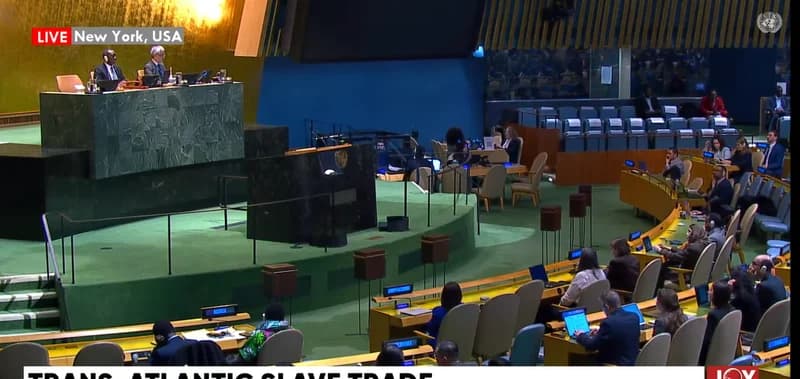
In a historic move for international justice, the United Nations General Assembly has adopted a landmark resolution, spearheaded by Ghana, formally classifying the transatlantic slave trade and the chattel enslavement of Africans as the "gravest crime against humanity." This resolution, which gained the support of 123 member states, marks a significant shift in the global recognition of historical atrocities. By establishing a clear moral and legal framework, the international community acknowledges the profound and enduring impact of the slave trade on African societies and the global diaspora, moving beyond symbolic gestures toward a more concrete pursuit of justice and accountability.
Ghana’s leadership in this initiative has been pivotal, with the proposal receiving high-level support across the continent. Minister for Foreign Affairs Samuel Okudzeto Ablakwa emphasized that the resolution is a crucial step for healing and preventing future atrocities, noting that the world has now affirmed the trafficking of enslaved Africans as a peak injustice. While the resolution focuses heavily on remembrance and education—seeking to foster global dialogue without necessarily reopening old wounds—it also introduces the critical element of reparatory justice. It calls for structured dialogue between former slave-trading nations and African states to address the systemic inequalities and racial discrimination that persist as legacies of the trade.
The African Union has echoed these sentiments, using the International Day of Remembrance of the Victims of Slavery to demand global commitment to dignity and justice. AU Chairperson Mahmoud Ali Youssouf highlighted the structural injustices that continue to affect the continent, urging for improved efforts to mitigate the socio-economic and cultural consequences of slavery. The AU’s alignment with Ghana's resolution reinforces a unified African front in the quest for reparations and the preservation of historical truth. This collective stance underscores the importance of education in dismantling the foundations of modern racism and discrimination.
Human rights organizations, including Amnesty International, have hailed the resolution as a "momentous step forward." Although the resolution is non-binding, advocates argue that it exerts significant moral and political pressure on nations that benefited from historical exploitation. By recognizing chattel enslavement as a crime against humanity, the UN has provided a foundation for affected communities to seek compensation and restitution. As the dialogue between nations begins to take shape, the resolution serves as a reminder that acknowledging the darkest chapters of human history is essential for building a future rooted in equality and mutual respect.
This story touches markets covered on Anansi Intelligence ↗.
More from africa
Continue exploring similar stories


