••
Ghana Advances Educational Transformation Through $28M TVET Investment and Youth Empowerment Initiatives
•3 min read•11 sources
Ghana’s educational and youth development sectors are undergoing a significant transformation, marked by multi-million dollar investments in technical training and a renewed focus on industry-aligned skills. At the forefront of this shift is the Design and Technology Institute (DTI), which recently broke ground on a $28 million Multi-Skills Campus in Berekuso. Supported by a €3 million grant from AUDA-NEPAD, the facility aims to bridge the gap between theoretical education and industry practice, training up to 3,500 learners annually in fields such as industrial plumbing and cleaning sciences. This initiative aligns with calls from experts like Dr. Prince Kofi Kludjeson, who recently advocated for a radical shift toward industry-driven education to transform Ghana’s economy, suggesting that regions like Ashanti have the potential to become tech hubs similar to Silicon Valley if academic models are modernized.
Parallel to these infrastructure gains, professional certification and youth advocacy have seen major milestones. The University of Media, Arts and Communication (UniMAC-IFT) has introduced a new certification pathway for non-certified photographers to formalize the skills of apprenticeship-trained professionals. Meanwhile, the advocacy group Curious Minds (Children and Youth in Broadcasting) celebrated 30 years of empowering young voices, highlighting the long-term impact of youth-led platforms in Ghana. Individual excellence also gained global recognition as Zaina Adamu, founder of Ghana Girl Rising, was named among the 2026 Global Top 40 Under 40 Most Influential People of African Descent for her dedication to enhancing educational opportunities for young women.
Grassroots empowerment and environmental stewardship are also being integrated into the educational experience. In Ejisu, the ‘ElevateHer’ mentorship programme recently concluded, providing young girls with training in digital literacy and vocational skills. Environmental responsibility took center stage as students from the University of Ghana launched the ECO GUARDIAN CAMPAIGN to promote sustainability, while Quaye Nungua R/C Basic School won the 2025 FanMilk School Caravan for collecting nearly 11,000 plastic wrappers. The school was rewarded with a refurbished ICT laboratory, demonstrating how corporate partnerships can incentivize environmental consciousness among the youth.
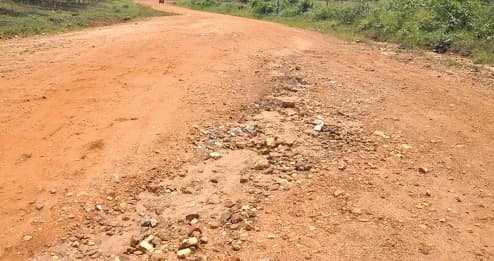
Despite these advancements, significant challenges remain in academic performance and institutional infrastructure. The West African Examinations Council (WAEC) recently released provisional results for the 2026 WASSCE private candidates, revealing concerningly high failure rates in Core Mathematics and Science, though English Language and Social Studies saw better pass rates. Additionally, the University of Health and Allied Sciences (UHAS) has made an urgent appeal for government intervention regarding poor internal road conditions and a severe lack of student accommodation. Vice-Chancellor Professor Lydia Aziato noted that only 2,000 of the university’s 11,000 students live on campus, calling for private sector investment to sustain the institution’s growth and ensure student safety and comfort.
This story touches markets covered on Anansi Intelligence ↗.
Live rates
Dollar to cedi rate →More from africa
Continue exploring similar stories


