••
Ghana Intensifies Regional Security and International Cooperation After Tragic Terror Attack on Traders
•3 min read•7 sources
Ghana is mourning the loss of 18 citizens following a brutal terrorist attack in northern Burkina Faso, an incident that has prompted the government to ramp up international security collaborations. Interior Minister Mohammed Muntaka Mubarak has officially confirmed the deaths of the traders—comprising 10 men and eight women—who were caught in a confrontation between extremists and armed forces near Titao. As the nation grapples with this tragedy, officials are emphasizing a shift toward more robust counter-terrorism frameworks and enhanced intelligence-sharing with regional and international partners to prevent future incursions.
In the immediate aftermath of the attack, attributed to the Islamist militant group JNIM, Minister Mubarak issued a passionate plea to the public to cease the circulation of graphic images and videos of the victims. Highlighting the severe trauma such footage inflicts on grieving families, the Minister noted that some victims were burnt beyond recognition, making identification a delicate process involving DNA sampling. Efforts are currently underway to evacuate survivors and provide medical treatment in Ouagadougou. Concurrently, Mahamudu Bawumia, the flagbearer of the New Patriotic Party (NPP), has called for a significant strengthening of Ghana’s counter-extremism framework, urging deeper regional intelligence cooperation to protect traders operating across the volatile Sahel corridor.
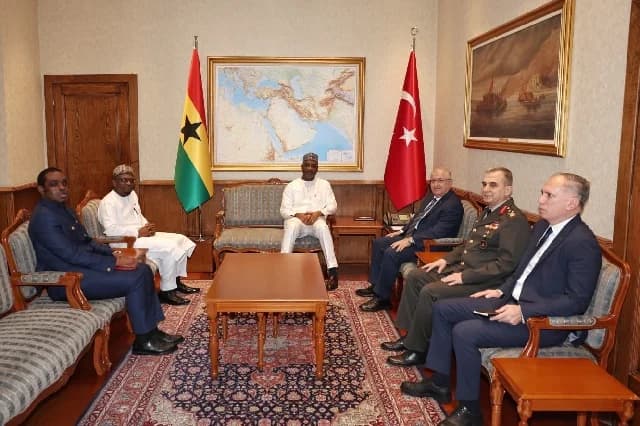
Beyond immediate crisis management, the Ministry of the Interior has initiated a series of high-level diplomatic engagements to fortify national security against evolving transnational threats. In Accra, Minister Mubarak met with a senior Lebanese delegation, including Consul General Ali Samih Jaafar and Deputy Director Morshed El Hajj Sleiman, to develop joint strategies against cyber fraud, drug trafficking, and money laundering. Similarly, a visit to Ankara for talks with Turkish counterpart Mustafa wiftwi saw the expansion of cooperation to include emergency response systems, disaster management, and migration control. These engagements signal Ghana’s intent to build a multifaceted defense against organized crime and terrorism through international knowledge-sharing.
The security challenges facing Ghana are mirrored across the West African sub-region, where international intervention continues to play a critical role. In neighboring Nigeria, the arrival of 100 U.S. military personnel—with 200 more expected—underscores the intensity of the fight against Islamist insurgents that threaten the stability of the entire region. These developments highlight the interconnected nature of security in West Africa. For Ghana, the tragic loss of its citizens in Burkina Faso serves as a catalyst for a more proactive security policy and a modernized apparatus aimed at safeguarding both domestic stability and the safety of its nationals working abroad.
Related topic
NPP (New Patriotic Party): Latest News →
