
Ghana News AI
HomeBriefsAsk GhanaAnalysisTopicsAbout
•
•

Stay Informed

Get AI-curated news briefs from Ghana delivered to your inbox every morning. Free forever, no spam.

Explore

  • Home
  • Briefs
  • About

Categories

  • Politics
  • Business
  • Sports
  • Entertainment
  • Africa

Features

  • Analysis
  • Cedi Rates
  • Dollar to Cedi
  • Ghana Gold Price

Topics

  • All Topics
  • Armed Forces Recruitment
  • Immigration Service Recruitment
  • Fire Service Recruitment
  • Prisons Service Recruitment
  • Customs Recruitment
  • WAEC Results & News
  • Ghana Education Service

Legal

  • Privacy Policy
  • Terms of Service
Ghana News AI© 2026 Ghana News AI. All rights reserved.
Made withfor Ghana
business

Ghana Tourism Authority Unveils New Regulatory Standards and Digital Information System for Hospitality Sector

2 days ago•2 min read•4 sources
Ghana Tourism Authority Unveils New Regulatory Standards and Digital Information System for Hospitality Sector
  1. Home
  2. /Business
  3. /Ghana Tourism Authority Unveils New Regulatory Standards and Digital Information System for Hospitality Sector

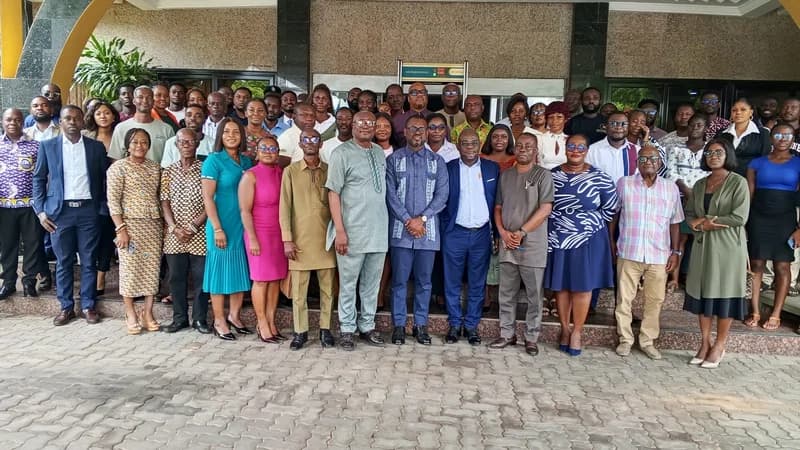
The Ghana Tourism Authority (GTA) has initiated a critical consultation process with key industry stakeholders in Tema to discuss the proposed Tourism (Registration and Licensing of Multi-purpose Establishments and Providers of Event Management Services) Regulations. This engagement, which brought together hoteliers, event planners, and other service providers, serves as a pivotal step in finalizing new legislative frameworks designed to modernize the nation's hospitality sector. By establishing clear guidelines for the registration and licensing of tourism-related businesses, the GTA aims to ensure that all operators meet rigorous international standards for service delivery and operational transparency. At the heart of these reforms is the introduction of the Ghana Tourism Information System (GTIS), a comprehensive digital platform intended to revolutionize how the industry manages data. According to GTA officials, the GTIS will facilitate more accurate data collection, which is essential for informed decision-making and strategic policy formulation. By digitizing these processes, the authority seeks to improve regulatory compliance while providing a clearer picture of the industry's economic impact. This shift toward a data-driven approach is expected to align Ghana's tourism landscape with global best practices, making the sector more competitive on the international stage. During the engagement, Mr. Isaac Asiam, the GTA Regional Manager, emphasized that collaboration between the regulator and industry players is paramount. He noted that the evolving nature of global tourism requires flexible yet robust regulations that protect both consumers and businesses. The proposed standards are intended to enhance public safety and elevate the professionalism of event management and hospitality services. The GTA plans to integrate feedback from these sessions into the final draft before it is presented to Parliament for approval. Stakeholders present at the Tema forum expressed broad support for the initiatives, acknowledging that stricter standards are necessary to improve service quality across the board. Participants highlighted that clear licensing requirements would help weed out substandard operators, thereby protecting the reputation of the industry. As the GTA moves forward with these regulatory reforms, the focus remains on fostering a sustainable and high-growth tourism environment that can contribute significantly to Ghana's national development goals.

Our Take

From the Team

Coming Soon

Our team will add key insights, trends, and actionable takeaways to help you stay informed faster.

This story touches markets covered on Anansi Intelligence ↗.

More from business

Continue exploring similar stories

Stanbic Bank and Industry Leaders Advocate for Structural Reforms as Labor and Legal Developments Reshape Ghana's Business Landscape
business|2 days ago

Stanbic Bank and Industry Leaders Advocate for Structural Reforms as Labor and Legal Developments Reshape Ghana's Business Landscape

Leaders in Ghana’s financial and industrial sectors are calling for enhanced structural reforms to unlock investment and ensure economic stability across various industries. Speaking at the WAMPEX 2026 panel, Benjamin Nana Kwesi Mensah of Stanbic Bank emphasized that improved deal structures and strict adherence to environmental, social, and governance (ESG) standards are crucial for attracting long-term funding into the small-scale mining sector. Despite the sector's vital role in gold production and employment, Mensah noted that a lack of transparency and legal compliance remains a significant hurdle for potential financiers seeking confidence in their investments. The push for structural integrity comes as labor tensions rise within the mining industry, highlighted by workers at Prestea Sankofa Gold Limited who have initiated a sit-down strike. The industrial action stems from the Managing Director’s alleged failure to sign a Memorandum of Understanding (MoU) regarding salary increments and end-of-service benefits negotiated earlier this year. While the company's public relations officer has cited weather-related delays for unpaid June salaries and document processing, the standoff underscores the critical need for the transparent governance and reliable leadership that financial experts are currently advocating for in the sector. Parallel to these challenges, the manufacturing and construction sectors are seeing progress in formalization through the registration of the Danpa Adanfo Co-operative Block Producers’ Society Limited. Officially certified by the Department of Cooperatives, this move aims to legalize and standardize the operations of small-scale block producers as part of the SPVO Certification Project. Led by Gabriel Opoku Darko, the registration is expected to enhance the competitive nature of the sector and ensure the production of quality building materials, though the cooperative’s leadership acknowledges that securing adequate funding remains a major hurdle for its growth. Beyond heavy industry and manufacturing, the call for the legal protection of assets has extended to Ghana’s creative and athletic sectors. Listowell Yesu Bukarson, CEO of LYB Sports & Entertainment, has urged showbiz and sports personalities to prioritize intellectual property (IP) rights to secure their financial futures. Bukarson argued that while active careers in these fields are often short-lived, well-managed IP can provide income for up to 70 years after a creator's death. This advocacy for legal safeguards mirrors the broader national trend of seeking formal structures to protect revenue streams and ensure sustainability across all sectors of the Ghanaian economy.

Louis Vuitton A brown Louis Vuitton handbag with the company's iconic graphics, including the four-petal flower monogram, printed across the leather
business|2 days ago

Microsoft Trims Workforce by 4,800 Amid AI Pivot as Global Business Faces Financial and Legal Shifts

Microsoft has announced a significant workforce reduction of approximately 4,800 employees, representing about 2.1% of its total staff, as the tech giant reorients its operations toward artificial intelligence (AI) infrastructure. This move comes amid a challenging financial period for the company, which saw its stock price plummet nearly 23% in the first half of 2026—its most significant decline since 2022. The layoffs reflect a broader trend across the technology sector, where industry leaders like Amazon and Meta have similarly trimmed their headcounts to balance rising operational costs with the massive capital investment required to dominate the emerging AI landscape. The restructuring is particularly focused on Microsoft’s gaming division, which has faced declining profit margins even as other sectors of the company show resilience. While the company prepares to report its latest financial results, analysts expect continued strength in its Azure cloud-computing division, which remains a cornerstone of its AI strategy. To mitigate the impact of these cuts, Microsoft had previously offered voluntary buyouts to approximately 9,000 employees. The current layoffs are part of a strategic realignment to ensure the company can sustain its heavy investments in the hardware and software necessary to power next-generation AI services. In a separate development highlighting the legal complexities of global business, the popular Chinese bubble tea chain Molly Tea has been ordered to pay 10.3 million yuan (approximately $1.5 million) in damages to Louis Vuitton. A court in Suzhou, Jiangsu province, ruled that Molly Tea’s logo infringed upon Louis Vuitton’s iconic four-petal flower monogram. The case has sparked intense debate in China, garnering over 400 million views on social media, with some defending the local brand while others emphasize the necessity of protecting intellectual property. Molly Tea has been ordered to cease using the disputed logo and issue a formal public apology. These two stories underscore the dual pressures currently facing global corporations: the need for rapid technological evolution and the increasing importance of brand protection. As Microsoft navigates the high-stakes transition to an AI-first economy, the Molly Tea ruling serves as a stark reminder of the financial and reputational risks associated with trademark disputes in major markets. Moving forward, businesses must balance aggressive innovation and expansion with a heightened sensitivity to operational efficiency and legal compliance in an increasingly competitive global environment.

Ghanaian CEOs Bullish on Growth Amid Rising Digital Disruption and Strategic Industry Collaborations
business|2 days ago

Ghanaian CEOs Bullish on Growth Amid Rising Digital Disruption and Strategic Industry Collaborations

Ghana’s business landscape is witnessing a surge in executive optimism, even as leaders grapple with the rapid pace of digital transformation and operational risks. According to PwC’s 29th Global CEO Survey, 73% of CEOs in Ghana express high confidence in revenue growth over the next 12 months, a figure significantly higher than the global average. This bullish sentiment is largely driven by improving macroeconomic conditions, including falling inflation and a more stable currency. However, this optimism is tempered by a shifting risk landscape, with 33% of executives identifying technology disruption as a primary concern and nearly half questioning their company’s long-term viability in the face of rapid advancements in artificial intelligence (AI) and changing industry dynamics. In response to these evolving challenges, strategic partnerships are emerging to equip businesses with the tools needed for the digital age. MTN Business has partnered with the Graphic Communications Group Ltd to provide Ghanaian enterprises with a combination of high-speed connectivity and trusted business intelligence. Through this initiative, subscribers to MTN’s Unlimited Fibre Broadband packages—ranging from the 100Mbps Business Basic to the 500Mbps Business Premium—receive complimentary access to Graphic Business news and market analysis. This collaboration aims to ensure that while businesses benefit from robust digital infrastructure, they also remain informed by credible data to navigate market volatility and technological shifts. The shift toward digital-first strategies is also reshaping the marketing and sustainability sectors. At a recent summit in Accra hosted by Expressions Influencer Agency, industry leaders and the Chartered Institute of Marketing Ghana (CIMG) explored the growing impact of 'media of influence.' Experts emphasized a transition from traditional advertising to digital platforms, where authenticity and influencer engagement are becoming critical for brand performance. Simultaneously, innovation is being recognized in the industrial sector, as demonstrated by Zoomlion Ghana Ltd securing two major honors at the 8th HESS Awards 2026. The company was recognized for its 'Waste Management Innovation' and 'Recycling Facility Excellence,' highlighting a commitment to turning environmental challenges into sustainable economic resources. Ultimately, these developments signal a pivotal moment for Ghana’s corporate sector. While the prevailing mood is one of growth, the recurring themes of technology risk and the need for high-quality information suggest that the next phase of economic success will depend on strategic agility. CEOs are increasingly being urged to reallocate their time toward long-term strategic planning and to embrace collaborative models—whether through data-driven marketing or technological partnerships—to ensure they can turn current economic tailwinds into a lasting competitive advantage within the West African sub-region.

ISSER Reports High Returns on Sanitation Investment as Ghana Employers Association Proposes 25-Year Mortgage Plan
business|2 days ago

ISSER Reports High Returns on Sanitation Investment as Ghana Employers Association Proposes 25-Year Mortgage Plan

Ghana faces significant infrastructure challenges in sanitation and housing, but new proposals from the Institute of Statistical, Social and Economic Research (ISSER) and the Ghana Employers Association (GEA) suggest these sectors could be massive drivers of economic growth. ISSER's recent policy brief reveals that strategic investment in waste management could yield a staggering GH"556 for every GH"1 spent. Simultaneously, the GEA is advocating for a National Home Ownership Programme to tackle the country's housing deficit of 1.8 million units through affordable GH"250,000 homes. According to ISSER, the economic returns on sanitation are currently being suppressed by significant underfunding. While Ghana currently spends an average of GH"38.78 per tonne on waste management, aligning this with the lower-middle-income country average of GH"1,028 could transform the national economy. The report predicts that such an investment would reduce sanitation-related morbidity by 97.4% and deaths by 81%. By 2025, the projected annual economic benefits from healthcare savings and increased productivity could reach GH"58.1 billion, potentially rising to GH"67.2 billion by 2032. On the housing front, the Ghana Employers Association has presented a proposal aimed at solving the nation’s structural housing shortage. Speaking at the 2nd National Labour Conference in Ho, GEA President Nana Dr. Emmanuel Adu-Sarkodee outlined a plan for a National Home Ownership Programme. The initiative centers on providing homes valued at GH"250,000 under a 25-year mortgage scheme. This initiative is designed not only to provide shelter for workers but also to stimulate the construction industry, creating jobs and fostering long-term economic stability. Both proposals emphasize a shift in perspective, viewing sanitation and housing as vital economic investments rather than mere social costs. ISSER highlights that better waste management is particularly critical as Ghana grapples with frequent flooding, which exacerbates public health crises and economic disruptions. Together, these initiatives suggest that by prioritizing basic infrastructure and affordable credit for housing, Ghana can unlock billions in latent economic value and improve the quality of life for its citizens.

All
africa
business
education
entertainment
health
news
politics
sports
technology