••
Ghana’s Education Landscape: High Praise for Free SHS Clashes with Alarms Over Critical Teacher Shortages
•3 min read•14 sources
The Centre for Democratic Movement (CDM) has sounded a dire warning, labeling Ghana’s current teacher recruitment deficit a "national emergency" that threatens to push over 1.2 million children into "learning poverty." While the government celebrates the success of the Free Senior High School (Free SHS) initiative, the CDM reports that over 30,000 classrooms across the country are currently without teachers, despite there being approximately 60,000 qualified, unemployed educators ready for deployment. This shortage is projected to cause significant learning losses, including a 64% decline in arithmetic proficiency and an 18% drop in reading skills among the affected student population. The group argues that the lack of a clear recruitment timeline following the 2026 Budget has created unnecessary anxiety for both parents and trained professionals.
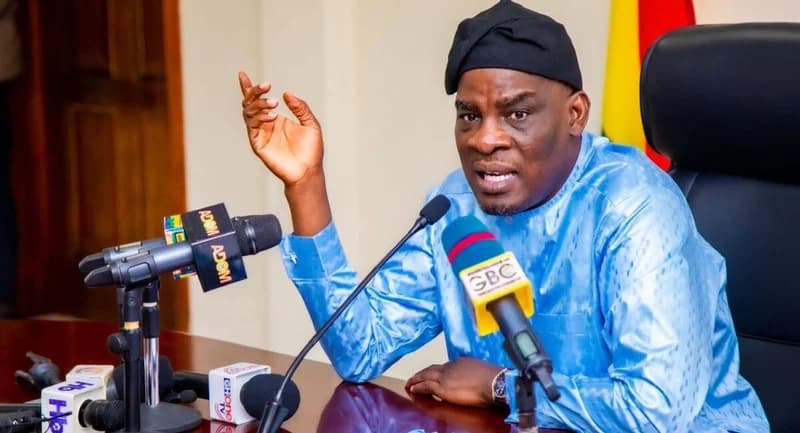
Amidst these warnings, Minority Leader Alexander Afenyo-Markin has defended the administration's educational record, describing the Free SHS policy as the most consequential social intervention of Ghana’s Fourth Republic. Speaking at the Young Commons Forum at the University of Cape Coast in February 2026, Afenyo-Markin argued that the 2017 initiative effectively removed financial barriers and democratized access to secondary education for hundreds of thousands of students from low-income backgrounds. He maintained that the policy’s success in increasing enrollment remains a defining legacy of the Akufo-Addo administration, asserting that its benefits in reducing educational inequality are clear despite ongoing public debates.
The CDM, however, contends that the focus on secondary education must not come at the expense of the constitutional mandate for Free, Compulsory and Universal Basic Education (FCUBE). The movement has proposed a six-point action plan, headlined by the establishment of an "Education Emergency Response Fund." This fund would support large-scale teacher recruitment, equitable deployment to underserved rural areas, and continuous professional development. The CDM has called for the immediate absorption of all qualified unemployed teachers and the creation of a transparent national teacher deployment framework to be presented to Parliament, ensuring that no child is denied their fundamental right to instruction.
Beyond staffing, education stakeholders are also calling for structural reforms to enhance the quality of instruction through cultural and linguistic investment. Professor Clement Kwamena Appah of the University of Ghana has advocated for a state-sponsored national terminology program to standardize Ghanaian languages, arguing that such an initiative is vital for knowledge creation and national development. As the CDM demands urgent ministerial briefings and quarterly progress reports on teacher placement, the overarching consensus among observers is that resolving the recruitment crisis and investing in sustainable workforce planning are essential to safeguarding Ghana’s democratic stability and the future of its youth.
This story touches markets covered on Anansi Intelligence ↗.
More from politics
Continue exploring similar stories


