••
Ghana Standards Authority and International Partners Launch Major Initiatives to Bolster SMEs and Export Competitiveness
•2 min read•6 sources
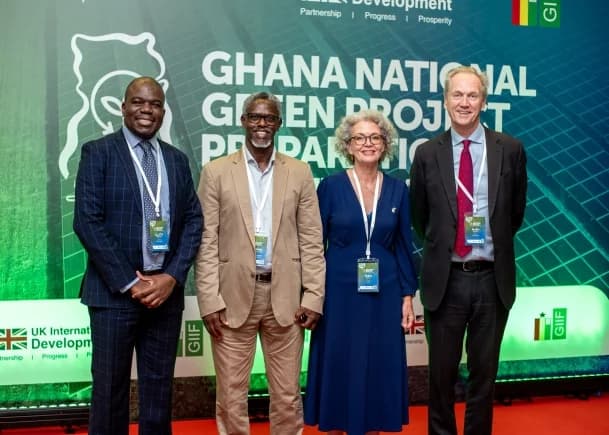
Ghana’s business ecosystem is undergoing a significant transformation as national authorities and international partners launch a series of strategic initiatives aimed at bolstering exports, infrastructure, and financial accessibility. Key among these developments is the Ghana Standards Authority’s (GSA) move to establish a National Organic Certification Scheme, alongside the launch of a £5 million Green Project Preparation Facility supported by the UK government. These developments signal a concerted effort to move Ghana toward a more resilient, low-carbon economy while empowering local producers to compete more effectively on the global stage.
To address the persistent financing gap facing Small and Medium Enterprises (SMEs)—estimated at $331 billion across Africa—Impact Investing Ghana (IIGh) and Savannah Impact Advisory have introduced a new framework to mobilize domestic pension capital. The initiative aims to direct a portion of Africa’s $600 billion in pension assets into productive sectors through a targeted $75 million fund. This financial push is further supported by the UK–Ghana Growth Partnership’s new £5 million facility, managed by FSD Africa and the Ghana Infrastructure Investment Fund (GIIF). This facility is specifically designed to create a pipeline of bankable, climate-resilient projects in sectors such as renewable energy and urban infrastructure, bridging the gap between project conception and investment.
On the trade and standards front, the GSA, in collaboration with the German Development Cooperation (GIZ), is finalizing its organic certification scheme to reduce the high costs and reliance associated with foreign certifiers. GSA Director-General Prof. George Agyei emphasized that local certification will allow Ghanaian farmers to access premium international markets where organic products often command prices 20% to 40% higher than conventional goods. By aligning with international standards, the scheme positions Ghana as a potential certification hub for West Africa under the African Continental Free Trade Area (AfCFTA), effectively removing historical barriers that have long hindered local agribusinesses.
However, experts warn that structural and internal governance issues remain a hurdle for long-term growth. The International Finance Corporation (IFC) recently highlighted the lack of succession planning in family-owned businesses, noting that many fail during leadership transitions because founders are often reluctant to relinquish control or fail to prepare successors. Complementing these governance concerns, corporate entities like Ecobank Ghana are stepping up their environmental responsibilities. Through nationwide tree-planting and ecosystem restoration campaigns, Ecobank is advocating for a business model where long-term economic prosperity is balanced with environmental sustainability and robust corporate governance.
This story touches markets covered on Anansi Intelligence ↗.
Live rates
Pound to cedi rate →More from business
Continue exploring similar stories


