••
Ghana Strengthens Global Ties through Strategic Energy, Security, and Economic Partnerships
•3 min read•15 sources
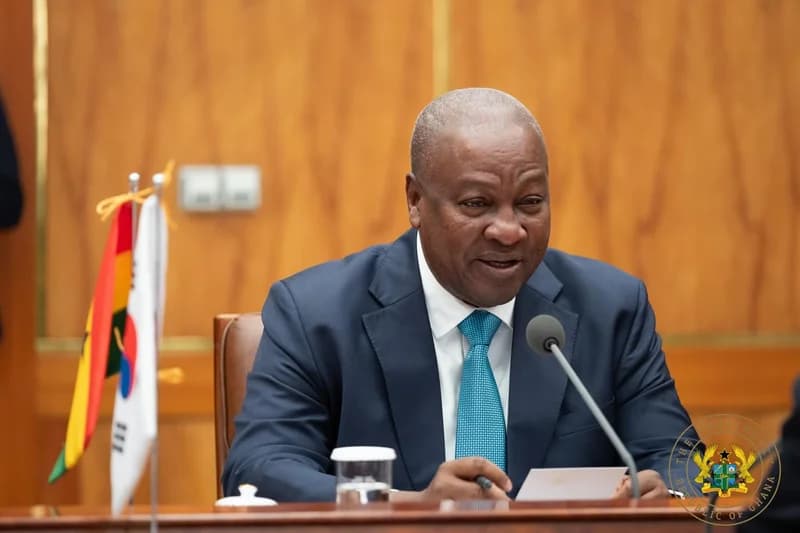
Ghana is currently at the center of a series of high-level international engagements aimed at bolstering its economic recovery, energy security, and regional stability. Highlighting these developments is President John Dramani Mahama’s diplomatic mission to South Korea, where on March 12, 2026, he commissioned the MT Asharami Ghana, a state-of-the-art dual-fuel Liquefied Petroleum Gas (LPG) vessel. This milestone, achieved in partnership with the Sahara Group and WAGL Energy, is a critical step in Ghana’s transition to cleaner energy, intended to reduce nationwide reliance on harmful traditional fuels like charcoal and kerosene. Following the commissioning, President Mahama was also honored with an honorary degree from Yonsei University on March 13, recognizing his contributions to international relations and public service.
Building on this momentum, the World Bank Group’s Managing Director and Chief Knowledge Officer, Paschal Donohoe, is scheduled to visit Ghana and Liberia from March 15 to 20, 2026. This marks Mr. Donohoe’s first visit to West Africa since his appointment in late 2025. His agenda focuses on supporting Ghana’s macroeconomic stability and fostering job creation through the mobilization of private capital. During his stay, he will meet with President Mahama and Liberian President Joseph Boakai to discuss critical development priorities, including electricity access, agricultural improvement, and economic governance. Mr. Donohoe is also expected to deliver a keynote lecture at the University of Ghana and inspect significant infrastructure projects, such as Liberia’s Mount Coffee Hydro-Power Plant.
On the domestic front, Ghana continues to lead regional discourse on environmental sustainability and security. The nation recently hosted an Intergovernmental Panel on Climate Change (IPCC) outreach meeting in Accra, organized by the Environmental Protection Agency and UNU-INRA. The forum, featuring insights from Prof. Fatima Denton, emphasized a shift toward "people-centered" climate adaptation, urging policymakers to prioritize the health and livelihoods of vulnerable populations over mere infrastructure. Simultaneously, Ghana has solidified its defense architecture by signing a landmark security and defense partnership with the European Union. This pact, announced by the EU Delegation’s Jonas Claes, focuses on enhancing early warning systems and conflict prevention mechanisms to safeguard regional stability.
These interconnected developments underscore Ghana's proactive approach to navigating 21st-century challenges. By leveraging international partnerships in energy technology, securing financial expertise from the World Bank, and committing to human-centered climate and security policies, the country is positioning itself as a resilient leader in West Africa. As these initiatives move from high-level agreements to implementation, they are expected to yield tangible benefits in public health, economic opportunity, and sustainable peace across the sub-region.
This story touches markets covered on Anansi Intelligence ↗.
Related topic
John Mahama: Latest News & Updates →More from africa
Continue exploring similar stories


