••
Ghanaian Mission Issues High Alert in South Africa Amid Resurgence of Xenophobic Tensions
•3 min read•8 sources
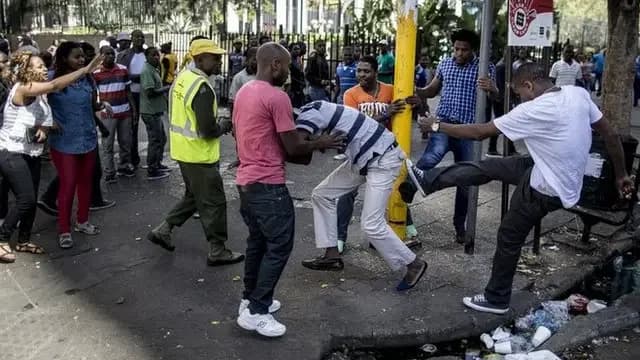
Ghana’s High Commissioner to South Africa, Benjamin Kofi Quashie, has issued a stark warning to the Ghanaian community residing in South Africa, urging them to remain on high alert following a recent surge in xenophobic violence. While current reports indicate a period of relative calm, the Ghanaian mission warns that the potential for escalation remains high. High-level discussions between Ghanaian officials and South African authorities are ongoing as the mission seeks to ensure the safety and security of its citizens amid recurring tensions that have historically targeted foreign nationals. The Ghanaian mission is actively monitoring developments and has kept consular services open to assist citizens facing challenges.
The diplomatic response, however, has faced criticism from veteran diplomats who argue that standard official procedures are no longer sufficient. Charles Owiredu, the former Ghana High Commissioner to South Africa, has characterized recent condemnations from the South African Police Ministry as inadequate. Speaking on JoyNews’ Newsfile, Owiredu argued that historical high-level meetings and official statements have consistently failed to produce lasting solutions. He pointed out that similar declarations have been made in the past without effective outcomes, suggesting that the South African leadership must move beyond mere condemnations toward sustained, decisive action.
At the heart of the recurring violence are deep-seated socio-economic grievances within South African society. Owiredu noted that many South Africans view foreign nationals—including Ghanaians—as a direct threat to limited resources, mistakenly seeing xenophobia as a solution to extreme poverty, unemployment, and systemic inequality. This perspective is echoed in broader social commentaries which describe the focus on immigrants as a political diversion; a metaphor for "chasing the rain" while failing to fix the "leaking roof" of the country's internal structural failures. By shifting blame to migrants, the root causes of South Africa's economic frustrations remain unaddressed.
Given the regional impact of these attacks, there is a growing call for international intervention to break the cycle of violence. Owiredu and other observers emphasize the necessity for a coordinated approach involving the African Union (AU) and the Economic Community of West African States (ECOWAS), as the violence affects migrants from across the continent. Until these foundational issues of economic disparity and political exploitation are resolved at a systemic level, migrant communities remain in a state of precariousness. The current situation highlights a critical need for a shift from ineffective past measures to a broader, unified continental strategy to protect the lives and livelihoods of all African nationals in South Africa.
This story touches markets covered on Anansi Intelligence ↗.
More from africa
Continue exploring similar stories


