••
Security and Survival: From the Frontlines of Ukraine to Rising Regional Instability Across Africa
•3 min read•19 sources
The African continent is currently grappling with a complex landscape of human security threats, ranging from the deceptive recruitment of citizens for foreign wars to brutal domestic resource conflicts and the dismantling of global narco-terrorist networks. A series of investigative reports and official statements have highlighted a disturbing trend where hundreds of Ghanaians have been lured into the Russia-Ukraine conflict under false pretenses. Since 2022, approximately 272 Ghanaians have been recruited through illegal trafficking networks, often promised lucrative jobs or educational opportunities only to find themselves on the frontlines. The human cost has been devastating, with at least 55 confirmed dead and others held as prisoners of war. Emotional farewells have recently been held for fallen compatriots, while Ghana’s Ministry of Foreign Affairs has called for urgent international investigations into these irregular military contracts and deceptive recruitment schemes.
Simultaneously, Sub-Saharan Africa is witnessing a surge in localized violence driven by competition for resources and ethnic tensions. In South Sudan, a brutal attack on a gold mining site in the Khor Kaltan area recently left at least 73 people dead and 25 injured, highlighting the fragile security situation exacerbated by the struggle for mineral wealth. In Nigeria, a 48-hour curfew was imposed on parts of Jos following a mass shooting at an open-air bar that claimed 26 lives, an incident reflecting ongoing tensions between herder and farmer communities. Further north, in Sudan’s South Kordofan region, the escalation of drone warfare between the Sudanese army and the Rapid Support Forces (RSF) has resulted in over 500 civilian deaths since early 2024, with strikes frequently hitting markets and hospitals, further disrupting critical food supplies.
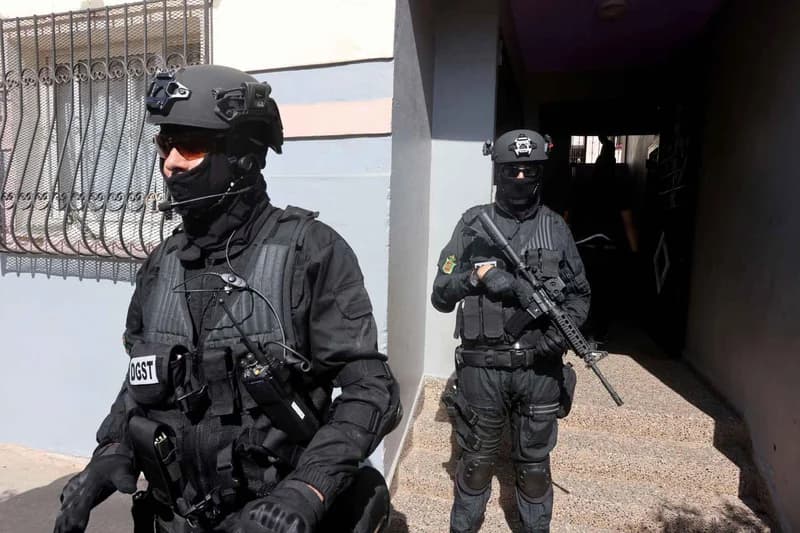
Amidst these crises, international security cooperation has achieved significant breakthroughs in dismantling transnational criminal networks. The U.S. justice system, in close collaboration with Moroccan security services, recently exposed an extensive web connecting narco-terrorism and arms trafficking across the Middle East, Africa, and Latin America. Key figures, including Lebanese-Syrian national Antoine Kassis and Bulgarian arms dealer Peter Dimitrov Mirchev, were targeted for supplying weapons to terrorist organizations and cartels. Morocco has emerged as a pivotal hub for intelligence sharing and security operations, facilitating the arrest and extradition of high-profile suspects and demonstrating the necessity of cross-border collaboration in addressing the intersection of organized crime and global terrorism.
Within Ghana, domestic security operations are intensifying to curb rising crime and communal instability. In the Bono Region, a joint security operation recently led to the arrest of 24 suspects and the recovery of significant weaponry, including pump-action guns and nearly 800 rounds of ammunition. In the Oti Region, stakeholders in the Nkwanta South Municipality are making desperate calls for peace as ongoing tribal disturbances cripple the local economy and cause a sharp decline in the Assembly’s Internally Generated Funds. While authorities have arrested four individuals in connection with the Nkwanta violence and deployed over 270 security personnel to the area, the persistence of these conflicts emphasizes the need for deep-seated dialogue and socio-economic interventions to ensure long-term stability and protect vulnerable populations across the region.
This story touches markets covered on Anansi Intelligence ↗.
Live rates
Ghana gold price →More from africa
Continue exploring similar stories


