••
Strengthening Ghana’s Rural Infrastructure: Significant Strides in Healthcare, Education, and Disaster Preparedness
•3 min read•4 sources
Ghana’s regional development landscape has seen a significant boost through various initiatives aimed at improving healthcare delivery, educational infrastructure, and community resilience. From the Upper West Region to the Volta Region, localized efforts are addressing long-standing deficits to improve the quality of life for residents. In Saboba, a massive private-sector donation has revitalized a hospital following a devastating fire, while in Nkwanta North and Wa, education officials and community leaders are working to provide the furniture and specialized training necessary to secure the future of the nation’s youth.
In the Northern Region, the Assemblies of God Hospital in Saboba received a major boost with medical equipment valued at over GH"830,000. Donated by MODEC and its MV25 charter partners, the package included anesthesia machines, hospital beds, and delivery tables to support maternal and child healthcare. This intervention proved critical as a subsequent fire destroyed the hospital’s children's ward shortly after the donation. Although the fire caused extensive damage, all patients and staff were safely evacuated. Ernest Asigri of AG Care-Ghana noted that this represents the largest private contribution to the facility, which serves over 120,000 people, highlighting the essential role of corporate social responsibility in rural healthcare settings.
The education sector also saw significant progress as the Nkwanta North District Education Directorate took delivery of 1,000 pieces of school furniture, including hexagonal tables and dual desks. District Chief Executive Dordoe Kudjoe Isaiah led the initiative to ensure that students in basic schools no longer have to sit on the floor during lessons. Simultaneously, the Nursing Training College (NTC) in Wa matriculated 195 new students into its Registered General Nursing and Nurse Assistant Clinical programs. While celebrating academic expansion—including plans for a Bachelor of Science in General Nursing by 2026—College Principal Bennie Juabie Douri and MP Rashid Hassan Pelpuo highlighted urgent needs for fencing, hostels, and a school bus to support the growing student body.
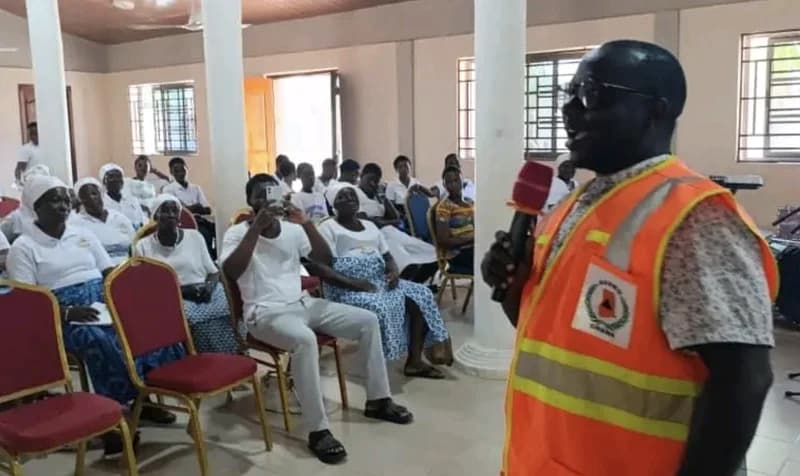
Beyond physical infrastructure, the National Disaster Management Organisation (NADMO) has intensified efforts to build human resilience in the Keta Municipality. Through a targeted engagement at the Living Hope Society, NADMO empowered local women with practical disaster prevention skills, focusing on weather awareness, fire safety, and the proper management of gas cylinders. Keta Municipal Director Wonder Setsofia Deynu emphasized that involving women and children in disaster risk reduction is essential for community safety as the rainy season approaches. These collective efforts across Ghana’s districts underscore a broader national movement toward bridging the rural-urban divide through improved services and community-led preparedness.
This story touches markets covered on Anansi Intelligence ↗.
More from africa
Continue exploring similar stories


