••
Government Intensifies Policy Enforcement: Revenue Protection, Rural Healthcare Accountability, and Service Reforms Take Center Stage
•3 min read•6 sources
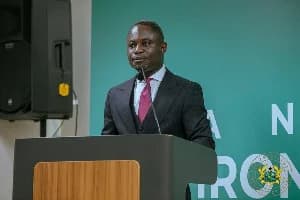
In a series of decisive moves aimed at safeguarding national revenue and improving public service delivery, the Government of Ghana has implemented several high-profile policy directives across multiple sectors. Central to these efforts is a comprehensive ban on the land transit of cooking oil, a directive issued by Finance Minister Dr. Cassiel Ato Forson. The measure, which mandates that all cooking oil consignments be processed exclusively through seaports, comes after the interception of 18 trucks suspected of participating in transit diversion schemes. These fraudulent activities reportedly caused potential revenue losses to skyrocket from an initial estimate of GH¢2.6 million to over GH¢85 million. By routing shipments through seaports, the government aims to enhance tracking and eliminate the customs loopholes that have long undermined local producers and depleted the state's coffers.
Simultaneously, the Ministry of Health has adopted a zero-tolerance approach toward medical professionals who decline postings to rural and underserved regions. Health Minister Kwabena Mintah Akandoh has issued a stern ultimatum, stating that any newly recruited medical doctors who fail to report to their assigned districts will be summarily removed from the government payroll by February 28, 2026. This directive underscores the administration's commitment to achieving equitable healthcare access across the country, particularly in deprived areas where doctor-to-patient ratios remain critically low. The Ministry emphasized that strict monitoring will be in place to ensure that taxpayer-funded salaries are only paid to those serving the communities to which they were assigned.
Complementing these enforcement measures are significant reforms in public service accessibility and energy stability. The Driver and Vehicle Licensing Authority (DVLA) has launched an expansion of its service centres, most recently with the inauguration of a premium centre in Bantama. CEO Julius Neequaye Kotey highlighted that this Public-Private Partnership initiative is specifically designed to eliminate "goro boys" (middlemen) and streamline processes through modern technology. Meanwhile, the National Petroleum Authority (NPA) has moved to stabilize public sentiment regarding energy supplies. Despite "alarmist" media reports of an impending Liquefied Petroleum Gas (LPG) shortage, the NPA assured the public of more than a month's worth of reserves, while acknowledging ongoing dialogues with private oil chambers over the transparent allocation of LPG Fund resources.
Together, these developments reflect a broader political strategy focused on administrative transparency and fiscal discipline. Whether through the crackdown on customs complicity in the cooking oil trade or the enforcement of rural service for healthcare workers, the government is signaling a shift toward more rigorous oversight. These interventions are expected to not only protect the national economy from revenue leakages but also to ensure that essential services—from road safety to healthcare—are delivered efficiently and fairly to all Ghanaian citizens.
This story touches markets covered on Anansi Intelligence ↗.
More from politics
Continue exploring similar stories


