••
Ghana Asserts Data Sovereignty in US Aid Rejection as Regional Insecurity and Global Energy Shifts Reshape Geopolitics
•3 min read•21 sources
Ghana has taken a firm stance on national sovereignty by terminating negotiations for a $109 million health aid agreement with the United States. The decision, rooted in concerns over US demands for access to citizens' personal health data, reflects a growing trend of African nations prioritizing data privacy over foreign assistance. Concurrently, Ghana is advancing "Resolution 2.0" at the United Nations, a reparatory justice initiative aimed at addressing the historical injustices of the Trans-Atlantic Slave Trade. Unlike traditional aid requests, this resolution focuses on restitution, the return of stolen artifacts, and healing for affected communities, receiving significant interest from the European Union and the broader diplomatic corps as Ghana emphasizes accountability over development funding.
While Ghana navigates these diplomatic maneuvers, neighboring Mali has plunged into a severe security crisis following a series of coordinated attacks by the Azawad Liberation Front (FLA) and the al-Qaeda-linked JNIM. These assaults resulted in the assassination of Mali’s Defence Minister, Sadio Camara, and the recapture of strategic northern territories such as Kidal. The escalation has cast serious doubt on the effectiveness of Russian military support via the Africa Corps and the stability of Colonel Assimi Goïta’s military junta. In response to the "extremely volatile" environment, France and the United Kingdom have urged their citizens to depart the country immediately, as the junta struggles to maintain oversight over significant portions of the territory.
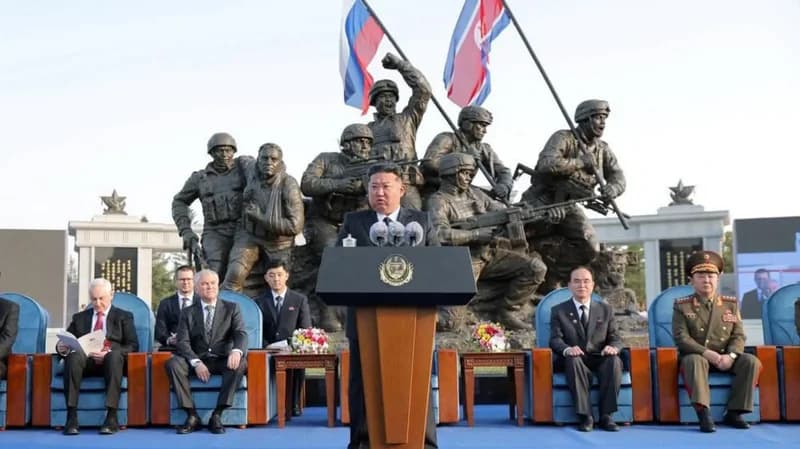
Beyond the Sahel, significant shifts in global alliances are emerging as the United Arab Emirates (UAE) announced its departure from the OPEC and OPEC+ oil cartels after nearly 60 years. Seeking greater flexibility to meet global demand, the UAE aims to expand its production capacity independently, a move that analysts believe could diminish OPEC's influence and lead to more volatile oil prices. Simultaneously, the conflict in Ukraine has seen an escalation in North Korean involvement, with leader Kim Jong Un praising soldiers for "self-blasting" with grenades to avoid capture. Intelligence estimates suggest over 15,000 North Korean troops have been deployed to assist Russia, highlighting the extreme measures and high casualty rates defining the current phase of the war.
These developments are underscored by a broader movement toward institutionalizing reparative justice and redefining traditional diplomatic ties. At a forum in Geneva, activists launched the Reparations Advocacy Manual and a 12-month global roadmap to challenge colonial legacies, aligning with Ghana’s UN objectives. These shifts are mirrored in the diplomatic sphere, where even the traditional "special relationship" between the UK and the US is being questioned by ambassadors in favor of new strategic priorities. As regional conflicts in Mali and Ukraine persist and energy markets face restructuring, the international community is entering a period of intense realignment where national interests, data sovereignty, and historical accountability are taking center stage.
This story touches markets covered on Anansi Intelligence ↗.
More from politics
Continue exploring similar stories


