••
Ghana’s Producer Inflation Plunges to 3.5% as FMCG Sector Records 3.7% Growth in First Half of 2026
•3 min read•8 sources
Ghana’s industrial and consumer sectors are showing signs of significant shift as of June 2026, characterized by a sharp decline in producer price inflation and steady growth in the consumer goods market. According to recent data from the Ghana Statistical Service (GSS), the year-on-year Producer Price Inflation (PPI) rate dropped to 3.5% in June 2026, a substantial decrease from the 5.8% recorded in May. This cooling of factory-gate prices coincides with a report from SumsureIQ showing that the Fast-Moving Consumer Goods (FMCG) sector grew by 3.7% in volume during the first half of the year, signaling a resilient recovery in domestic consumption despite broader macroeconomic pressures.
The decline in producer inflation was primarily driven by a significant cooling in the mining and quarrying sectors, which have previously been volatile due to global commodity price fluctuations. Government Statistician Dr. Alhassan Iddrisu noted that the month-on-month producer price change fell by 3.7%, marking the largest monthly decline in recent history. However, the relief is not uniform across all sectors; while the industrial producer price index (I-PPI) stood at 3.3%, other sectors such as electricity and gas (12.5%), transport (10%), and fabricated metal products (26.3%) continue to experience double-digit inflationary pressure.
Despite the relief for manufacturers at the factory gate, a disconnect remains for the average Ghanaian consumer. While PPI has eased, consumer inflation stood higher at 5.3% in June 2026, driven largely by rising costs in fuel, transport, and essential services. Analysts from the GSS and financial institutions have cautioned that the moderation in producer prices often takes time to filter down to retail shelves. Consequently, while input costs for businesses are stabilizing, consumers have yet to fully feel the impact of reduced inflation on their daily purchasing power.
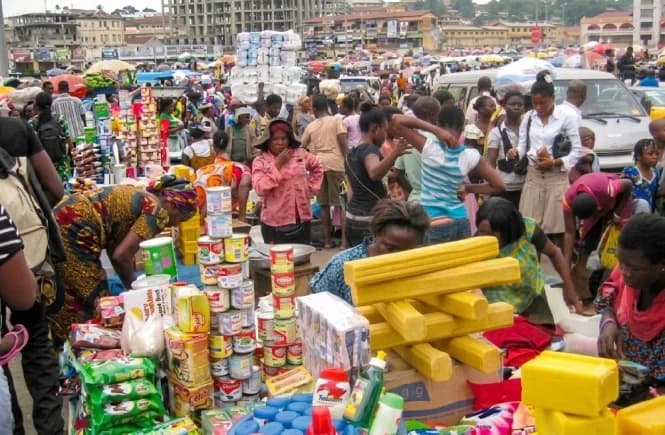
In the consumer goods market, the 3.7% volume growth in the FMCG sector was heavily anchored by food products, which accounted for 79% of the volume increase. Value consumption in this sector surged even higher, by 21.9%, with food again driving nearly half of that rise. This trend suggests that while consumers are spending more, their focus remains primarily on essential items. The FMCG growth is seen as a positive indicator of economic recovery, though market researchers warn that future purchasing behavior will remain sensitive to the stability of the cedi and potential global economic headwinds.
Looking ahead, the sharp decline in PPI provides local manufacturers with much-needed stability for commercial planning and production cost management in the second half of 2026. Dr. Iddrisu has urged businesses to optimize their operations to take advantage of these softer producer prices, while advising the government to maintain its focus on economic stability. As Ghana continues its recovery efforts, the ability to translate lower industrial costs into affordable retail prices will be critical for sustaining the growth observed in the consumer goods sector and easing the burden on the general public.
This story touches markets covered on Anansi Intelligence ↗.
Live rates
Dollar to cedi rate →More from business
Continue exploring similar stories


