••
Ghana’s Accountability Drive: Former Ministers Face Legal Heat as Financial Probes Deepen
•3 min read•18 sources
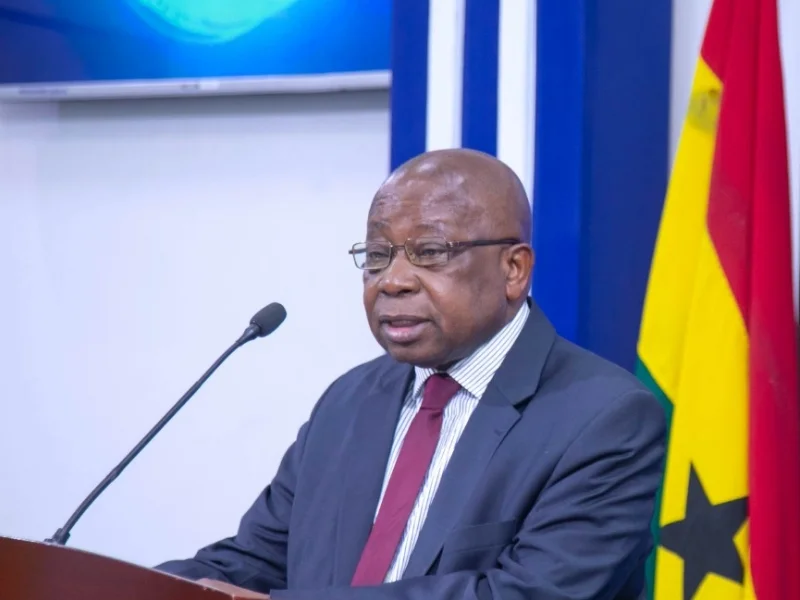
Ghana’s political landscape is currently dominated by a series of high-profile legal battles and financial investigations as the government intensifies its accountability drive. Central to these developments is the revelation that former Finance Minister Ken Ofori-Atta is seeking permanent residency in the United States to avoid extradition on over 70 criminal charges. Simultaneously, former Health Minister Kwaku Agyemang-Manu is set to face prosecution over the controversial Sputnik V vaccine procurement, while authorities have frozen GH¢50 million linked to Bernard Antwi Boasiako, popularly known as Chairman Wontumi. These cases, spanning from healthcare to finance and industrialization, signal a significant shift toward judicial scrutiny of past government dealings.
Ken Ofori-Atta, who served as Finance Minister from 2017 to 2024, is currently being held in a Virginia detention facility for overstaying his visa. His legal team argues that returning to Ghana would subject him to a "political witch hunt" and an unfair trial, citing concerns over the independence of the Ghanaian judiciary. However, the Ghanaian government has formally requested his extradition to face charges including financial misconduct that allegedly caused the state a loss of over GH¢1.4 billion. A court hearing in Virginia is scheduled for April 27, 2026, which will determine the next steps in this high-stakes international legal tug-of-war.
The accountability wave also touches on the COVID-19 pandemic era, with Minister for Government Communications Felix Kwakye Ofosu announcing imminent criminal charges against former Health Minister Kwaku Agyemang-Manu. The charges stem from the 2021 procurement of Sputnik V vaccines through a middleman at nearly double the manufacturer’s price. Investigations by a parliamentary committee and the Ghana Audit Service revealed that approximately $2.85 million was paid for vaccines that were never delivered, and the contracts lacked mandatory parliamentary approval. Additionally, the deal with Frontiers Healthcare Services for airport testing remains under fire for its lack of transparency and the significant profits generated at the state's expense.
In another significant development, the government has frozen GH¢50 million in accounts belonging to Bernard Antwi Boasiako following a COCOBOD payment made in early 2025. Felix Kwakye Ofosu detailed that the funds were allegedly diverted into Treasury Bills and the establishment of a private insurance firm. Amid these probes, former Deputy Trade Minister Michael Okyere Baafi has defended the One District One Factory (1D1F) program against corruption allegations, insisting that the initiative's structure prevents the misuse of funds. Meanwhile, the National Premix Fuel Secretariat is collaborating with local executives to recover mismanaged community development funds through a nationwide accountability exercise.
Beyond individual prosecutions, the government and policy advocates are looking toward systemic reforms to ensure long-term transparency and social protection. There are growing calls to amend the National Pensions Act to make SSNIT registration mandatory for all registered businesses, closing a "visibility gap" that currently leaves many workers without retirement security. By integrating SSNIT identification with business registration, officials hope to create a fairer labor market and a more sustainable pension system. As these legal and administrative processes unfold, they represent a pivotal moment for Ghana’s governance, as the nation seeks to balance political stability with the rigorous pursuit of fiscal justice.
This story touches markets covered on Anansi Intelligence ↗.
More from politics
Continue exploring similar stories


