••
Ghana’s Mining Sector Under Scrutiny: Minority Alleges State Capture Amidst Growing Galamsey Crisis
•3 min read•13 sources
Ghana’s mining sector has become a central flashpoint for political and environmental tension as the Minority in Parliament raises alarms over alleged 'state capture' while the government grapples with the pervasive reach of illegal mining (galamsey). The Minority on the Lands and Natural Resources Committee, led by Ranking Member Kwaku Ampratwum-Sarpong, has accused the government of favoring businessman Ibrahim Mahama, brother of President John Dramani Mahama, in significant mining deals. The opposition cited the acquisition of the Black Volta and Sankofa Gold Projects by Mahama’s company, Engineers & Planners, and the lack of transparency in the transition of the Damang gold mine as evidence of a dangerous drift toward the concentration of mineral wealth in private hands. They have called for immediate investigations into potential conflicts of interest and warned that future administrations may review these arrangements to ensure accountability to the Ghanaian people.
Simultaneously, the struggle against illegal mining has reached a critical juncture, with President John Dramani Mahama acknowledging the deep-seated complexities of the crisis. Speaking to Organized Labour, the President admitted that political and traditional leaders are often complicit in galamsey operations, making enforcement difficult. He highlighted that the decline in cocoa prices has driven many farmers toward more lucrative but destructive illegal mining. This admission of internal systemic failure was echoed by the Member of Parliament for Tatale-Sanguli, Ntebe Ayo William, who argued that while galamsey cannot be completely eradicated, it must be minimized through targeted interventions against heavy machinery and the protection of water bodies and forests.
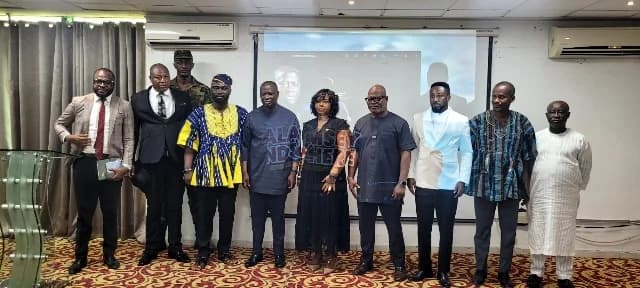
Adding a layer of security and social analysis, the Kofi Annan International Peacekeeping Training Centre (KAIPTC), in collaboration with the Spanish Embassy, recently held a dialogue on the security ecosystem of illegal mining in the Western Region. Stakeholders, including Western Regional Minister Joseph Nelson, emphasized that galamsey is driven by powerful economic incentives that affect local governance and community safety, particularly for women and children. The dialogue underscored that illegal mining is no longer just a livelihood issue but a threat to national security, influenced by land authority disputes and labor exploitation. In response to the environmental devastation, a new coalition of journalists, Patriotic Journalists Against Galamsey (PAJAG), has launched a nationwide campaign under the theme 'The Pen is Mightier Than the Changfan,' seeking to use media advocacy to pressure the government into more effective action.
Looking toward the future of Ghana’s extractive industry, the Natural Resource Governance Institute (NRGI) has warned that the nation risks losing significant revenue from its burgeoning lithium sector due to weak licensing regimes. NRGI Country Manager Patrick Stephenson cautioned that current vulnerabilities in mineral licensing could lead to corruption involving politically exposed persons, mirroring the pitfalls of past mining agreements. As the demand for green minerals rises, the call for enhanced transparency, broader stakeholder consultation, and stronger oversight systems has become more urgent. The intersection of state capture allegations, the galamsey menace, and the management of emerging minerals suggests that Ghana's mining sector requires a comprehensive institutional overhaul to protect the nation's natural resources for future generations.
This story touches markets covered on Anansi Intelligence ↗.
Live rates
Ghana gold price →More from politics
Continue exploring similar stories


